















By Omoyeni Ojeifo
Preparations for the upcoming Sallah celebration are becoming a steep uphill battle for many Abuja households.
As the prices of rams, tomatoes, and vegetables climb daily, shoppers in the capital city are being forced to constantly scale back their budgets.
A visit by Persecondnews correspondent to major hubs—including the Galadimawa Ram Market, Apo Market, Wuse, and Utako Market—revealed a stark shift.
The usual festive hustle has been replaced by long pauses, intense bargaining, and frequent walk-aways.
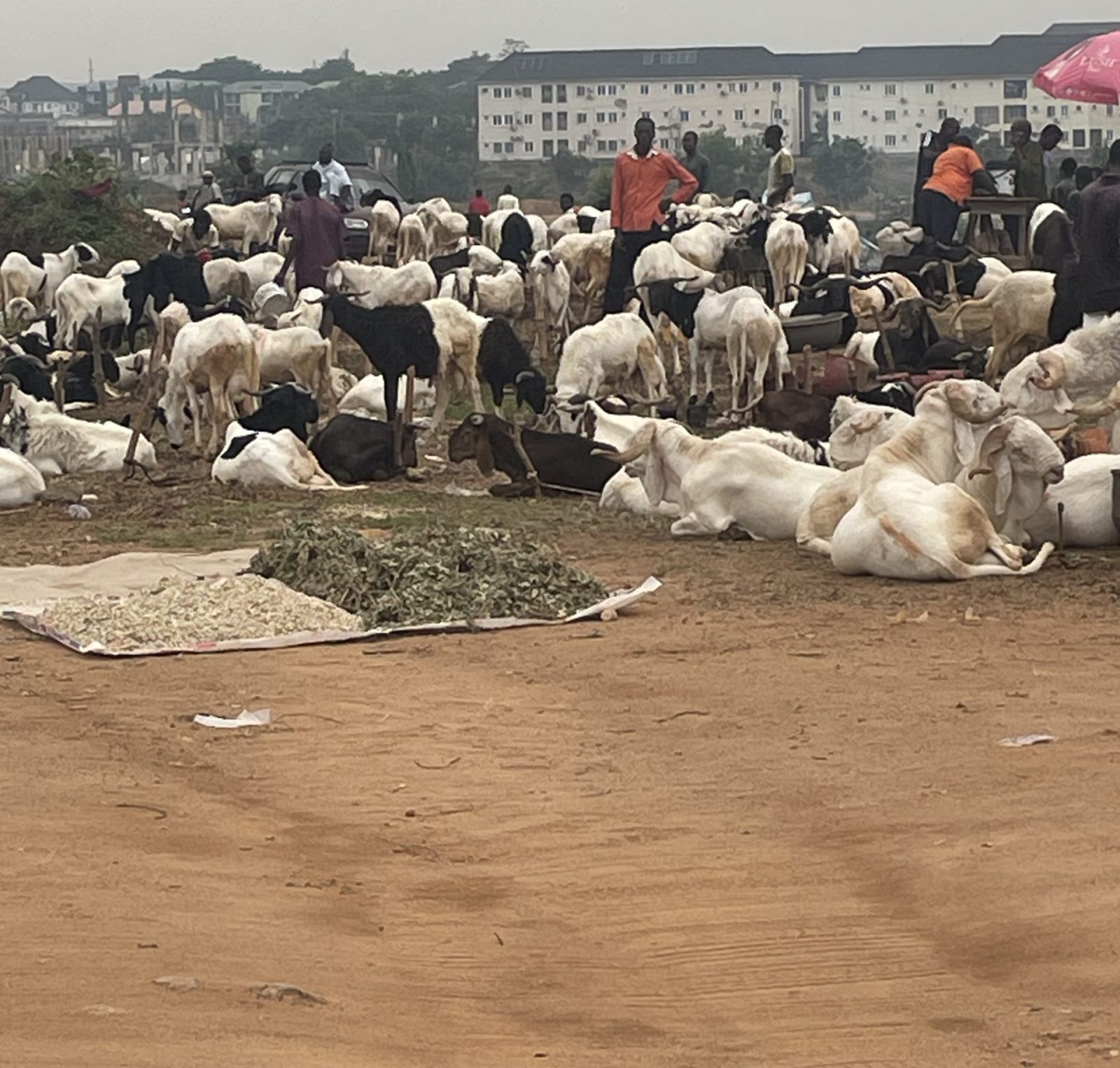
At the Galadimawa Ram Market, the financial strain is evident in every interaction.
Potential buyers or shoppers step forward to ask for prices, hesitate, and often walk away quietly after checking their wallets.
Some return minutes later to renegotiate, hoping for a “miracle concession” from the sellers.
Musa Abdullahi, speaking on behalf of the market’s chairman, confirmed that patronage has plummeted because residents simply don’t have the cash.
“We no too get customers like that because small ram now dey around ₦190,000 to ₦250,000,” Abdullahi, who spoke in pidgin, explained.
“Medium fit go ₦300,000 to ₦400,000 while the big ones dey reach ₦450,000 to ₦600,000. The prices increase well-well for market.”
According to him, market prices have become entirely unpredictable as Sallah approaches.
“Last week the prices cheaper pass now,” he said. “E dey add more money every day. Sometimes na ₦5,000 or more increase for one day. As Sallah dey come close, everything dey move.”
He also warned that shoppers who are waiting until the last minute to buy may end up paying even steeper prices.
“If person no buy now, before Sallah proper the price go still increase again,” he added.
The frustration is shared across the market as another trader, Salga Ibrahim, noted that consumer behavior has shifted drastically compared to previous festive seasons.
“In the past, people would just pick a ram and buy it,” he told Persecondnews.
“Now, they calculate the price meticulously before even considering a purchase. Some don’t even buy at all anymore. Even the number of people coming to the market has dropped.”
Nearby, Ibrahim Mangal stood frozen for a moment beside a ram pen, reeling from the quoted price of a medium-sized ram, before turning and walking away.
“I came with ₦200,000 thinking I could buy a large ram, but now I don’t even know what to do,” he lamented.
“They told me my money can only buy a small one, and that won’t even be enough for my family.”
Another buyer, Zainab, also abandoned negotiations after hearing the current prices.
“If I can’t afford it, I won’t force myself,” she said. “Even the turkey I wanted to buy is now ₦55,000—something I bought for ₦35,000 just last month.”
Persecondnews reports that a similar tension hangs over the Apo, Wuse, and Utako markets.
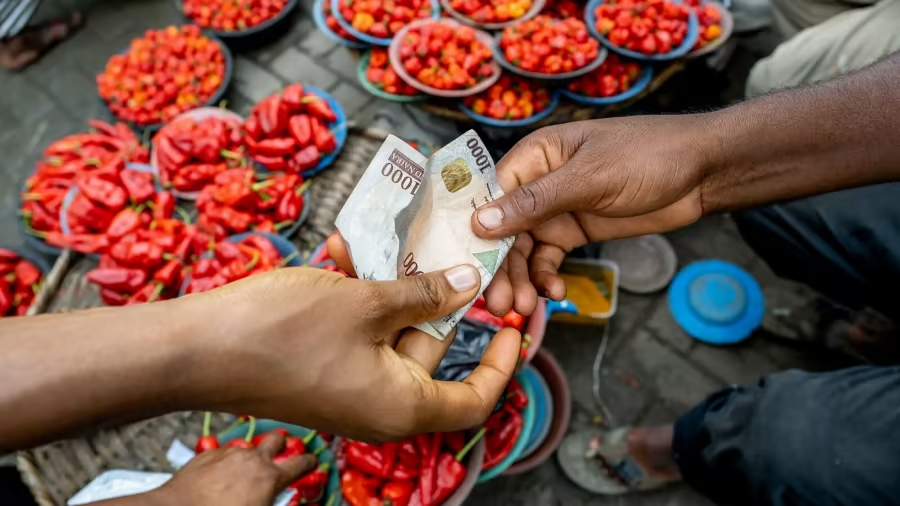
The financial strain is particularly visible in the vegetable sections, where customers move cautiously, downsizing their orders or walking away entirely after hearing the latest prices.
Traders note that the costs of tomatoes, peppers, onions, and potatoes fluctuate almost daily, driven by supply chain issues, transportation costs, and heightened festive demand.

Hauwa, a vegetable seller at Apo Market, confirmed that prices have remained highly unstable in recent weeks.
“A basket of tomatoes now costs between ₦8,000 and ₦10,000,” she said, adding:“Pepper is around ₦12,000, while Irish potatoes go for ₦7,000 to ₦8,000. Sweet potatoes and onions are both retailing for around ₦3,000 to ₦4,000.”
She added that these sudden price hikes have drastically impacted her customer base.
“People are still coming to the market, but many are no longer buying in the quantities they used to,” she noted.
A shopper Rahmat Sulaimon inspected a basket of tomatoes, paused briefly, and then downsized her intended purchase.
When asked what triggered her sudden change of heart, she blamed the unrelenting rise in food costs.
“Nigerians are Nigeria’s problem,” she lamented, pointing out:”I bought a small basket of pepper and tomatoes in this exact spot last week for ₦8,000, and now they are telling me it is ₦12,000.”
Another vegetable seller, Halima, pointed out that the larger wholesale baskets have become even more prohibitive for the average buyer.
“A large basket of tomatoes now ranges between ₦60,000 and ₦85,000, depending on the size,” she explained.
Maryam Yahaya, another trader, attributed this severe market instability directly to logistics and supply chain disruptions.
“If the supply trucks arrive late, the prices change that very same day. Nothing is fixed anymore.”
She further noted that pepper and other essential cooking ingredients are following the exact same volatile trend.
“A small basket of onions now is going for ₦4000, just last week it was ₦3700″. Even carrots and cabbage got salad had doubled in price”. she added.
At Wuse Market, traders confirmed that larger baskets of Pepper and tomatoes now sell between ₦65,000 and ₦90,000 depending on freshness and quality.
A shopper, Aisha, blamed the recurring price increases during festive periods on greed among traders and suppliers.
“I wonder why we always do this to ourselves. Whenever a celebration approaches in this country, prices just skyrocket. People always use the opportunity to exploit others, and then everyone turns around and blames the government,” she said.
At Utako Market, vegetables remain neatly arranged across stalls, but buyers now spend more time calculating than purchasing.
Across the Galadimawa, Apo, Wuse, and Utako markets, traders point to soaring transportation costs, high fuel prices, and seasonal demand as the main drivers of the price hikes.
Meanwhile, buyers express that the financial pressure is becoming increasingly difficult to manage with each passing day.
At Galadimawa, a trader aptly summed up the tense standoff while tightening a ram’s rope:“Everyone is just adjusting. Nobody wants to lose out.”
Author











Leave a comment