











Following decades of unmet government targets and chronic grid instability, the Dangote Group is pivoting toward a massive 20,000-megawatt power initiative.
This intervention by Aliko Dangote targets Nigeria’s most critical infrastructure deficit and, if successful, would revolutionize the nation’s industrial and domestic energy landscape.
The proposed expansion highlights the severe inadequacy of the status quo.
Currently, Nigeria’s population of 200 million relies on an average grid output of just 3,331 megawatts—a figure that remains woefully insufficient for a country of its size and economic potential.
The move comes after years of frustration under former Power Minister Adebayo Adelabu, who missed three self-imposed deadlines to stabilize the grid at a modest 6,000 megawatts.
A fleeting record of 6,003 megawatts in March 2025 proved to be a false dawn, collapsing almost immediately due to a broken gas supply chain and rampant infrastructure vandalism.
This chronic instability carries a staggering price tag.
According to the World Bank, erratic power costs the Nigerian economy roughly $29 billion annually—about 10% of its GDP—as businesses and families are forced to rely on expensive diesel generators to survive.
Stepping into this leadership vacuum, Aliko Dangote told International Finance Corporation (IFC) Managing Director Makhtar Diop that his conglomerate has the liquidity and infrastructure to succeed where the government has repeatedly failed.
“We are now going into power… 20,000 megawatts,” he said.
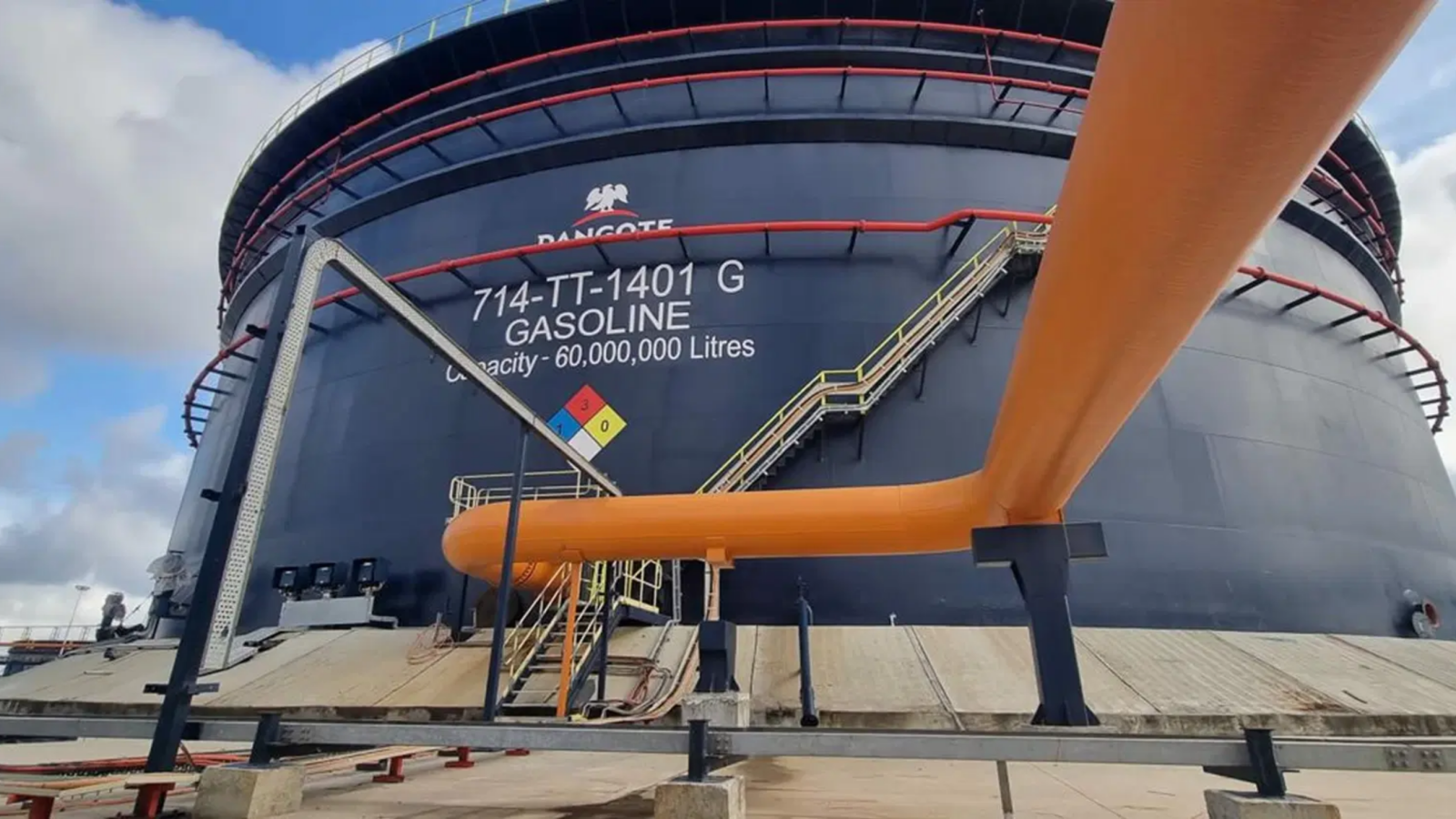
The timing is deliberate. Having commissioned a 650,000-barrel-per-day refinery and built a commanding position in the fertiliser market, Dangote argued that his empire has matured into an asset-light, cash-generative enterprise ready to absorb another capital-intensive frontier.
His broader expansion — covering potash and phosphate mining in Congo and Brazil, a deep-sea port with an 18-metre draft, and LNG development — is designed to make the conglomerate largely self-sufficient in critical inputs.
“Today, in about two and a half years, we will be the largest fertiliser company in the world,” he said. “We are putting up 12 million tons of urea. We are doing LNG.”
Yet the very conditions that make Nigeria’s power sector an attractive opportunity also make it a graveyard for ambitious timelines.
The national transmission network cannot currently sustain more than 8,000 megawatts without risking total collapse — meaning even if Dangote builds the plants, the state-controlled grid may be incapable of carrying the electricity to consumers.
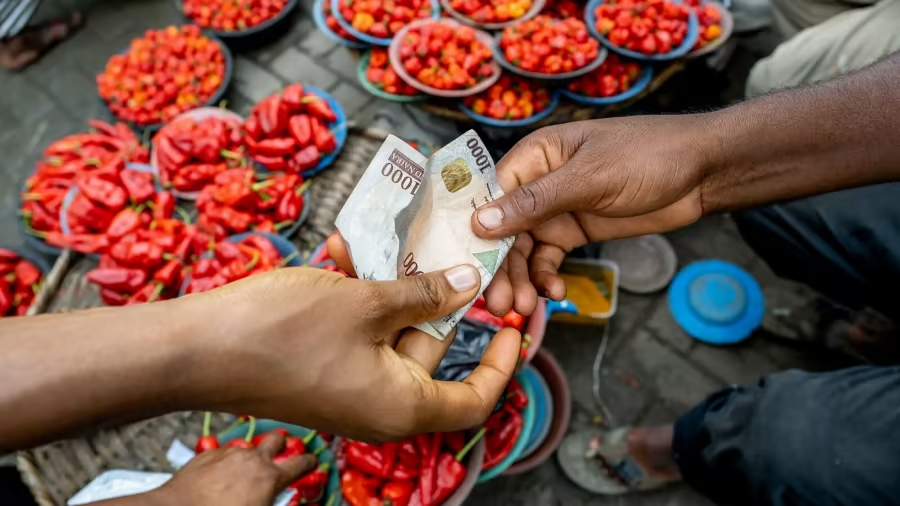
Lagos residents groan over rising tomato prices, seek alternatives
Distribution companies, meanwhile, are ensnared in a liquidity trap, unable to collect sufficient revenue to pay gas suppliers, leaving at least 70 percent of existing thermal generation plants fuel-starved.
Persecondnews also recalls that Nigeria privatised its power sector in 2013 with comparable optimism. More than a decade later, the structural rot remains largely unaddressed.
For Dangote’s 20,000-megawatt vision to succeed where the state has consistently stumbled, it would require not merely private capital but a wholesale reform of energy policy — a commodity that has proved, in Nigeria, even scarcer than electricity itself.
Author








Leave a comment