










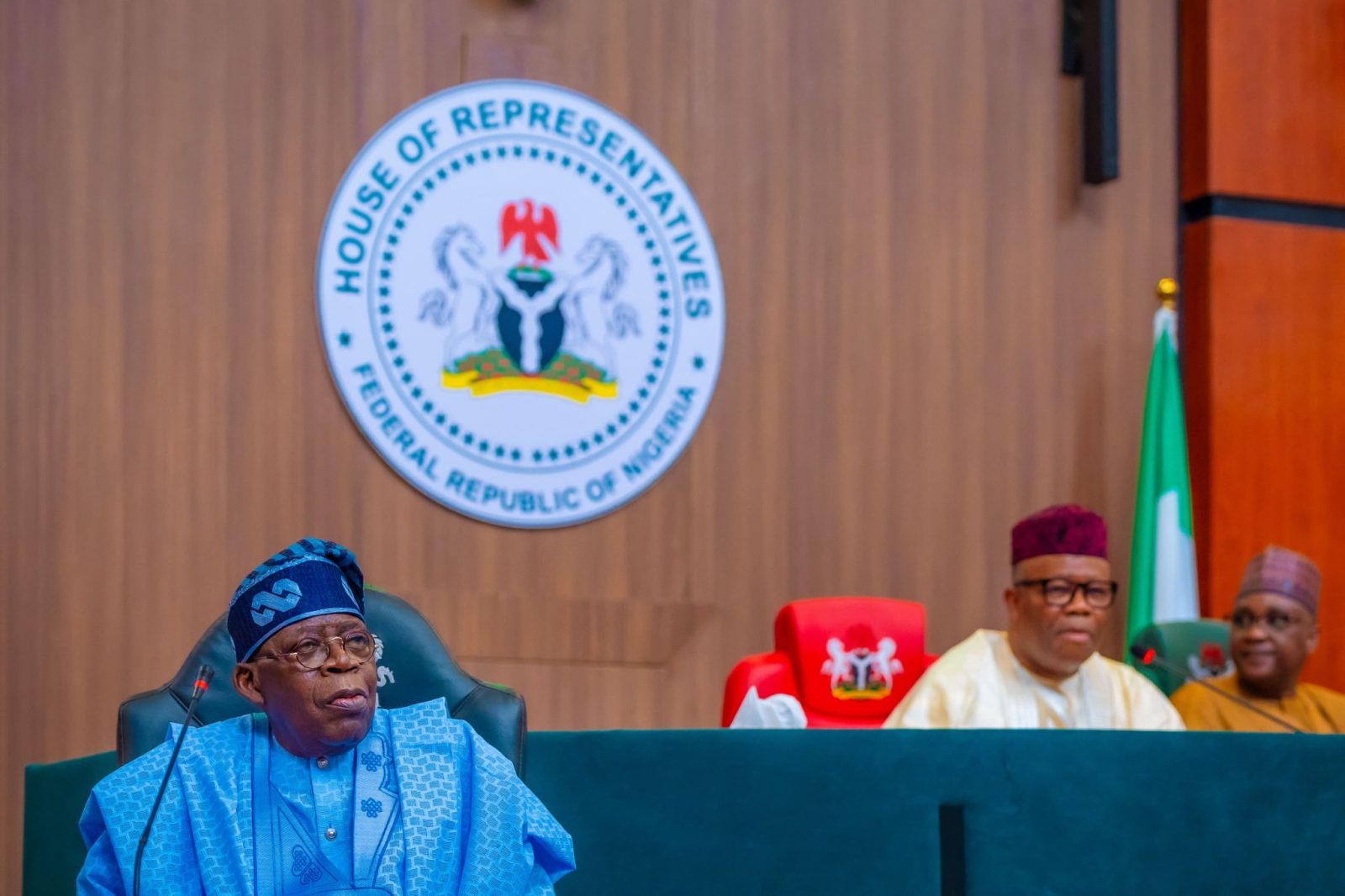



President Bola Tinubu has formally approached the National Assembly with a request for a significant N9.3 trillion upward revision of the 2026 Appropriation Bill.
This adjustment elevates the federal spending plan from N58.4 trillion to a record-breaking N67.7 trillion.
While the move highlights the administration’s expansive fiscal ambitions, it also underscores growing concerns regarding the nation’s escalating debt profile.
The request was detailed in a letter read by Senate President Godswill Akpabio on Tuesday, marking the lawmakers’ return from the two-week Eid-el-Fitr recess.
This revision represents a 16% increase over a budget that was already the largest in Nigeria’s history when it was first presented in December 2025.
According to the President, the fiscal expansion is driven by three core objectives:
*Regularizing Legacy Commitments: Addressing outstanding legal and financial obligations from previous budget cycles.
*Debt Consolidation: Integrating existing government indebtedness into the formal fiscal framework.
*Strategic Investment: Funding a selective group of high-priority projects while ensuring the 2026 plan maintains overall macro-fiscal stability.
“The proposed adjustment is aimed at strengthening fiscal transparency and ensuring more effective implementation of priority national programmes,” the President stated in the letter.
Persecondnews recalls that the December 2025 budget presentation, christened the “Budget of Consolidation, Renewed Resilience and Shared Prosperity,” originally projected total expenditure of N58.18 trillion, with expected revenue of N34.33 trillion, leaving a deficit of N23.85 trillion representing 4.28 percent of GDP.
The revised figures push the deficit even higher, though precise new revenue projections have not yet been released.
Tinubu emphasized that the adjustment is designed to ease pressure on domestic financial markets while ensuring that outstanding obligations from previous fiscal cycles do not hinder implementation of the 2026 budget.
With a national debt stock exceeding N153 trillion, Nigeria is walking a fiscal tightrope.
Currently, more than half of every naira earned by the federal government is swallowed by debt interest, leaving limited room for the schools, hospitals, and roads the country desperately needs.
Senator Solomon Adeola has pushed back against critics of this borrowing spree, arguing that the country’s massive infrastructure gap makes new loans a “necessary evil.”
He, however, cautioned that the administration must shift its focus from the size of the debt to the efficiency of its management.
The scale of this shift is evident in the 2026 budget, which anticipates a staggering N20 trillion in new loans.
The plan leans heavily on the local market, with domestic borrowing projected to skyrocket by 72% to nearly N18 trillion, raising concerns about the potential for “crowding out” private sector investment.
Author






Leave a comment