


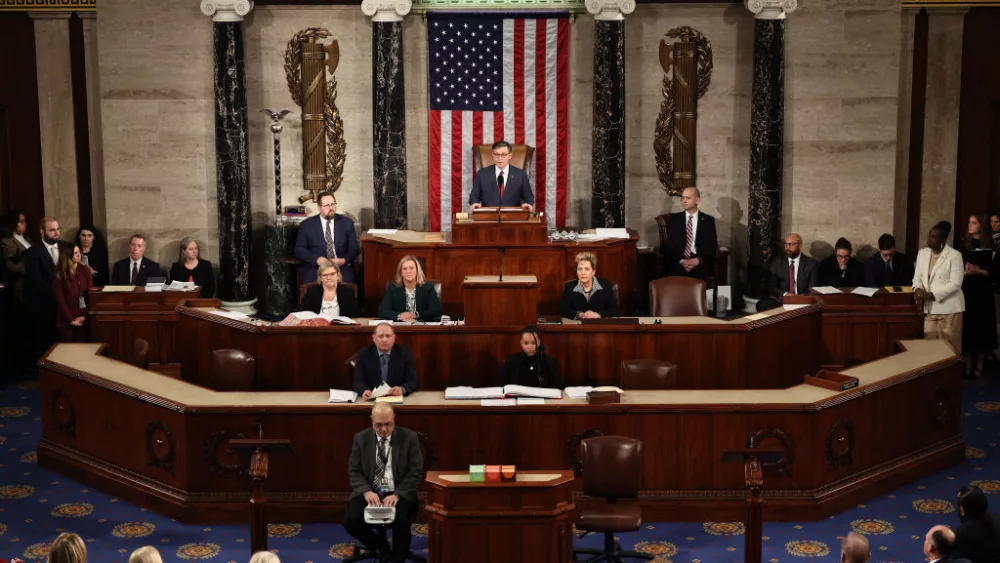


American congressional members have put forward fresh legislation on Tuesday designed to tackle religious intolerance in Nigeria, emphasizing the need for authorities there to safeguard at-risk groups, particularly Christian populations.
The initiative, known as the Nigeria Religious Freedom and Accountability Act of 2026 with the designation HR 7457, comes from Representatives Riley Moore of West Virginia and Chris Smith of New Jersey, who leads the House Foreign Affairs Africa Subcommittee.
Additional backers encompass Tom Cole from Oklahoma, who heads the House Appropriations Committee; Brian Mast from Florida, chair of the House Foreign Affairs Committee; Mario Diaz-Balart from Florida, leading the Appropriations Subcommittee on National Security and Related Programs; and Bill Huizenga from Michigan, who oversees the Foreign Affairs South and East Asia Subcommittee.
In unveiling the proposal, Moore noted his direct observations, saying: “For years, Christians in Nigeria have faced unspeakable violence, churches burned, villages destroyed, families slaughtered, while the global community looked away.”
He elaborated on his involvement, adding: “As part of the investigation President Trump asked me to lead, I visited Nigeria and witnessed firsthand the horrors our brothers and sisters in Christ face and saw the security challenges Nigeria faces.”
Moore further pointed out the bill’s purpose: “That is why I am proud to introduce the Nigeria Religious Freedom and Accountability Act of 2026 with Representative Chris Smith.
“This legislation makes clear that the United States stands with our persecuted brothers and sisters in Christ and seeks to help Nigeria address its many challenges.”
Smith, having presided over 13 hearings in Congress on this issue, criticized the stance of Nigerian officials, adding: “The Nigerian government’s blatant denial of the religious persecution occurring within its borders has only enabled the religious-based violence in the country to fester, with Christian deaths and church attacks reaching unprecedented numbers.”
He urged firm intervention from the US, “Now that President Trump has rightly redesignated Nigeria a ‘Country of Particular Concern,’ the United States has a responsibility to do its due diligence in ensuring that the Nigerian government is taking the proper steps to address and punish the systemic violence against Christians and non-radical Muslims by Islamist extremists.”
Smith cautioned about the risks of delay, declaring: “Inaction on the part of both the Nigerian and U.S. governments only emboldens these radical Islamist thugs to inflict even more misery, suffering, and death.”
He emphasized global commitment, adding: “remain steadfast in its mission to promote and protect religious freedoms throughout the globe.”
Mast endorsed the effort, asserting: “The free world cannot stand by as Christians face mass murders, kidnappings and brutal assaults at the hands of terrorist thugs and armed militias in Nigeria.”
He pressed for accountability, saying: “The Nigerian government must do their part to eliminate the scourge of religious persecution plaguing the country.”
Cole framed the push as essential on ethical and practical grounds, commenting: “Defending religious liberty in Nigeria and worldwide is both a moral duty and a vital American interest.”
He affirmed: “The Nigeria Religious Freedom and Accountability Act of 2026 makes it clear: religious persecution will not be tolerated.”
Should the legislation become law, it would compel the US Secretary of State to deliver an in-depth assessment to Congress covering Nigeria’s adherence to global religious liberty norms, handling of those displaced internally, application of laws against blasphemy, aid in security matters, and initiatives to bring offenders to justice while breaking up radical organizations.
This development reflects heightened scrutiny from Congress urging Nigeria to implement tangible measures to uphold religious rights and curb aggression tied to militant factions.
Back in November 2025, President Trump labeled Nigeria as a nation warranting special attention, enabling potential diplomatic or financial responses from the executive.
Following his arrival in Nigeria, Moore toured terror-afflicted areas and engaged officials on religious freedom and the persistent insurgent crisis.
He proposed enhanced US-Nigeria collaboration to halt the violence while delivering a stern message: the US will not accept the targeting of Christians or any form of religious suppression.
Moore underscored that President Trump follows through on his policies, vowing continued oversight to push the Nigerian government toward more decisive action against domestic threats.
Author




Leave a comment