















More than 2,500 residents of Damau village in the Kubau Local Government Area of Kaduna State now benefit from constant power and clean water supplies following the launch of a 100 kWp solar mini-grid by the Rural Electrification Agency (REA).
The project marks a major step forward in expanding energy access through clean, renewable technology.
The installation is part of a broader wave of 39 mini-grid projects being finalized across the country under the 2024 Federal Government Capital Subvention.
Inaugurating the project, REA Managing Director/CEO, Dr. Abba Abubakar Aliyu stated that the Damau mini-grid proves how renewable energy can be tailored to meet local demands.
He called for sustained partnerships with state governments, noting that decentralized power remains the most effective way to modernize Nigeria’s rural landscape.
Aliyu commended Kaduna Governor Uba Sani for his support, noting that such partnerships help ensure projects reflect the priorities of local communities

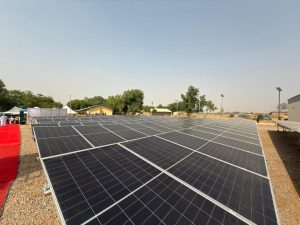
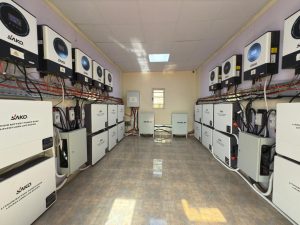
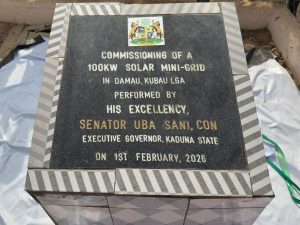
Also speaking, the Executive Director of Technical Services at the agency, Engr. Umar Abdullahi Umar, said the Damau mini grid aligns with the REA newly harmonized technical standards and specifications for off grid energy deployment.
He noted that integrating electricity with essential services like water supply would ensure that power access leads to real social impact, long term sustainability and room for future expansion.
By strengthening Nigeria’s rural electrification infrastructure, these projects ensure no community is left behind in the shift toward sustainable energy.
The Damau mini-grid has already delivered visible results, energizing residential buildings, commercial hubs, and essential public facilities.
A key feature of this social intervention is the integration of a solar-powered water system.
By electrifying a submersible borehole and storage facility, the project now delivers clean drinking water directly to the community.
This vital service has significantly improved local welfare, particularly for women and children who no longer face long-distance journeys for water.
The agency noted that the project reflects a shift in how rural electrification is being delivered.
Rather than focusing only on grid extension, the REA is increasingly deploying renewable energy solutions tied to productive and social infrastructure.
This approach, according to officials, allows the Federal Government to use its capital budget more efficiently while delivering energy systems that are economically viable and impactful.
By prioritizing consultations with local leaders and representatives, the REA ensured the Damau project was built on a foundation of mutual trust and accountability.
The agency maintains that this “community-first” approach is the secret to making rural energy projects last.
The impact is already clear – a steady rise in electricity consumption from homes and small businesses suggests that Damau is outgrowing its current 100 kWp system.
To meet this need, the REA has begun assessing ways to scale the facility, ensuring the community’s energy supply keeps pace with its economic development.
Author










Leave a comment