











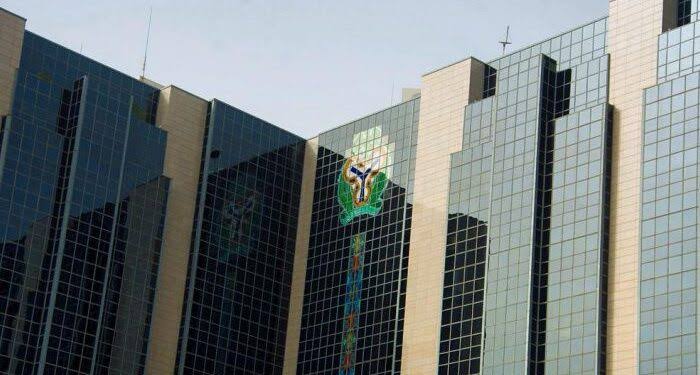



The Central Bank of Nigeria (CBN) has called on banks and financial institutions to take urgent action against emerging electronic fraud threats, emphasizing the need for industry-wide coordination to safeguard the country’s digital payments ecosystem.
The warning was given at the 2026 Nigeria Electronic Fraud Forum (NeFF) Technical Kick-Off Session in Lagos on Wednesday, where regulators, banks, and law enforcement agencies gathered to discuss strategies for mitigating electronic fraud.
Deputy Governor of Financial System Stability at CBN, Mr. Philip Ikeazor, highlighted the growing complexity of fraud patterns, citing threats such as social engineering, SIM-swap abuse, and Authorised Push Payment (APP) scams.
“Emerging threats such as social engineering, SIM-swap abuse, insider compromise and Authorised Push Payment (APP) scams require faster, integrated and proactive responses,” he said.
Ikeazor emphasized the industry’s commitment to reducing fraud response times to under 30 minutes and adopting enterprise-wide fraud management systems leveraging real-time analytics and shared intelligence.
Managing Director/CEO of NIBSS, Mr. Premier Oiwoh, reported a significant decline in electronic payment fraud losses in 2025, despite rising transaction volumes.
“The reduction in electronic payment fraud losses was recorded despite rising transaction volumes.
“We can only attribute this improvement to interventions by CBN, the Nigerian Financial Intelligence Unit (NFIU), security agencies and enhanced monitoring across the payments ecosystem,” Oiwoh said.
Oiwoh noted that internet banking and e-commerce platforms remain vulnerable to fraud, with social engineering and insider-assisted fraud emerging as dominant trends.
He stressed the need for stricter controls, stronger regulatory compliance, and deeper industry collaboration to sustain recent gains.
Persecondnews reports that Digital payment fraud in Nigeria fell to N25.85 billion in 2025, representing a 51 per cent decline from N52.26 billion the previous year, the Nigeria Inter-Bank Settlement System (NIBSS) has reported.
Data showed that fraud incidents fell from 123,918 in 2021 to 67,518 in 2025, with a small four per cent decline in the last year. Geographically, Lagos accounted for 63.43 per cent of fraud activity, reflecting its role as Nigeria’s commercial hub.
Abuja, the Federal Capital Territory (FCT), recorded 3.12 per cent, while Ogun, Rivers, and Delta States contributed between 2.09 per cent and 2.51 per cent of total fraud volume.
E-commerce and internet banking remain the channels most affected, followed by point-of-sale, mobile, and web platforms.
Oiwoh highlighted social engineering, particularly insider abuse, as the most prevalent fraud technique.
Author












Leave a comment