






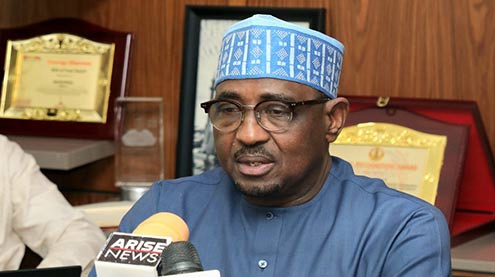


Engr. Farouk Ahmed, Chief Executive Officer of the Nigerian Midstream and Downstream Petroleum Regulatory Authority, NMDPRA, has rejected allegations linking his children’s education abroad to corruption, insisting the claims are exaggerated, misleading and driven by vested interests unsettled by tougher regulation.
In a statement dated December 16, 2025, Ahmed said he was responding not out of fear of scrutiny, but because the accusations were being pushed at a time and in a manner that suggested a coordinated attempt to distract the regulator from its work.
He anchored his defence on what he described as three decades of service in Nigeria’s petroleum sector, beginning in 1991 as a junior engineer in the Department of Petroleum Resources, DPR, and rising through the ranks, he said, through merit and competence rather than political patronage.
Ahmed listed his career path through technical and operational units, including crude oil marketing, gas supply monitoring and downstream operations, describing them as areas where decisions are driven by technical realities and market demands, not politics. He recalled serving as General Manager of the Crude Oil Marketing Division by 2012, and later assuming downstream responsibilities in 2015 amid fuel scarcity and pricing controversies.
He said his appointment as NMDPRA chief executive in 2021 came with a clear mandate to implement the reforms of the Petroleum Industry Act, PIA, transparently and without favour, while acknowledging that such reforms would inevitably provoke resistance from interests that benefited from what he called decades of opacity and preferential licensing.
On the specific allegation that he spent about five million dollars on Swiss secondary education for his children, Ahmed said the figure was being pushed as proof of illicit enrichment, but insisted it was built on innuendo rather than facts.
He stated that three of his four children received merit based scholarships of between 40 percent and 65 percent of tuition, adding that the details were verifiable to any authorised investigation. He also said his late father, whom he described as a Northern Nigerian businessman, established education trust funds for his grandchildren before his death in 2018, and that the family support was consistent with cultural traditions of collective investment in education.
Ahmed said his annual compensation as NMDPRA CEO, which he put at about ₦48 million inclusive of allowances, was publicly available in audited reports. He argued that when scholarships, family contributions, his long term savings, cooperative investments and legitimate family resources were properly accounted for, his children’s education did not require corruption or spending beyond his means.
He further said he had submitted asset declarations to the Code of Conduct Bureau yearly since entering public service, and that every income source, investment and significant expenditure was documented. He also publicly authorised the schools attended by his children to disclose financial records to authorised Nigerian government investigators.
Turning to the broader dispute in the sector, Ahmed suggested the timing of the allegations was linked to NMDPRA’s actions, including stricter licensing requirements, tougher quality enforcement that exposed substandard petroleum products, and moves to deepen transparency in pricing and supply reporting.
He rejected claims that NMDPRA’s import licensing approvals amounted to sabotage, insisting the regulator was acting within the Petroleum Industry Act, citing its obligation to ensure supply security and prevent scarcity when domestic supply is insufficient. He warned against a single source supply model, describing it as a vulnerability no responsible regulator should accept.
Ahmed said the agency had published monthly supply reports since 2021, established public data portals on licensing and pricing, submitted itself to audits by international firms, improved supply chain management, implemented depot to station tracking to curb diversion, and enforced quality standards uniformly.
He ended with a direct challenge to investigators, calling for a comprehensive review of his records. He publicly requested the Code of Conduct Bureau to review his asset declarations from 1991, asked the EFCC to examine his financial transactions and sources of income, and urged the National Assembly to exercise oversight regarding any allegations of regulatory compromise during his tenure.
Ahmed maintained that personal attacks and manufactured scandals would not intimidate him into abandoning statutory duties or granting preferential treatment to any entity, regardless of influence.
He concluded by insisting that his financial and professional records would withstand any legitimate inquiry, and that the reforms being pursued by NMDPRA were in Nigeria’s long term interest.








Leave a comment