









By Paul Ejime
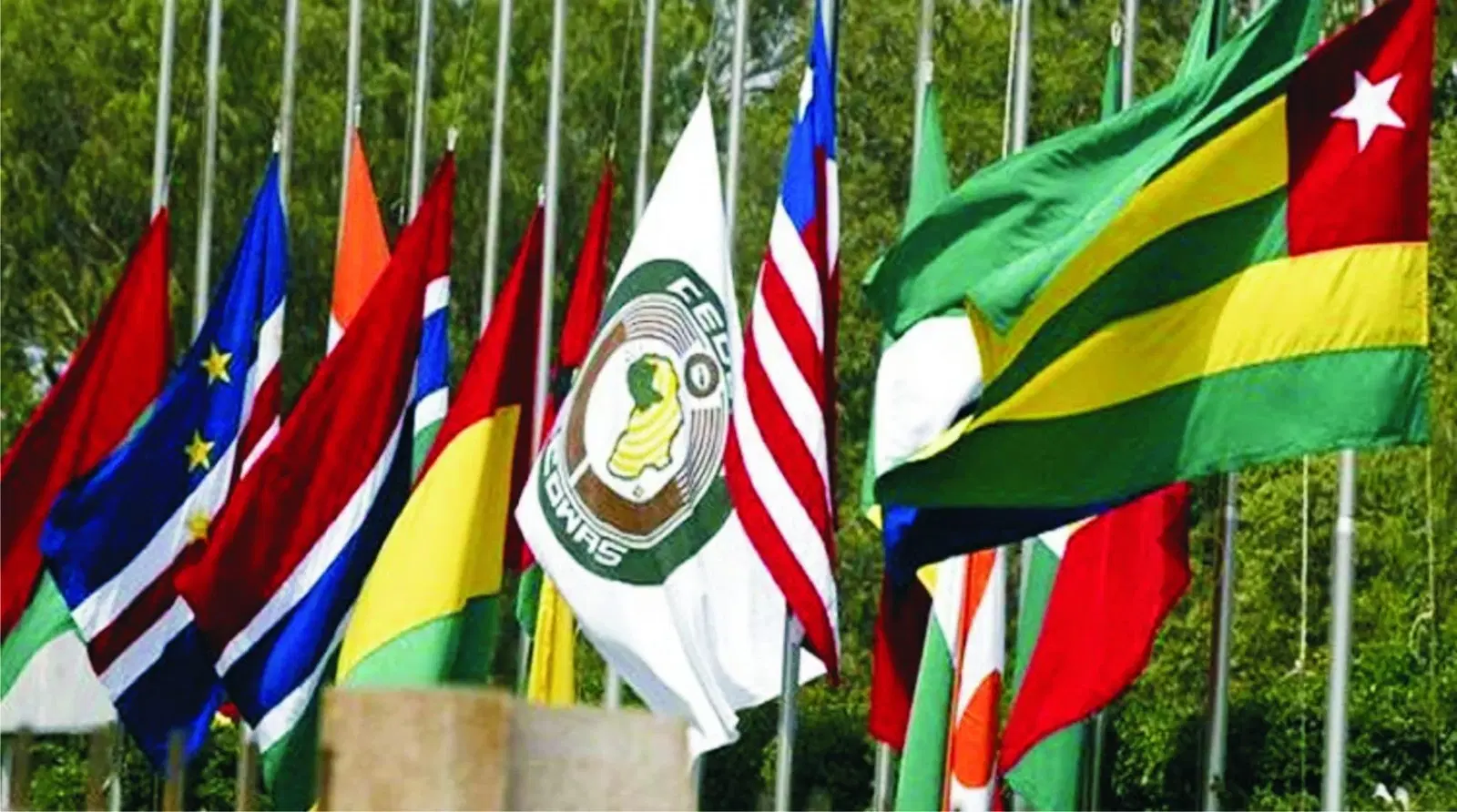
After suspending Guinea-Bissau due to the 26th November military coup, which many believe President Umaro Sissoco masterminded because the results of the 23rd November elections were not in his favour, West African citizens and indeed, the international community had expected consequential decisions by ECOWAS leaders against impunity and the brazen disruptions of constitutional order in the region.
Instead, the Communique from the Summit in Abuja, the Nigerian capital on 14th December is considered as an anti-climax, falling disappointingly and spectacularly short of expectation.
Rather than insist on the publication of the Guinea-Bissau election results, ECOWAS leaders surprisingly called for a nebulous “short transition programme led by an inclusive government.”
International observers, including from ECOWAS, the African Union and the Community of Portuguese-Speaking Countries (CPLP), had in their separate reports described the 23rd November parliamentary and presidential polls as “peaceful and orderly.”
The National Electoral Commission, CNE, was to announce the results on the 27th November before the “Embalo cinematographic coup” on 26th November.
Embalo announced the putsch himself and claimed he was under arrest, with the luxury of telephoning the foreign media. It later turned out that a number of the junta leaders, including Gen. Horta Inta-A, who has assumed the position of Transitional President and the new Prime Minister Ilídio Vieira Té, who was Embalo’s Campaign Director for the 23rd November elections, are his loyalists.
The junta has continued to consolidate its hold on power, announcing a 28-member cabinet and a 12-month transition programme, which the ECOWAS Authority has rejected.
Guinea-Bissau remains under political tension amid reports of arrests of opposition figures. Officials of civil society organisations said “a mega protest” they planned for Saturday, 12 December, could not take place because of “heavy deployment of security forces” on the streets.
One activist, who spoke on condition of anonymity, said ECOWAS leaders “have dashed the hope and aspiration of the people of Guinea-Bissau.”
“What is a short transition, when there is a winner of the presidential election?, the source asked.
Also, sources close to Fernando Dias da Costa, a front-runner in the presidential election, expressed disappointment with the Abuja summit decision.
Dias claimed he won the election. He is currently under Nigerian protection in Bissau, and in an open letter to the ECOWAS leaders, he urged them to insist on the release of the election results “so that the President elected by the people of Guinea-Bissau… can take office.”
The Communique of the Abuja summit, read by the ECOWAS Commission President Omar Touray, also demanded the “immediate release” of all detainees, including Domingos Simões Pereira, the leader of the African Party for the Independence of Guinea-Bissau and Cape Verde (PAIGC), and his deputy Octávio Lopes. After Pereira and the party were barred from participating in the November parliamentary and presidential elections, they urged their supporters to vote for Dias.
A soldier and former Prime Minister, Embalo has ruled Guinea-Bissau with an iron fist since 2020, after a disputed election. He unilaterally extended his second-tenure and reported four military coups against his regime, using the excuse of the first two in 2022 and 2023 to dissolve the parliament.
Embalo also claimed victory in the November presidential election before the army takeover. Following the coup, he was evacuated to Senegal, from where he reportedly moved to Congo-Brazzaville and later to Morocco.
The foreign media reported that one of his aides was arrested in Lisbon, Portugal, on Sunday with about five million euros on a private jet. Embalo’s wife was alleged to be on the plane, but was not arrested.
ECOWAS leaders also agreed to dispatch more delegations, one led by the Chair of Authority, Sierra Leone’s President Julius Maada, who had earlier visited the coup leaders, and another by the regional Committee of Chiefs of Defence Staff, to engage with the Bissau junta leaders.
President Bio and the Commission President Touray also met with the CNE officials, who, following their release from detention by the junta, claimed that the Commission could not conclude the electoral process because armed men who invaded the CNE’s secretariat carted away vital documents and equipment. However, IT experts and opposition leaders insist the election results are still retrievable.
Former Nigerian President Goodluck Jonathan, who led an observation mission of the West African Elders’ Forum to Guinea-Bissau during the November elections, and Senegalese Prime Minister Ousmane Sonko are among high-profile West Africans who dismissed the Bissau coup as a sham.
The circumstances might be different, but analysts expected ECOWAS to insist on the release of the election results in Guinea-Bissau, to re-enact the Gambian scenario of 2017. Then, with ECOWAS’ intervention, President Yahya Jammeh was escorted to exile in Equatorial Guinea after refusing to concede electoral defeat to current President Adama Barrow.
Incidentally, the Abuja summit warned Jammeh to desist from efforts to destabilise the Gambia, or face undisclosed consequences.
For Guinea-Bissau, allowing a transition programme, no matter how short, is tantamount to playing into the hands of Embalo, whose opponents have accused of staging the coup to buy time for a return to power, which will be a slap in the face of regional leaders.
By their latest Abuja decision, ECOWAS leaders might have set a dangerous precedent, which could embolden incumbent presidents about to lose an election to use the “Embalo playbook” by inviting the military to thrash the electoral process. This is at a time when ECOWAS is being dismembered, and facing existential threats, especially the resurgence of military coups, the latest attempt being in Benin, which Nigeria helped to foil.
Is the Abuja decision on Guinea-Bissau “in solidarity with a colleague or have ECOWAS leaders run out of imagination and progressive ideas?”
Five of the regional bloc’s 15 member States – Mali, Burkina Faso, Niger, Guinea and Guinea-Bissau – are now ruled by soldiers after military coups. The juntas in the first three countries have pulled them out of ECOWAS to form the Alliance of Sahel States, AES.
Restive Sahel and the ECOWAS region are bedevilled by political instability characterised by deadly attacks by terrorists and extremist insurgency groups such as Al-Qaeda, Islamic State West Africa Province (ISWAP) and Boko Haram.
The tenure of Gambia’s Touray-led ECOWAS Commission management ends in July 2026.
Another decision by the Abuja summit is the allocation of statutory positions at the Commission and Community institutions to member States.
Barring any unforeseen changes, Senegal will produce the next President of the Commission, Nigeria, the Vice-President, Cote d’Ivoire, the Internal Services Commissioner, Benin, the Commissioner for Economic Affairs (Liberia), Human Development and Social Affairs, Sierra Leone, Political Affairs, Peace and Security, and Ghana, Infrastructure.
Cabo Verde will produce the Auditor General, Togo, Director-General of the West African Health Organisation (WAHO), The Gambia, Director-General of the Intergovernmental Group Against Money Laundering and Terrorism Financing (GIABA).
The Council of Ministers will interview candidates for the roles, while the Chief Justices of the ECOWAS Community Court will come from Benin, Togo, The Gambia, Nigeria and Liberia.
The summit also agreed that ECOWAS should support Ghana’s candidacy for the Chairmanship of the African Union in 2027.
Apart from the civil wars in Liberia and Sierra Leone, Guinea-Bissau is a country where ECOWAS has invested so much resources and the latest decision puts the regional bloc’s relevance and legitimacy on the line.
*Paul Ejime is a Media/Communications Specialist and Global Affairs Analyst
Author



Leave a comment