






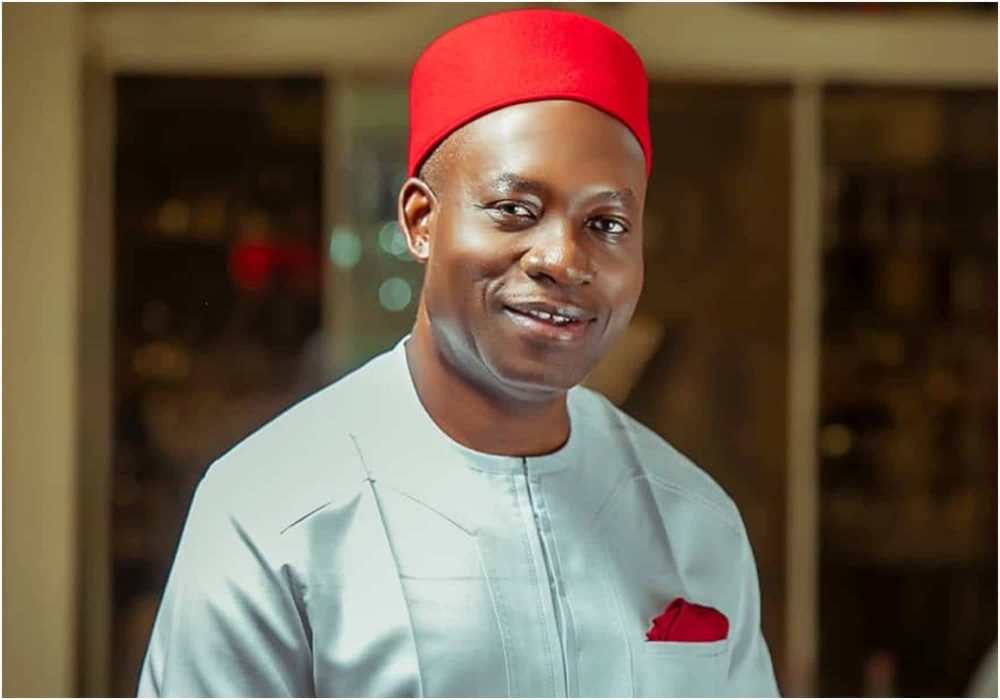


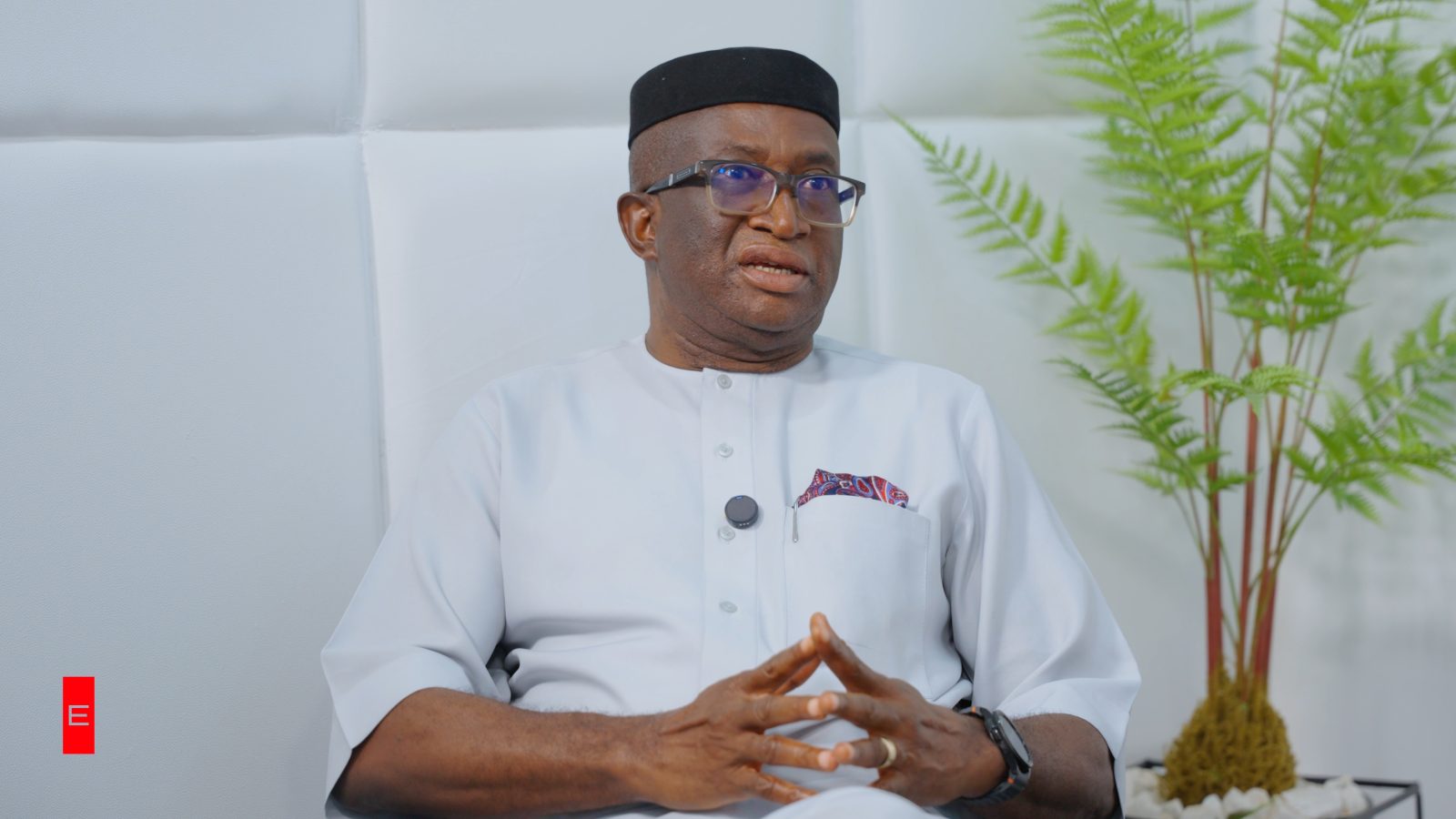



Senator Victor Ndoma-Egba has provided a damning insider’s account of the institutional decay plaguing key Nigerian agencies, revealing that a staggering 62-step bureaucratic process was required to pay a single contractor during his tenure as Chairman of the Niger Delta Development Commission (NDDC). In a revealing interview on The Exchange Podcast, hosted by Femi Soneye, he described how such inefficiency directly breeds corruption, calling it an “opportunistic situation.”
The former Senate Leader lamented that the NDDC, a “well conceived” intervention, has been rendered ineffective by the abandonment of its foundational master plan and constant political interference. He revealed that his own board was dissolved via a news ticker, without any formal communication, highlighting the instability that hinders proper planning.
Ndoma-Egba’s critique extended to the National Assembly, an institution he argued is still suffering from the legacy of prolonged military rule. He recalled the public’s perception of the legislature as an unnecessary “irritant,” a sentiment exacerbated by incidents like the “furniture allowance saga,” which he claimed was widely misunderstood by the public.
Comparing past and present governance, he noted that in 1984, he was appointed a commissioner overseeing a portfolio that would today constitute over twelve ministries. While acknowledging the need to manage the cost of governance, he argued that an excessive cut often sacrifices efficiency at the altar of frugality.
He identified a “cultural” problem as the core of Nigeria’s institutional weakness, citing a societal timidity in holding leaders accountable and an unhealthy deference to authority. This cultural shift, he argued, is reflected in the stark contrast between the modest lifestyles of first-generation leaders and the material acquisitions of modern public officers.
Now serving as Pro-Chancellor of the Federal University Oye-Ekiti (FUOYE), Ndoma-Egba faces a different challenge: managing “supersonic speed” growth. He revealed the 14-year-old institution now has 60,000 students and is the fourth most sought-after university in Nigeria, a success he attributes to a stable academic calendar and strong community relations.
On Nigeria’s youth bulge, Ndoma-Egba stated it is only an asset if coupled with education, skills, and opportunity. “If they are not educated, if they are not skilled, if they are not empowered, they become a curse,” he warned, emphasizing the need for deliberate youth empowerment policies.
His vision for the future is a “secure and prosperous Nigeria,” a goal he believes is achievable by learning from the past. He nostalgically recalled a more industrious era with functional factories across the north, a far cry from the current economic landscape.
Despite the challenges, his personal journey—from a 24-year-old board member to Senate Leader—stands as a testament to the opportunities that can exist for the youth, provided the right environment is created by a purposeful state.
Born four years before independence to a politically active mother who was a local government chairman, Ndoma-Egba was literally born into Nigeria’s story. He recounted witnessing the excitement of independence and the subsequent economic promise, followed by the turmoil of civil war and military rule, all within a single lifetime—a compressed history that in other climes would span generations.
He shared a humorous yet revealing personal habit, stating that he eats pounded yam every single day of his life when he is in Nigeria. This personal quirk offered a glimpse of the man behind the public figure, who also comes from a family where he “took law from my father and politics from my mother,” a father known more for his passion for hunting, which made their house “smell like the mortuary.”
Ndoma-Egba’s public service began extraordinarily early. He was appointed to a federal board at 24 and, at 26, became a state commissioner, a role he acquired only after the governor made him lie about being 27. He recalled walking into his first meeting and being mistaken for an aide, a moment that defined his challenging yet groundbreaking early career.
When asked about the Nigeria he desires for his grandchildren, his answer was succinct and heartfelt: a “secure and prosperous Nigeria.” He painted a vivid picture of a past that embodied this vision, where night travel was safe and thriving industries like the textile factories of Kano provided economic vitality.
He attributed the nation’s current challenges to a decay in political culture, where the modest ethos of leaders like Tafawa Balewa has been replaced by a relentless pursuit of material acquisition. For him, this shift in the “environment” is at the heart of governance problems.
Author



Leave a comment