












The Federal Government and the Academic Staff Union of Universities (ASUU) are scheduled to meet today, Thursday, August 28, in Abuja.
The government plans to present a counteroffer to the lecturers to resolve the ongoing disagreement regarding the 2009 agreement.
Informed sources said the Minister of Education, Dr. Maruf Tunji Alausa, will be part of a ministerial team.
This delegation also includes the Minister of Labour, representatives from the National Salaries, Incomes and Wages Commission (NSIWC), and the Solicitor-General, and they will meet with ASUU leaders in Abuja.
The meeting’s purpose is to determine how to fully implement the renegotiated FGN-ASUU 2009 agreement and other reports from the most recent round of negotiations.
Officials stated that the meeting will focus on establishing a clear timeline for the agreement’s signing and its phased implementation.
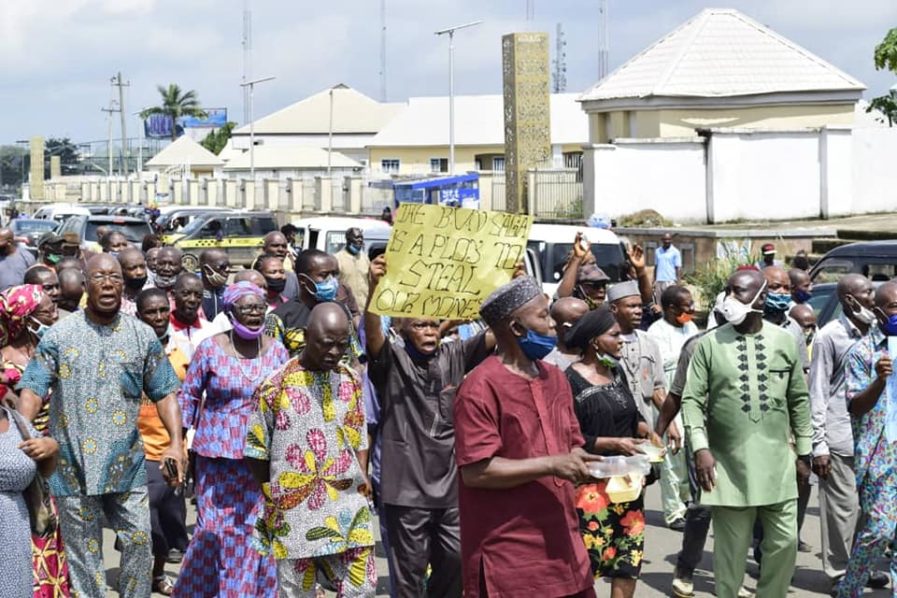
ASUU’s move is fueled by the growing impatience of its members across the country.
A renegotiation process was completed in December 2024, with the final draft submitted to the government in February 2025.
Union leaders are now adamant that the agreement must be signed and implemented to prevent another national strike that would shut down public universities.
Persecondnews recalls that at a media briefing in Abuja, Prof. Al-Amin Abdullahi, the Zonal Coordinator of ASUU’s Abuja Zone, had said the union had kept its part of the bargain and expected the government to demonstrate seriousness by adopting the report without delay.
The 2009 agreement remains the touchstone of the dispute, signed under the late President Umaru Musa Yar’Adua, which promised comprehensive reforms to Nigeria’s public universities, including sustained revitalisation funding, institutional autonomy, a negotiated salary and conditions package for academics, and a monitoring framework for implementation.
Its partial or non-implementation across successive administrations has led to recurring strikes.
Analysts estimate that since 1999, cumulative industrial action by ASUU and other unions has cost the system the equivalent of nearly five years of lost academic time, a disruption that has eroded confidence in the country’s higher education sector.
But stakeholders and government insiders argue that what differentiates the current process is the approach of Education Minister, Tunji Alausa, who has combined immediate remedial action with longer-term structural reforms.
Persecondnews recalls that the Tinubu administration earlier this year released N50 billion to settle the Earned Academic Allowances (EAA) owed to university lecturers and staff, a debt that had lingered for nearly two decades and repeatedly sparked strike actions.
The move, credited directly to Alausa’s intervention, was received across campuses as a restoration of trust and a demonstration that government could finally match promises with delivery.
Beyond arrears, Alausa has also launched the Diaspora BRIDGE Initiative, a digital platform designed to connect Nigerian professionals abroad with universities at home through mentorship, guest lectures, research collaboration, and curriculum support.
Policy voices, including Dr. Dakuku Peterside and Prof. Yemi Oke, have praised the platform as a deliberate and credible way to convert brain drain into brain circulation.
Today’s meeting faces several immediate challenges.
According to sources within the education and labor ministries, the main goal is to reconcile the Yayale Ahmed draft (completed in December 2024) with the original 2009 text and subsequent reports, including the Nimi Briggs recommendations.
The meeting will also focus on outlining a phased financial plan that aligns with the national budget and creating a legally binding document for signing.
Author







Leave a comment