









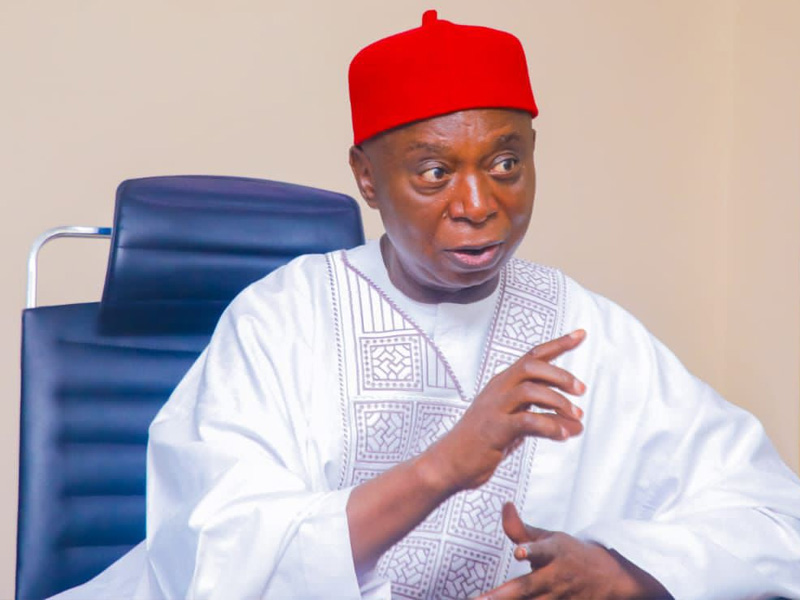



As national discussions continue regarding the future of Nigeria’s 1999 Constitution, Sen. Ned Nwoko, representing Delta North Senatorial District, has rejected the idea of discarding it in favor of drafting a new one.
He insists that the current document remains functional.
Speaking on Channels Television’s Sunrise Daily on Friday, July 18, 2025, Nwoko described the existing constitution as a “working document” that continues to guide governance in the country.
“Personally, I do not subscribe to the idea that we should throw away the current constitution and create an entirely new one. It is a workable document, and it has been guiding what we are doing in Nigeria so far,” he said.
The lawmaker maintained that while the constitution is not perfect, it can be improved through targeted amendments rather than a complete overhaul.
He said: “There cannot be any perfect constitution anywhere in the world. All you can do is propose amendments and hope that those amendments go through so that whatever the wishes of the people are can be reflected.”
Nwoko’s remarks come amid renewed calls from civil society groups, elder statesmen and political leaders advocating a new constitution as a means of addressing structural and governance challenges in the country.
Persecondnews recalls that former President Olusegun Obasanjo, ex-Commonwealth Secretary-General Chief Emeka Anyaoku, human rights lawyer Femi Falana, and former Akwa Ibom State Governor Victor Attah clashed on Wednesday over the relevance of Nigeria’s 1999 Constitution at the national summit on the Future of Nigeria’s Constitutional Democracy in Abuja.
While Obasanjo and Falana placed the blame for Nigeria’s democratic failings on corrupt and self-serving leadership, Anyaoku and Attah argued that the 1999 Constitution – imposed by the military – lacks legitimacy and must be replaced.
Persecondnews recalls that the 1999 Constitution, which is the supreme law of the land, was drafted to facilitate a transition from military to civilian rule.
The Constitution, which was promulgated on May 5, 1999 by Gen. Abdulsalami Abubakar’s military government, came into effect on May 29, 1999, marking the beginning of Nigeria’s Fourth Republic.
It establishes Nigeria as a federal republic with a presidential system, guarantees fundamental human rights, and divides power among the executive, legislative and judicial arms of government.
The Constitution has undergone several amendments since its adoption.
Despite its limitations, it provides the framework for governance and the rule of law in the country.
Author










Leave a comment