










By Joycelyn Ellakeche Adah
The Presidential Compressed Natural Gas Initiative (PCNGI) has refuted recent “alarmist” media reports questioning the viability of Nigeria’s Compressed Natural Gas (CNG) sector.
The PCNGI asserts that these reports do not reflect the significant progress made within the initiative’s first year of operation.
Engr. Michael Oluwagbemi, the Programme Director/Chief Executive of PCNGI, said the sector, which was “virtually non-existent” a year ago, is now thriving.
He attributed this rapid development to the vision of President Bola Ahmed Tinubu and the swift implementation efforts of the PCNGI team.
He said the narrative being pushed by skeptics, including certain media outlets, fails to account for the remarkable growth that has taken place since the initiative’s formal rollout in May 2024.
At the time, the national CNG footprint was limited to a mere 4,000 vehicles and 11 underutilized stations, remnants of a stalled pilot launched by NNPC in 2017.
Fast forward twelve months, and the picture has changed dramatically.
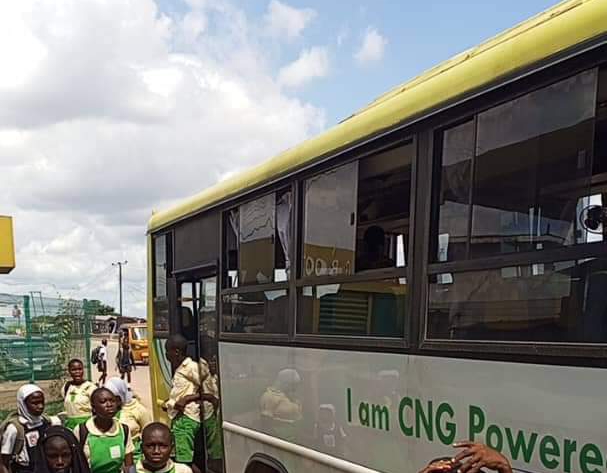
The number of CNG vehicles has surged past 50,000 and is projected to double to 100,000 in the coming months.
While this sudden rise has led to congestion at existing stations, the PCNGI sees it as a positive indicator of demand, not failure.
Oluwagbemi pointed to the influx of private and public sector investments as proof that the market is responding.
Last week, two sister stations were commissioned in Abuja, with local energy companies AY Shafa and Femadec leading the charge.
Both firms have committed to building a combined 30 more stations over the next year, while Femadec is also rolling out CNG infrastructure across 20 university campuses—a move the PCNGI describes as a “dual dividend” of innovation and inclusion.
In Yola, Greenville Oil & Gas is spearheading the deployment of 51 new stations in the North and Southeast, including difficult-to-access rural areas.
The trend is mirrored nationwide, with over 175 CNG stations currently in development. Several cities, including Port Harcourt, Ado Ekiti, Lokoja, Abuja, Aba, and Enugu, are set to have fully operational stations within the next two to four months.
One of these sites has already gone live in Ilorin, signaling a successful launch of the CNG refueling initiative envisioned last year.
Additional expansions are underway as the Nigerian National Petroleum Company Limited (NNPCL) is adding eight more CNG stations to its current network of twelve, with a further forty expected in the second phase of its national rollout.
Bovas Energy is preparing to launch two ultra-modern facilities in Ibadan, while NIPCO Plc is working to complete eight more stations to add to its already operational 23 across the country.
The momentum is not limited to station development as the Midstream and Downstream Gas Infrastructure Fund (MDGIF) recently announced equity investments for 10 new entrants into the CNG space.
Three of those investments are dedicated to station development, while earlier funding rounds—totaling ₦123 billion—have already supported the sub-sector.
In just one year, the CNG ecosystem has attracted over $500 million in investment, created more than 10,000 direct jobs, and established 255 vehicle conversion centers that did not exist prior to 2024, a statement said.
Despite these gains, the PCNGI acknowledged that building a nationwide fueling and service infrastructure is a long-term project.
“It took over seventy years for Nigeria to become dependent on petrol and diesel,” said Oluwagbemi.
“We cannot expect to reverse that in seven months. This is an engineering transformation, not a magic trick.”
He expressed concern over media narratives that threaten to undermine public trust in the transition.
A recent article by Vanguard Newspaper, he said, was particularly concerning: “Vanguard chose to ignore the facts and focused on panic. That does a disservice to the thousands of Nigerians whose lives have already been changed by this programme.”
Addressing speculation that some bi-fuel vehicle users may revert to petrol-only due to perceived lack of access, the PCNGI chief dismissed the claim as unfounded.
He emphasized that even partial access to CNG stations can reduce travel costs by up to 90 percent, making the switch economically irresistible.
Oluwagbemi reaffirmed the initiative’s commitment to President Tinubu’s vision of affordable, sustainable transportation.
“We are on course. Rome was not built in a day, and Nigeria’s clean energy transition will take time—but the progress is undeniable,” Persecondnews quotes him as saying.
Author






Leave a comment