









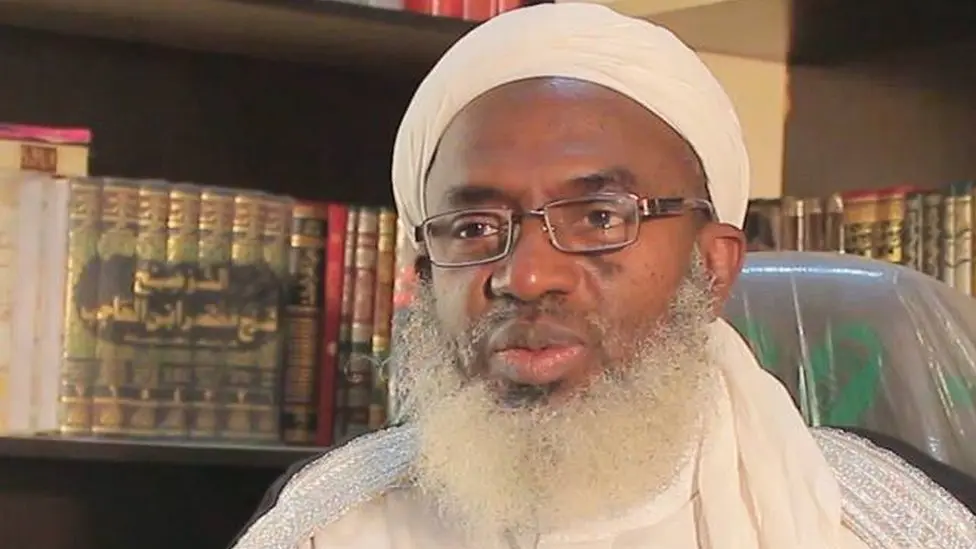



Sheikh Ahmad Gumi, a prominent Nigerian Islamic scholar, was recently deported from Saudi Arabia after being denied entry into Medina. This action prevents him from participating in the 2025 Hajj pilgrimage.
The Kaduna-based cleric, known for his controversial opinions on various national and international matters, confirmed his deportation in a statement on his official Facebook page on Monday.
“Due to some reasons related to my views on world politics, the authorities in Saudi Arabia do not want me to be present at Hajj even though they have granted me a visa,” Gumi wrote.
The cleric, who was part of a delegation of religious scholars sponsored by the National Hajj Commission of Nigeria (NAHCON), arrived at Prince Mohammad Bin Abdulaziz International Airport in Medina on Saturday night via Umza Air.
However, upon arrival, Saudi immigration officials reportedly stopped him at the airport and denied him entry into the city, before placing him on a return flight to Nigeria.
Gumi, in a statement on his page, said that the Nigerian authorities have shown concern and have promised to engage Saudi officials to seek clarification and resolution.
“I am grateful to the authorities in Nigeria who have pledged to engage with the Saudi authorities on this matter,” he said.
A NAHCON source, who preferred to remain anonymous, verified the incident, stating that the Commission was taken aback by Saudi Arabia’s decision.
This surprise stemmed from the fact that all delegation members, including Sheikh Gumi, possessed valid visas and met the standard requirements for Hajj participation.
While Saudi Arabia has not offered an official explanation for the deportation, observers speculate it might be linked to Sheikh Gumi’s outspoken political and religious views, which could diverge from the kingdom’s policies.
In recent years, Gumi has been a key figure in dialogue initiatives with armed groups in northern Nigeria and has frequently criticized Western and Middle Eastern political interventions.
This incident has ignited considerable discussion within religious communities and the broader public, prompting questions about the implications of political ideology on religious observance.
Author





Leave a comment