











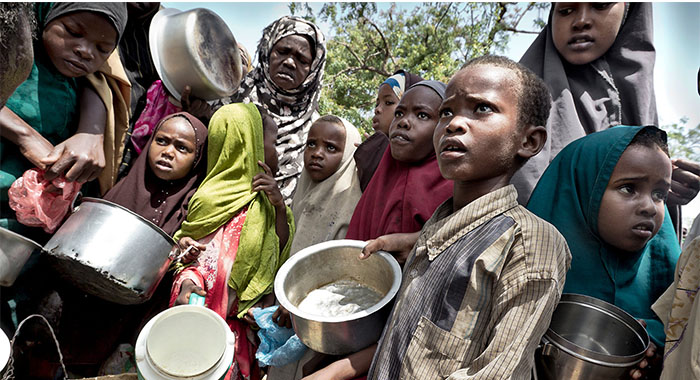




The United Nations (UN) in partnership with the Oxford Poverty and Human Development Initiative, in its latest report on the global multidimensional poverty index, has disclosed that about 1.1 billion people in the world are living in acute multidimensional poverty despite efforts at poverty reduction.
The report also revealed that 534 million people in Sub-Saharan Africa are living in acute poverty, while Asia has 389 million people.
The UN report which analyzed data from 81 countries, noted that 25 countries reduced their Multidimensional Poverty Index (MPI) by half in just 15 years.
“The findings provided the researchers with hope that SDG 1- zero poverty is possible to be achieved by 2030. Some of the countries are India, China, Cambodia, Morocco, Vietnam, Congo, Honduras, Indonesia, and Serbia.
“India proved a remarkable case as it lifted 415 million people from poverty between 2005 and 2021. In China, around 69 million people exited poverty in 4yrs (2010-2014) while Indonesia saw its MPI reduce by 8 million in 5 years. On average, countries were able to reduce their poverty levels by half in 12 years,” the report added.
However, the report noted that the absence of data after the Covid-19 pandemic restricted their understanding of the effects of the pandemic on poverty levels in the 110 countries where data was collated from.
The Director of the Human Development Report Office, Pedro Conceição, noted that the impact of the covid-19 pandemic on education derailed the progress countries have made in reducing Multidimensional poverty.
“As we reach the midpoint of the 2030 Agenda for Sustainable Development, we can see that there was steady progress in multidimensional poverty reduction before the pandemic.
“However, the negative impacts of the pandemic in dimensions such as education are significant and can have long-lasting consequences.
“We must intensify efforts to comprehend the dimensions most negatively affected, necessitating strengthened data collection and policy efforts to get poverty reduction back on track,” he stated.
Furthermore, the report also disclosed that data collected from Nigeria, Cambodia, Peru, and Mexico in 2021 and 2022 revealed that despite the pandemic, MPIs were reduced.
Persecondnews reports that a 2023 data from the World Poverty Clock, pegged the number of extremely poor Nigerians at 71 million.
Also, the National Bureau of Statistics (NBS), had in its 2022 Multidimensional Poverty Index survey stated that 63 percent of persons living in Nigeria; 133 million people, are multi-dimensionally poor.
The World Bank, in its Macro Poverty Outlook for Nigeria in April 2023, also stated that about 13 million Nigerians would fall below the national poverty line by 2025.
Author












Leave a comment