










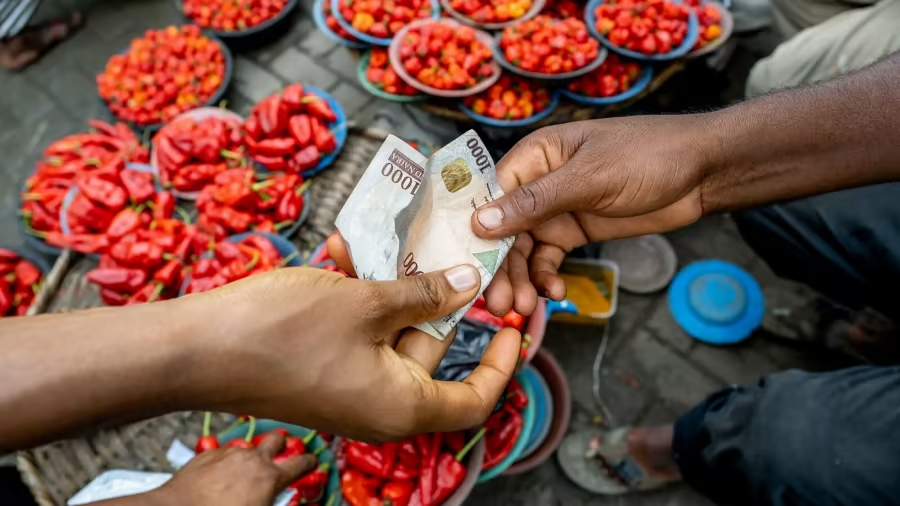




Nigeria’s headline inflation rate has eased to 16.05% in October 2025, marking the seventh consecutive monthly decline, according to the National Bureau of Statistics (NBS).
This represents a significant slowdown from the 33.88% recorded in October 2024.
“The headline inflation rate (year-on-year basis) decreased in October 2025 compared to the same month in the preceding year (i.e., October 2024), though with a different base year, November 2009 = 100,” the NBS stated in its consumer price index (CPI) report.
On a month-on-month basis, inflation rose to 0.93%, up from 0.72% in September 2025, indicating a slight increase in price growth.
Food inflation also saw a notable decline, dropping to 13.12% year-on-year, 26.04% lower than October 2024’s 39.16%.
However, month-on-month food inflation was -0.37%, reflecting a 1.21% increase from September’s -1.57%.
The NBS attributed this to rising prices of onions, fruits, shrimp, and meat.
States with the highest year-on-year food inflation were Ogun (20.85%), Nasarawa (19.96%), and Ekiti (19.70%), while Akwa Ibom (3.98%), Katsina (4.15%), and Yobe (4.29%) recorded the slowest increases. Month-on-month, Bauchi (6.77%), Abuja (5.11%), and Niger (4.84%) saw notable food price hikes.
The Central Bank of Nigeria (CBN) had reduced interest rates to 27% in September, the first cut in five years, following sustained inflation declines.
The NBS report suggests a gradual cooling of price pressures, offering some relief to households and businesses.
The average annual food inflation rate for October 2025 was 21.96%, 16.16% lower than the previous year.
Author











Leave a comment