










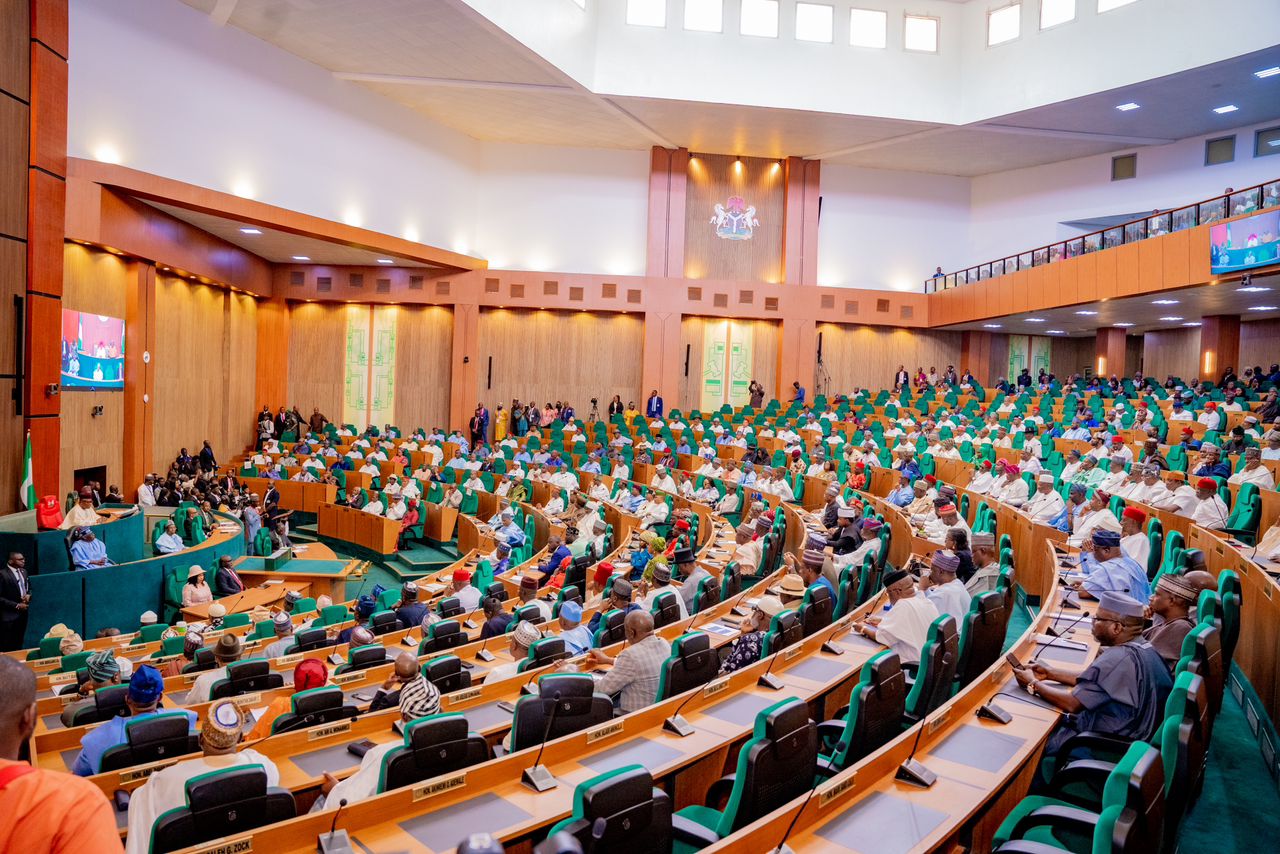




The National Assembly has begun deliberating on major constitutional amendments that could lead to the creation of 55 new states and 278 additional local government areas.
This was disclosed by Ismail Mudashir, Special Adviser to Deputy Senate President Sen. Barau Jibrin, in an Abuja statement on Friday, October 24.
Speaking at a joint retreat in Lagos, Senator Barau—who chairs the Senate Constitution Review Committee—reaffirmed the legislature’s commitment to delivering timely, “people-centered” amendments.
He also urged lawmakers to ensure the first set of amendments are transmitted to state Houses of Assembly before the end of the year.
“It has been a long journey to bring the Senate and the House of Representatives’ Constitution Amendment proposals that cut across several sections and deal with different subject matters,” he said.
“We have been in this process for the past two years, engaging our constituents, critical stakeholders, institutions, civil society organisations and interest groups in town hall meetings, interactive sessions and public hearings, harvesting and synthesizing views and perspectives which has ultimately culminated to what we have here today — 69 bills, 55 state creation requests, two boundary adjustments and 278 local government creation requests.”
Barau said members are expected to resolve these issues and make recommendations to both chambers, expressing optimism that progress could be achieved within the two-day session.
“It is not going to be a simple task to achieve within two days, but I believe we can do it, especially as we have promised Nigerians that we will deliver the first set of amendments to the State Houses of Assembly before the end of this year,” he added.
While stressing the need for patriotism and unity in the review exercise, Barau, who also serves as the First Deputy Speaker of the ECOWAS Parliament, urged participants to avoid divisive tendencies.
“We are seated here as one committee. There should be no ‘we’ and ‘them’; we should be guided by the interests of Nigerians.
“I wish all of us a very fruitful deliberation and hope for recommendations that will meet the approval threshold of the provisions of Section 9 of the Constitution,” he said.
Persecondnews reports that efforts to amend Nigeria’s 1999 Constitution have historically faced significant hurdles, largely due to the complex process involved and the requirement for concurrence from at least two-thirds of the 36 state Houses of Assembly.
Several previous amendment attempts have stalled over political disagreements, regional interests, and issues of resource control, state creation, and devolution of powers.
The last major constitution amendment effort, initiated by the Ninth National Assembly, succeeded in passing some key bills—such as those on financial autonomy for state legislatures and the judiciary—but many others, including those on state police and local government autonomy, failed to scale through due to lack of consensus.
Political observers say that while the current review exercise signals renewed political will, the multiplicity of proposals, particularly on the creation of new states and local governments, could again test the unity of the federation and the ability of lawmakers to balance national aspirations with practical governance realities.
Author












Leave a comment