











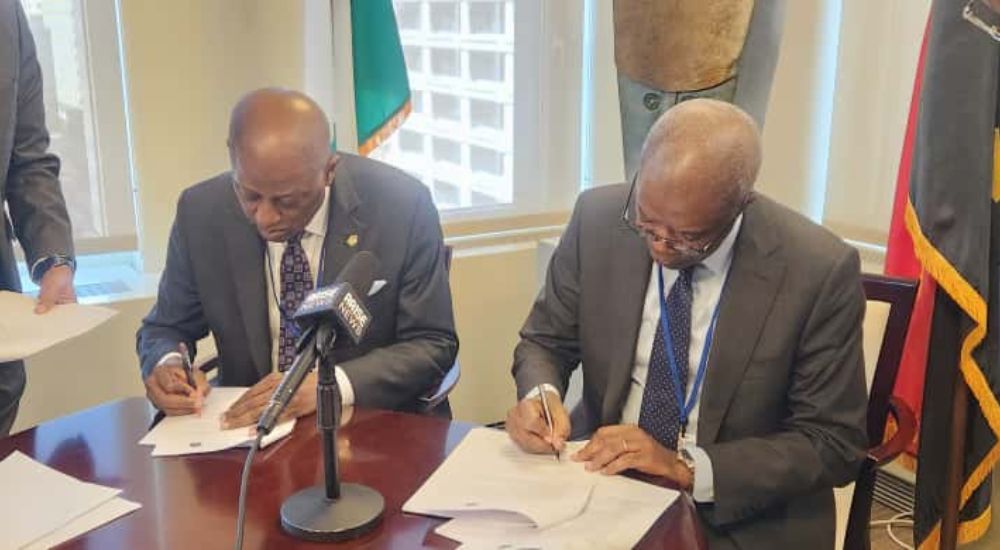




In a bid to enhance bilateral cooperation and knowledge sharing, the Central Bank of Nigeria (CBN) and the Bank of Angola have signed a Memorandum of Understanding (MoU).
This agreement, signed on the sidelines of the IMF and World Bank Annual Meetings in Washington DC in the US, marks a significant milestone in strengthening inter-African cooperation in central banking.
“This forum brings together a multiplicity of stakeholders and interests from across the globe, and what we’ve done today highlights the spirit of cooperation that defines these annual meetings,” said CBN Governor Olayemi Cardoso.
“The agreement provides us an opportunity to build a more interconnected and resilient African financial system capable of withstanding external shocks,” the CBN statement released on Friday added.
The MoU establishes a structured framework for both central banks to exchange technical expertise, regulatory information, and supervisory best practices.
Key areas of cooperation include foreign reserve management, currency operations, monetary policy coordination, payment systems, and cybersecurity.
The pact also covers anti-money laundering and counter-terrorism financing, staff training, and the development of financial statistics and research capacity.
CBN Deputy Governor Mohammed Abdullahi emphasized that the cooperation will strengthen their collective ability to manage systemic risks, enhance transparency, and promote financial stability in their respective countries.
The framework will also support oversight of cross-border financial institutions, a growing priority as African economies become more interconnected.
The Governor of the Bank of Angola, Manuel Antonio Tiago Dias, welcomed the collaboration, describing it as a “strategic partnership that will help both nations deepen financial integration and institutional reform.”
He noted that the MoU aligns with ongoing efforts by African central banks to strengthen intra-continental collaboration.
This agreement underscores Nigeria’s renewed diplomatic and economic outreach within Africa, prioritizing financial sector reforms, regional partnerships, and macroeconomic stability.
It also reflects a broader push for regional financial stability across Africa, as economies step up coordination on monetary policy, digital payments, and anti-money laundering frameworks.
Author







Leave a comment