











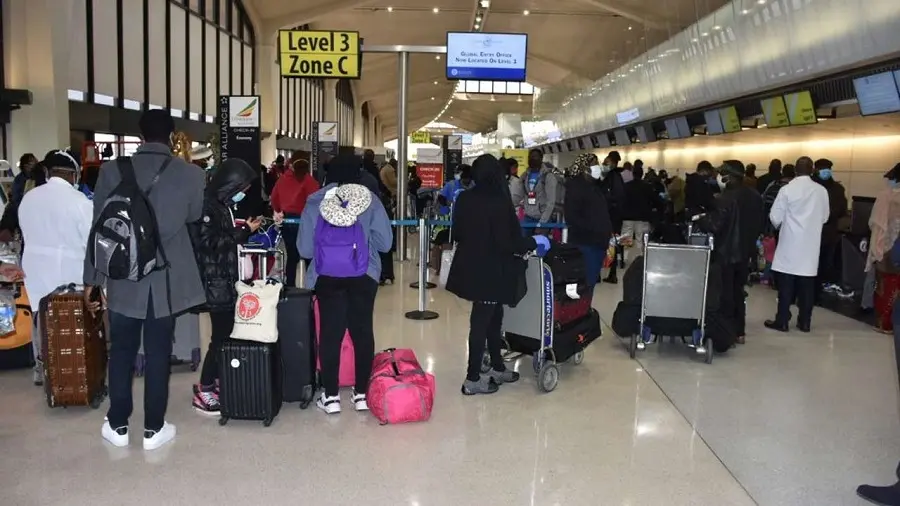




Over the past two years, 897 Nigerians were granted asylum in the United States, as indicated by the latest case-completion figures from the Executive Office for Immigration Review (EOIR).
The data reveals that in 2023, U.S. judges granted asylum to 514 Nigerians, while 383 were granted asylum in 2024, marking a 25% decrease between the two years.
During this period, 501 Nigerian asylum seekers were denied, with 265 rejections in 2024 and 236 in 2023.
The EOIR publishes this annual report through the U.S. Department of Justice’s “Asylum Decisions by Nationality” portal, which includes data on every country that has registered asylum cases.
In 2024, the number of Nigerians seeking asylum was the third highest among African nations, following 527 Cameroonians and 291 Ethiopians.
Other African countries with notable numbers included Ghana (238), Egypt (203), Eritrea (193), Uganda (86), Senegal (99), and Sudan (42).
However, African nationals still represent a relatively small portion of the overall asylum applications in the U.S., which continue to be dominated by applicants from Latin America and Eurasia.
On a global scale, Russia recorded the highest number of asylum grants in 2024, with 3,605 approvals, a sharp increase attributed to draft evasion and dissidence related to the Ukraine conflict.
China followed with 2,998 grants, as more dissidents fled the communist regime, while Venezuela and Nicaragua recorded 2,656 and 2,000 grants, respectively.
U.S. immigration judges also granted asylum to large numbers from Central America: 1,684 Salvadorans, 1,624 Hondurans, 1,592 Guatemalans, 1,007 Cubans, and 751 Mexicans.
On the denial side, Mexico had the highest number of rejections with 3,910, followed by China (903), El Salvador (2,880), Ecuador (2,774), and Peru (2,424).
Asylum applications in the U.S. are governed by Section 208 of the Immigration and Nationality Act
Individuals in the U.S. can apply for asylum if they can prove a well-founded fear of persecution based on race, religion, nationality, political opinion, or membership in a particular social group.
However, factors like criminal convictions, missed filing deadlines, and the issue of “firm resettlement” can jeopardize asylum claims.
The asylum process operates through two tracks: “affirmative” cases, which are submitted to U.S. Citizenship and Immigration Services (USCIS), and “defensive” claims, which are made when individuals are already in removal proceedings.
Affirmative cases that are denied are rerouted to the EOIR’s immigration courts, where government attorneys can oppose release.
Author












Leave a comment