










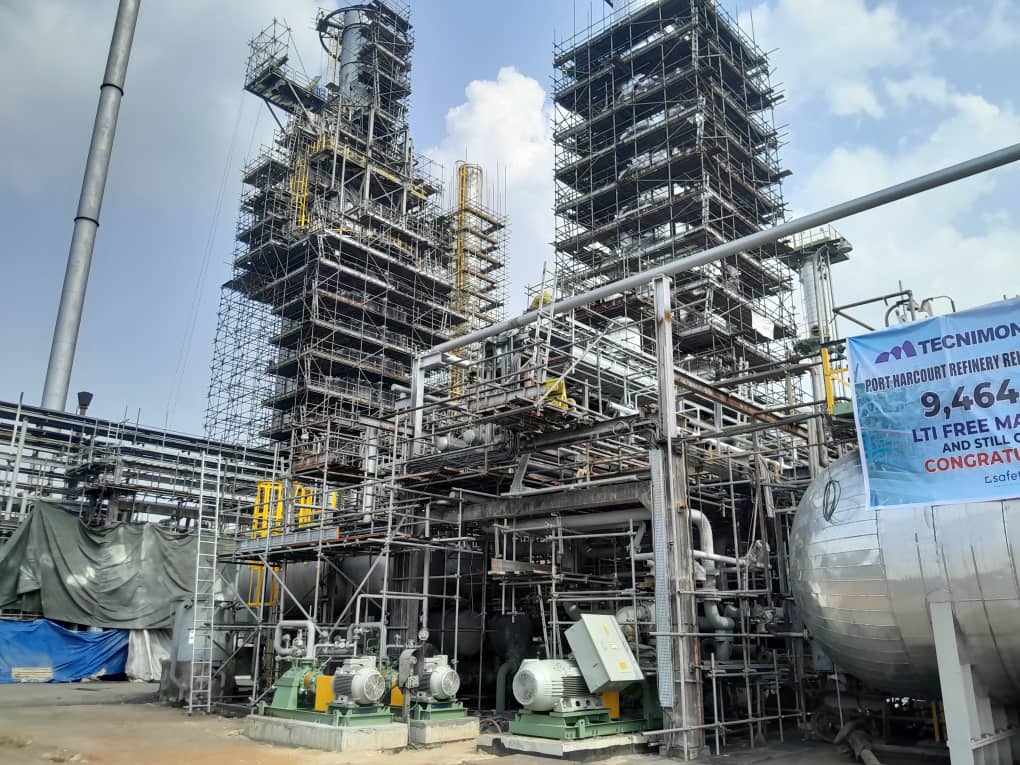




The Nigerian National Petroleum Company Limited (NNPC Ltd.) says it will engage reputable and credible operations and maintenance companies to operate and maintain the Warri Refining and Petrochemical Company and the Kaduna Refining and Petrochemical Company, which are due to be handed over soon.
Persecondnews reports that the initiative aims to strengthen the nation’s petrol supply and enhance energy security.
The announcement was made through a statement on the NNPC Ltd. official X account on Thursday: The NNPC Ltd. is seeking reputable and credible Operations & Maintenance (O&M) companies to oversee the Warri Refining and Petrochemical Company (WRPC) and the Kaduna Refining and Petrochemical Company (KRPC).
“The goal is to ensure reliable and sustainable operations to meet the nation’s fuel supply and energy security obligations.
“The tender process for selecting these companies will be a three-stage process: Expression of Interest (EOI), Technical Evaluation, and Commercial Evaluation.”
The circular highlights that the process will focus on maximizing cost-saving opportunities in consumable procurement, personnel management, and the use of advanced systems like Computerized Maintenance Management Software (CMMS) and Warehousing Management System (WMS).
Inaugurated in 1978, the Warri Refinery in Warri, Delta State, is a complex conversion refinery with a nameplate distillation capacity of 6,250,000 metric tonnes per annum (MTA), or 125,000 barrels per day (bpd).
The refinery complex includes a petrochemical plant commissioned in 1988, with production capacities of 13,000 MTA of polypropylene and 18,000 MTA of carbon black.
The Warri refinery is strategically positioned to supply petroleum products to the southern and southwestern regions of Nigeria.
On the other hand, the Kaduna Refinery was commissioned in 1980 to cater to the petroleum needs of Northern Nigeria, with an initial capacity of 50,000 bpd.
By adding a second 50,000 bpd crude train specifically for the production of lubricating oils, the capacity increased to 100,000 bpd in 1983.
Further expansions in 1986 increased the capacity of the first crude train to 60,000 bpd, bringing the refinery’s current nameplate capacity to 110,000 bpd.
Author












Leave a comment