
















In their quest to protect their daughters from sexual predators or unwanted male attention, women in Kpaduma II practice the tradition of flattening the breasts of their underage daughters to make them appear less attractive and “womanly.” Persecondnews AJUMA EDWINA AMEH and RACHEAL MAGIT write on this archaic and primitive tradition.
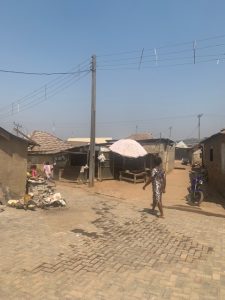
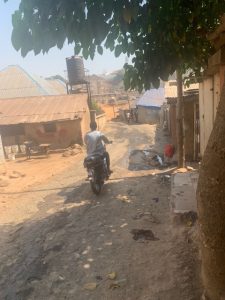
It was an experience of a bumpy ride passing through the hilly, dusty road covered with red earth and rocks. For a first-timer, passing through this road would certainly be a nightmare owing to the constant bouncing over rocks and swerving from one side of the untarred road to the other. This is a vivid description of the road that leads to Pygba Sama in Kpaduma II, a remote village in the Federal Capital Territory (FCT).
Ironically, this remote village lies behind the grandeur of the Guzape district and is also about 14.2 kilometres from the Presidential Villa.
The inhabitants of Kpaduma II, who are predominantly Gbagyi, are known for practicing an age-long tradition known as breast ironing or breast flattening.
This is a tradition that mothers in the village, dating as far back as their forefathers, adopted to protect their pre-teenage daughters from men or sexual predators.
This archaic practice, usually shrouded in secrecy, involves massaging or pressing the breasts of young girls, usually below 12 years old, with heated objects such as stone or calabash to either delay their breast development or make them disappear for those who develop breasts early.
An indigene of Kpadama II, 22-year-old Dorcas Joseph, who shared her experience with Persecondnews during a recent visit to the community, said her mother did it to her when she was nine years old.
“I started developing breasts early. At the age of 9, my breasts had started coming out. When my mother noticed it, she became worried.
“One evening, she called me to the kitchen after she had finished cooking. Before she called me, she put a small calabash by the fire to heat. Upon my arrival in the kitchen, she pretended to examine an area of my body before restraining me and carrying the hot calabash from by the fireside to apply pressure to my breast.
“I was screaming because of the pain. I cried profusely that evening. That was the first and last time my mother did that to me. She did the same thing to my immediate younger sister too,” she narrated.
According to Miss Joseph, her mother’s action didn’t slow down or stop her breasts from growing.
“My breast didn’t stop growing after that; maybe it’s because it was just once my mother did. I have a friend whose mother did it to her continuously, with one special stone they usually use. Right now, her breasts are not even, and it’s very obvious. One breast is big while the other one is very small, more like it’s stunted,” she added.
According to data from the Africa Health Organization (AHO), breast ironing affects 3.8 million teenagers across Africa and has been identified as one of the five under-reported crimes relating to gender-based violence.
It added that family members frequently engage in the practice, with the mother performing 58 percent of them.
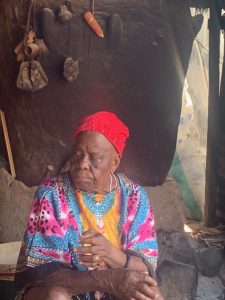
Also speaking with Persecondnews during the visit is an octogenarian from the village popularly known as Mama Ganako.
According to her, the practice has drastically decreased compared to the past because people are more enlightened now.
“Very few people practice it now, unlike before, when it was very common. I never experienced it growing. My mother didn’t do it to any of us, and I don’t know why she didn’t, but my aunts and so many other people I know did it to their daughters.
“I also didn’t do it to any of my children. But unfortunately, my children did it to their daughters. I don’t know who told them and taught them to do that.
“Those days, once a girl starts developing breasts, men would start picking interest in her, either for marriage or just for sex, because they see her as a woman. So mothers, out of fear, will put calabash, a spoon, or a stone—usually the one they use to grind on the stone—in the fire and use it to press their daughter’s breast and drive it away.
“This will stop the breast from growing for a while, and that will make the girl look less like a woman and more like a child. That way, men won’t look at her. It worked for them that time,” she explained.
Meanwhile, medical experts have warned against breast flattening, saying the practice is harmful to women’s health.
Speaking in an exclusive interview with Persecondnews on the health implications of breast ironing, a consultant obstetrician and gynaecologist, Dr. Ikechukwu Daniel, said the practice can disfigure the breast.
“It affects the gladular tissue, which is the part of the breast that produces milk. Women who undergo breast ironing find it difficult to lactate or breastfeed their babies after childbirth.
“Because of the lack of aftercare after the processes, they are exposed to a lot of health problems, such as abscesses, dissymmetry of the breasts, tissue damage, and, in some cases, partial disappearance of one or both breasts.
“It also affects their self-esteem as well as their mental and social well-being. This barbaric practice has to be put to a complete stop,” he said.
He called on the need to educate women and girls on the dangers of breast ironing as well as create more awareness.
Persecondnews recalls that the Minister of Women Affairs, Mrs. Uju Kennedy-Ohanenye, condemned the harmful and barbaric practice in December 2023 when she went on an advocacy and sensitization visit to the community.
This Minister expressed worry over the practice on teenage girls residing in the community, as she solicited the partnership of the Garki District Heads and other local authorities towards eradicating the practice.
Author








Leave a comment