











By Segun Adebayo
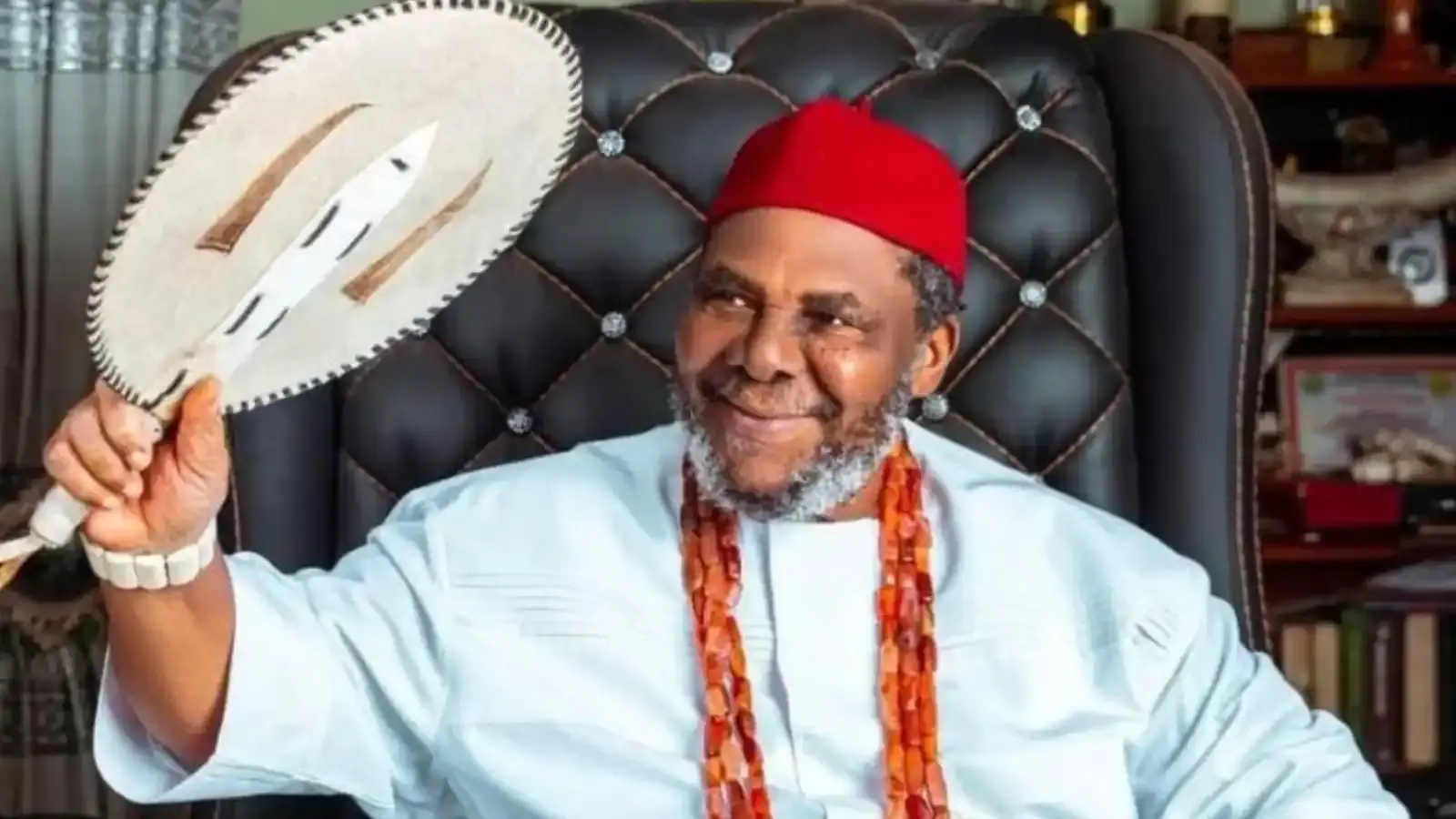
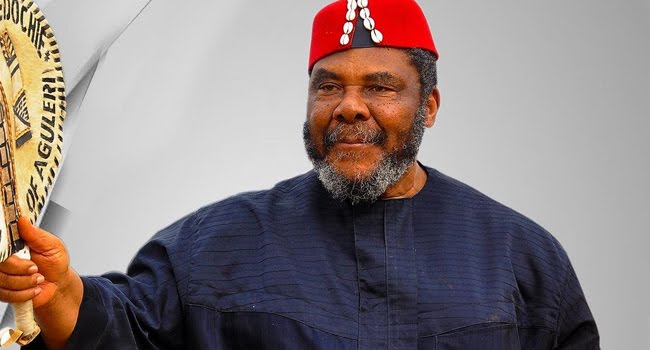
For generations of Nigerian movie lovers, the name Pete Edochie was synonymous with authority, wisdom, tradition and an unmistakable commanding voice.
Whether playing a king, wealthy businessman, community leader or a stern family patriarch, the veteran actor possessed a screen presence that made him one of the most recognisable faces in Nigerian entertainment.
But beyond the familiar traditional titles, memorable proverbs and imposing characters was a man whose journey began in broadcasting long before he became one of Nollywood’s most celebrated figures.
Chief Peter Uwadiegwu Ogugua Edochie, popularly known as Pete Edochie, was born on March 7, 1947, in Zaria, Kaduna State, although his ancestral roots were in Akamnato, Ifite Nteje, Anambra State.
He attended St Patrick’s and St James Primary Schools in Zaria before proceeding to St John’s College, Kaduna. His interest in acting reportedly started during his secondary school days when he participated in a school production of William Shakespeare’s The Merchant of Venice at the age of 15.
Edochie subsequently travelled to England, where he studied journalism and television at the School of Journalism and Television, preparing himself for a career that would initially take him into broadcasting.
From Broadcasting to National Prominence
In 1967, at the age of 20, Edochie joined the Eastern Nigerian Broadcasting Corporation as a junior programmes assistant.
He gradually rose through the ranks, eventually becoming Director of Programmes at the Anambra Broadcasting Service. He also served as Deputy Managing Director and occasionally acted as the organisation’s managing director.
His years in broadcasting helped shape his communication skills, delivery and confidence, qualities that would later become defining features of his acting career.
Although he had established himself in broadcasting, his transition into television drama would eventually change the course of his life.
The Role that Changed Everything
Edochie’s major breakthrough came in 1987 when he was cast as Okonkwo in the Nigerian Television Authority’s television adaptation of Chinua Achebe’s literary masterpiece, Things Fall Apart.
His portrayal of the proud, uncompromising and ultimately tragic Igbo warrior became one of the most memorable performances in Nigerian television history.
The production brought him considerable national and international attention. The BBC reportedly sent a delegation to Nigeria to interview him following the success of his performance.
His interpretation of Okonkwo became so closely associated with his identity that generations of viewers continued to remember him through the character.
The success of Things Fall Apart established Edochie as a major acting talent even before the Nigerian home-video industry developed into what is today known as Nollywood.
A Career filled with Memorable Productions
As Nollywood expanded, Edochie became one of its most sought-after veteran actors, featuring in productions that further cemented his reputation.
His notable works included Rituals (1997), Igodo (1999), The Egg of Life, Oracle, Across the Niger, Passage of Kings and Lionheart (2018).
In Genevieve Nnaji’s Lionheart, he played Chief Ernest Obiagu, a wealthy businessman whose family and business responsibilities formed a central part of the story.
His performances were particularly associated with traditional authority, family leadership, power, loyalty and the complexities of African traditions.
His deep voice, measured delivery, expressive facial gestures and ability to deliver traditional proverbs with conviction made him a distinctive figure on screen.
A father of actors, including Yul Edochie
Away from the cameras, Pete Edochie was married to Barrister Josephine Edochie, with whom he shared more than five decades of marriage.
The couple had six children, including popular Nollywood actor Yul Edochie and actor Linc Edochie.
Yul followed his father’s footsteps into the movie industry, becoming a recognised actor and filmmaker in his own right.
His family occasionally attracted public attention, particularly following controversies surrounding Yul’s marriage to actress Judy Austin and the subsequent public conversations involving his first wife, May Edochie.
Pete Edochie also became a subject of public discussion over his comments on the controversy, particularly his defence of his son.
Despite the attention surrounding his family, his own acting career remained one of the most enduring in the history of Nigerian cinema.
Honours, recognition and industry influence
Edochie’s contribution to entertainment earned him several honours, including the national honour of Member of the Order of the Niger (MON), conferred on him in 2003 by former President Olusegun Obasanjo.
He also received the Africa Magic Viewers’ Choice Awards Industry Merit Award and a Lifetime Achievement Award from the Africa Film Academy.
In 2020, he was honoured with the African Film Legend Award at the African Film Festival in Dallas, United States.
His influence extended beyond the films in which he appeared. For many younger actors, he represented a generation of performers who helped establish the foundations upon which the Nigerian film industry grew.
His Final days and Bestie
In the months leading to his death, Edochie remained a familiar presence in entertainment conversations, with appearances and interviews continuing to attract attention.
One of his last widely publicised interviews was with Ugo Nwokolo TV, an episode scheduled for release on November 25, 2026. Excerpts released days earlier attracted attention after he spoke about his son Yul’s personal life and the public criticism surrounding it.
His final screen appearance may also become a particularly emotional moment for movie lovers.
The veteran actor featured in Bestie, an upcoming movie produced by actress and filmmaker Toyin Abraham, in which he plays Papa Ngozi.
The film, which also features Sola Sobowale, was billed for nationwide cinema release on December 16, 2026.
With his death coming weeks before the film’s scheduled release, audiences may now watch his appearance with a different sense of appreciation, as one of his final recorded performances to reach cinema screens.
The End of an Era
Pete Edochie’s death was announced by his family on Wednesday, November 25, 2026.
According to the statement signed by his son, Chief Leo Pete Edochie, the actor died at 12:30am in Enugu following a protracted battle with prostate cancer. He was 79.
The family described his passing as the loss of a beloved husband, father, brother and kinsman, adding that funeral arrangements would be announced in due course.
For many Nigerians, Pete Edochie was more than an actor. He was a familiar voice in living rooms, a commanding presence in countless films and a performer whose interpretation of African traditions became part of the country’s popular culture.
From his early days in broadcasting to his unforgettable portrayal of Okonkwo and decades of Nollywood performances, his journey was one of remarkable longevity and influence.
An Iroko has fallen, and the generations that watched him grow into one of Africa’s most celebrated screen figures will remember the voice, the presence and the characters he left behind.
Author






Leave a comment