















By Samuel Akpan
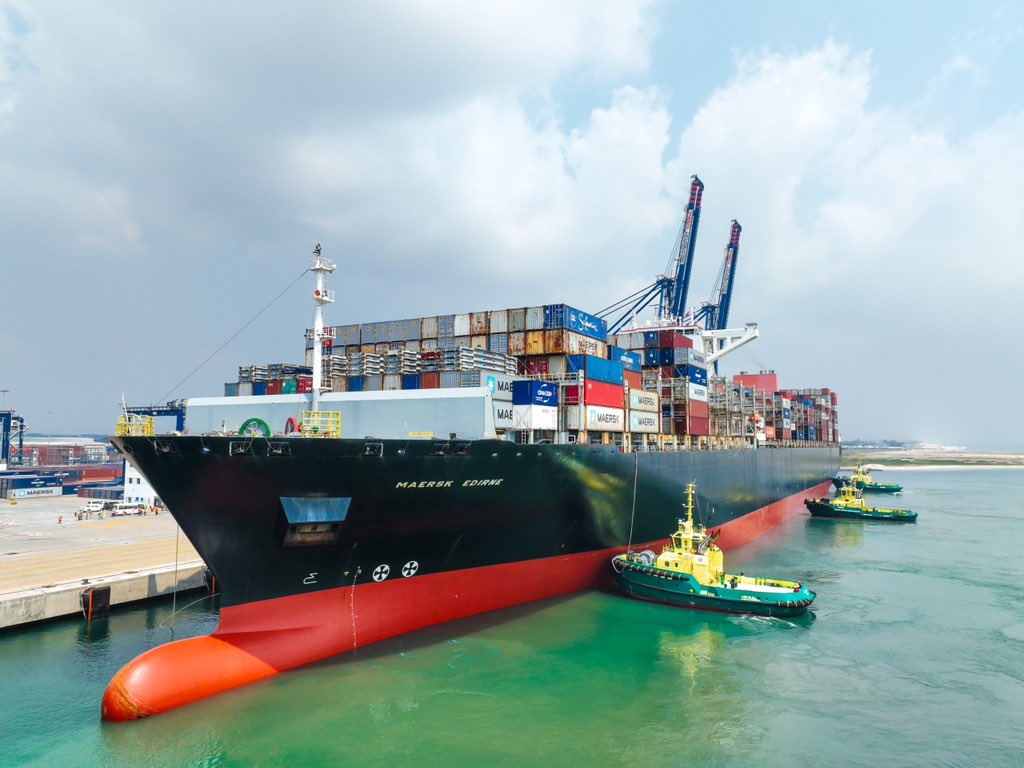
Nigeria’s maritime sector has recorded a sharp rise in vessel calls and cargo volumes over the past five years, with the Nigerian Ports Authority’s reforms transforming ports into stronger engines of economic growth and blue-economy expansion.
In the first half of 2026, the NPA handled 2,300 ocean-going ships totaling 96.6 million Gross Registered Tonnage and 68.2 million metric tonnes of cargo, marking a 12.2 percent year-on-year increase and a clear shift toward larger vessels.
Ship calls rose only 6.9 percent from 2,152 in H1 2025, yet Gross Registered Tonnage jumped 20.9 percent from 79.9 million, while cargo throughput climbed from 60.8 million tonnes, reflecting deep-draft berths attracting bigger ships.
Compared with the 2021–2022 baseline of roughly 1,900–2,000 calls, 65–70 million tonnes GRT and 52–55 million tonnes of cargo, the gains represent a structural recovery driven by NPA investments in capacity and efficiency.
Lekki Port now accounts for nearly 40 percent of national throughput, with Dangote Refinery operations contributing more than 76 percent of its traffic, while Onne handles 22.7 percent through LNG exports and eastern ports ease historic Lagos congestion.
“These figures show that our focus on deep-water facilities and operational reforms is paying off,” NPA Managing Director Abubakar Dantsoho said at the Nigerian Ports Consultative Council meeting in Lagos.
“Lekki and Onne are absorbing more traffic and supporting larger vessels that previously bypassed West Africa, reducing pressure on older terminals and strengthening the entire marine ecosystem,” he added.
“The growth in outward cargo and container traffic demonstrates how improved port efficiency is directly advancing non-oil exports and industrial activity across the country,” Dantsoho noted during a session themed on simplifying cross-border trade.
Container volumes rose 10.3 percent to 815,236 TEUs, with imports at 546,755 TEUs (67 percent) and exports at 203,980 TEUs (25 percent), while outward cargo surged 22 percent in the second quarter to reach 41.9 percent of total throughput.
Transshipment grew 169.5 percent to 35,574 TEUs, though it remains about four percent of containers, underscoring Nigeria’s ports as primarily domestic gateways while laying groundwork for regional hub status under AfCFTA.
The NPA scaled revenue to ₦1.19 trillion in 2025 and is targeting ₦1.489 trillion in 2026, boosting remittances to the Consolidated Revenue Fund and supporting fiscal resources for further maritime infrastructure.
Inward traffic, at 56.8 percent of throughput, continues to supply industrial machinery and raw materials, with the Dangote Refinery acting as a major anchor that reduces refined-product import dependence and stabilizes foreign-exchange outflows.
PerSecondNews reports that NPA’s specific port efficiency measures focus on digitalisation, infrastructure upgrades, traffic management, export facilitation, and geographic decentralisation.
These align with the reforms cited in the H1 2026 performance data as drivers of higher vessel tonnage, cargo volumes, and reduced Lagos-centric congestion.
Eto electronic call-up system, manages truck entry and movements. It has processed over 3.5 million truck movements and helped cut average turnaround times.
An integrated electronic barrier system (operational since September 2025) allows only trucks with valid Eto tickets into terminals, reducing unauthorised entry and manual interference. The system has been extended beyond Lagos (including to Onne).
The Port Community System (PCS), launched in Q1 2026, integrates shipping lines, terminal operators, freight forwarders, and regulators on one platform to streamline documentation, improve transparency, and cut manual bottlenecks. It serves as the backbone for further automation.
While the National Single Window (NSW) digitizes interactions across the trade value chain—reducing human touchpoints, eliminating duplicate processes, lowering costs, and accelerating clearance—the NPA serves as a primary architect and integrator of the platform.
Author








Leave a comment