






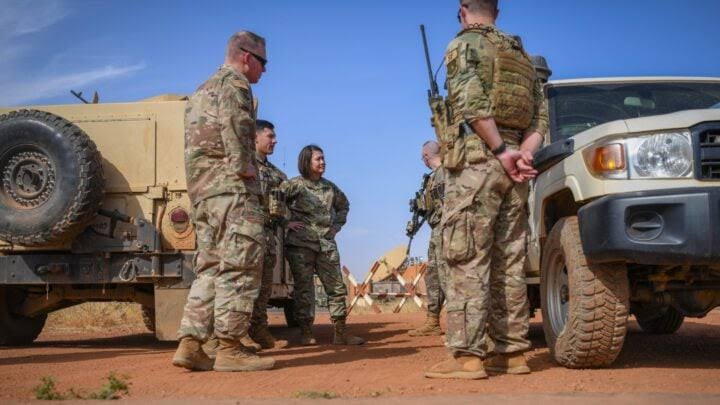




About 200 U.S. troops will leave Nigeria by late September as the Pentagon wraps up a counter-terrorism mission launched earlier this year.
The deployment featured joint operations, intelligence sharing, and specialized training aimed at Islamist insurgents.
Washington termed the operation a success for improving local security, even as broader extremist threats endure across the region.
U.S. officials described the deployment as a potential model for future military partnerships in Africa, arguing that the relatively small force achieved significant results, including the killing of Abu Bilal al-Minuki, a top Islamic State figure, during a joint U.S.-Nigerian raid in May.
Despite those successes, militant attacks have continued across Nigeria, with armed groups carrying out deadly assaults in recent weeks.
Security analysts say terrorists remain a major threat, particularly in parts of northern and central Nigeria.
The troops were deployed to northeastern Nigeria in February after U.S. President Donald Trump criticised Nigeria’s handling of terrorist violence, particularly attacks affecting Christian communities.
However, both Christian and Muslim Nigerians have been victims of years of insecurity involving terrorism, banditry, kidnappings and communal conflicts.
The mission strengthened cooperation between Washington and Abuja, with U.S. military officials highlighting improved intelligence coordination and battlefield training as the lasting outcome.
A smaller number of American personnel, including trainers and intelligence analysts, will remain in Nigeria after the main contingent leaves.
Meanwhile, the Nigerian government has yet to publicly comment on the planned withdrawal.
The move marks a shift in U.S. strategy away from maintaining large permanent military footprints in Africa toward smaller, temporary deployments focused on specific security objectives.
However, some Nigerian security experts have warned that the withdrawal could create challenges if local forces are unable to sustain the operational momentum built during the partnership.
Joint operations against Islamic State and other militant groups have dramatically improved U.S.-Nigeria military relations.
Yet, experts emphasize that sustainable stability rests on Nigeria’s capacity to secure its own borders and address the broader socioeconomic factors fueling violence.
Author








Leave a comment