






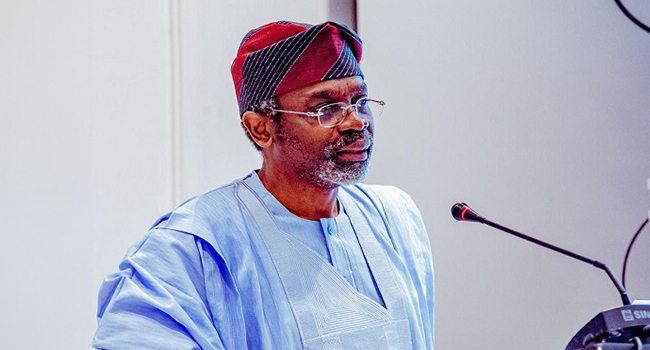




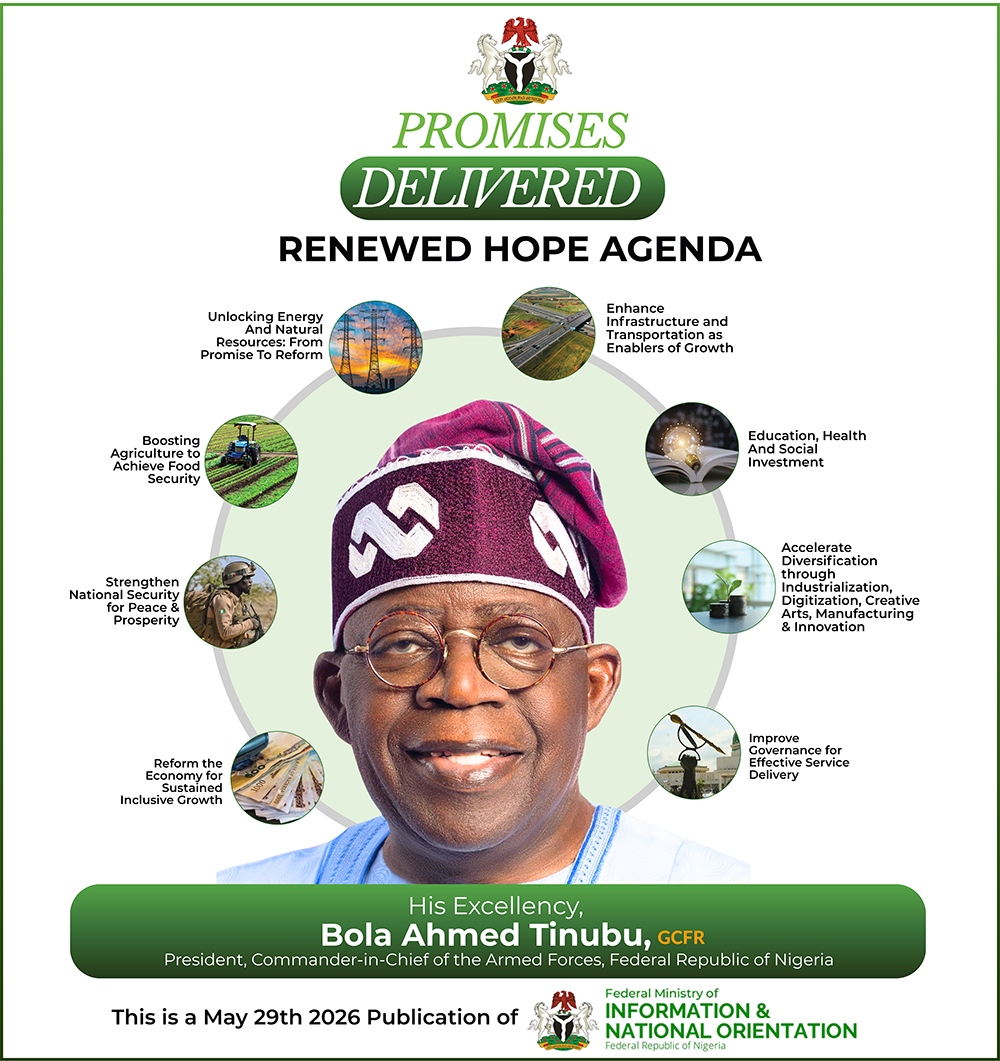


Former Minister and Special Adviser to President Bola Ahmed Tinubu on Media and Public Communications, , has delivered a sweeping and passionate defence of the President , describing him as “Nigeria’s Reformer-in-Chief” and the political strategist leading one of the most difficult economic correction missions in the nation’s modern history.
In a lengthy reflection titled One Thousand and Ninety-Five Days, Dare painted Tinubu as a leader who deliberately chose painful but necessary reforms over political convenience, insisting that Nigeria could no longer sustain years of economic distortions, fiscal leakages, fuel subsidy burdens, and policy inconsistencies.
According to Dare, Tinubu inherited a nation weighed down by decades of postponed decisions and structural inefficiencies, adding that previous administrations understood many of the country’s economic problems but lacked the political courage to confront them directly.
“The easiest thing in governance is to drift with the tide. The hardest is to alter course in the middle of gathering turbulence,” Dare wrote, arguing that Tinubu opted for difficult reforms aimed at long-term national stabilization rather than temporary political comfort.
The presidential aide described Tinubu as a “Tinkerer-in-Chief,” constantly reassessing systems, redesigning institutions, and pursuing strategic recalibration to reposition Africa’s largest democracy.
Dare also revealed his close political relationship with Tinubu spanning nearly three decades, saying he witnessed the President build political structures “from ashes,” manage coalitions, nurture talent, and survive political battles designed to “politically drown and asphyxiate him.”
He portrayed Tinubu as a master coalition builder and grassroots mobilizer whose understanding of governance extends beyond politics into economic management, institutional reform, and national development.
The article strongly defended the administration’s economic reforms, including fuel subsidy removal and exchange rate unification, insisting that Nigeria had reached a point where delayed decisions could no longer be avoided without risking systemic collapse.
“A country cannot sustainably subsidize inefficiency forever,” Dare stated, adding that sustainable prosperity is rarely achieved without periods of difficult restructuring and sacrifice.
While acknowledging public hardship, inflationary pressures, and growing anxieties among Nigerians, Dare maintained that the Tinubu administration remains focused on rebuilding the country’s economic foundation and repositioning it for long-term competitiveness and stability.
He further argued that history may eventually remember Tinubu’s first one thousand and ninety-five days in office not as a season of political popularity, but as the beginning of Nigeria’s difficult but necessary correction and recovery process.
According to Dare, leadership during reform periods is often lonely and politically dangerous because every major adjustment creates resistance from entrenched interests benefiting from previous systems.
“History will ultimately render its own verdict,” he concluded, “but Nigeria has begun a consequential journey of correction and recovery.”
The publication is expected to generate fresh political debate as the Tinubu administration continues to defend its reform agenda amid economic hardship, rising public expectations, and intense political scrutiny ahead of the 2027 general elections.
Author










Leave a comment