










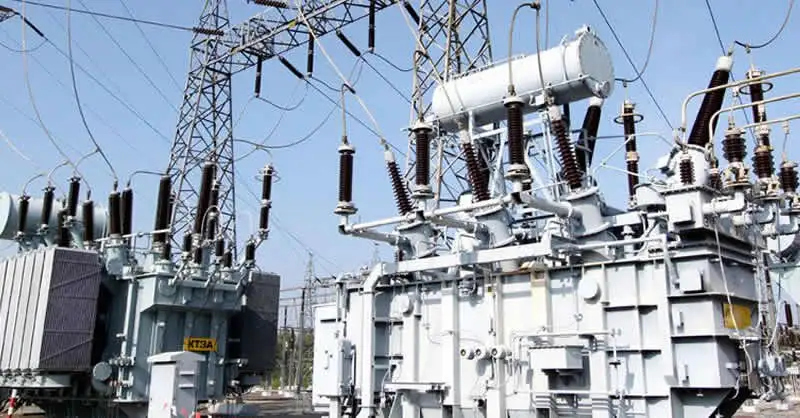




For the second time in just four days, Nigeria’s national grid suffered a total collapse on Tuesday, January 27 morning.
Data shows a staggering drop in generation, plummeting from 3,825 MW at 10 a.m. to a mere 39 MW by 11 a.m.
Confirming the crisis, Eko Electricity Distribution Company (EkoDisCo) issued a statement notifying customers that the system failure has resulted in a widespread loss of power.
“Kindly be informed that there was a system collapse at 10:48 hrs, which has resulted to a loss of power supply across our network.
“We are currently working with our TCN partners as we hope for the speedy restoration of the grid. We will keep you updated as soon as power supply is restored. Kindly bear with us,” it said.
Persecondnews reports that this is the second grid collapse in January 2026 and the third in less than one month.
The national grid had collapsed on December 29, 2025, and more recently on Friday, January 23, 2026.
As the grid collapsed on Tuesday, load allocation to the distribution companies was 0.00 MW, indicating that no Disco was supplying electricity at the time of the incident.
The Nigerian Independent System Operator has yet to explain the cause of the current grid collapse.
NISO confirmed that the outage occurred at about 12:40 p.m., following the simultaneous tripping of several 330kV transmission lines.
Reacting to January 23 grid collapse, NISO said in a statement that the combined incidents resulted in a total collapse of the interconnected national grid.
“The Nigerian Independent System Operator wishes to inform the public that at approximately 12:40 hours on Friday, 23 January 2026, the national grid experienced a system-wide disturbance, which resulted in a total outage across the interconnected network,” it stated.
Major urban centres including Lagos, Abuja, Port Harcourt, Kano, Enugu, Benin City, Ibadan, Kaduna and Jos reported complete loss of supply, affecting homes, businesses, hospitals, airports, fuel stations and mobile networks.
As at 11:44am on Tuesday, the grid operator released the first partial restoration figures showing only 90 MW back online nationwide.
Persecondnews also reports that public outrage has reached a fever pitch on social media, with Nigerians decrying the recurring blackouts as an unacceptable reality for 2026.
Critics argue that the crisis is a symptom of systemic neglect, citing a familiar list of failures: insufficient gas supplies, fragile transmission lines, and the weight of aging infrastructure.
These long-standing issues, compounded by vandalism and a historic lack of investment, continue to keep the nation’s energy security out of reach.
Author









Leave a comment