








By Paul Ejime
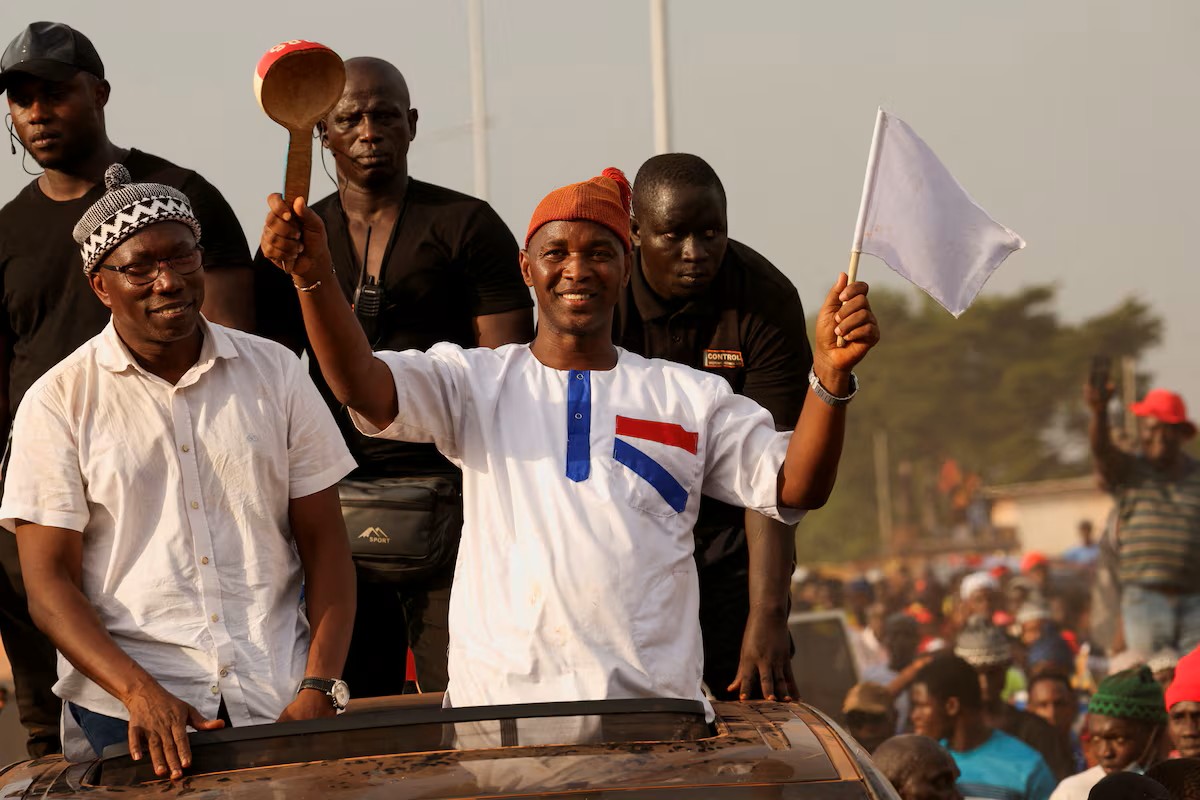
Fernando Dias da Costa, a front-runner in Guinea-Bissau’s 23 November presidential election, has called on ECOWAS leaders meeting on Sunday, 14 December, to insist on the release of the election results “so that the President elected by the people of Guinea-Bissau… can take office.”
“We hope that with your invaluable support, this summit will result in the publication of the election results, which remain available despite announcements to the contrary…,” candidate Dias said, in an open letter to the regional leaders, adding that, according to “all observers…” the unpublished results gave him “a significant advantage in the first round.”
In the letter titled “Guinea-Bissau remains hopeful amid darkness and institutional chaos,” he said: “Our people are convinced that the definitive and successful conclusion of the electoral process, …thwarted by the military coup and the manoeuvres of the outgoing president, is the primary prerequisite.”
“ECOWAS can bring light and hope back to our country, as it has done elsewhere in our region,” he added.
It is the first public statement by candidate Dias, who has been under Nigerian protection following the 26 November military coup in Guinea-Bissau, by which President Umaro Sissoco Embalo claimed he was toppled.
A number of the junta leaders, including Gen. Horta Inta-A, who has assumed the position of Transitional President and the Prime Minister Ilídio Vieira Té, who was Embalo’s Campaign Director during the 23 November elections, are his loyalists.
Embalo and Dias were claiming victory in the election before the military struck a day before the National Electoral Commission, CNE, planned to announce the results of the poll.
Armed men invaded the Bissau secretariat of the Commission, arrested the officials and carted away documents and computers.
After their release, the officials said the CNE could not conclude the electoral process because its documents and computers, including servers, had been destroyed.
However, IT experts and diplomatic sources stated that the election results were retrievable.
The military said it seized power to prevent “drug lords” from destabilising Guinea-Bissau.
Domingos Simões Pereira, the leader of the African Party for the Independence of Guinea-Bissau and Cape Verde (PAIGC), and his deputy Octávio Lopes have been detained by the junta, and their families have demanded their immediate and unconditional release.
The PAIGC fought for the independence of Guinea-Bissau and Cabo Verde, but after Pereira and the party were barred from participating in the parliamentary and presidential elections, they urged their supporters to vote for Dias.
“As you prepare to hold a crucial Summit of ECOWAS, the regional organization that unites the peoples and countries of our region, this Sunday, December 14, allow me to take the liberty of wishing you every success,” Dias said in his letter.
“Many answers to the major challenges that concern us all depend on its (Summit’s) outcome.”
“Those related to the situation in Guinea-Bissau, my country,” he said, “are the most pressing. Even though on all sides, the warning signs are flashing red, tensions are high, and there are multiple dangers, from the economy to politics and the social climate.
“It is not without reason that the regional body has declared a general emergency to underscore the urgent needs of the moment.”
Continuing, Dias told ECOWAS leaders, “the people of West Africa have high expectations for your deliberations,” adding …those most familiar with Guinea-Bissau describe (the coup) as a setup orchestrated by the outgoing President and his allies in the army to prevent the peaceful transfer of power to the winner of the election.”
“Numerous other underhanded tactics and mistreatment, which spared none of our partners, including, at the beginning of this year, the expulsion of an ECOWAS delegation and the announcement of a suspected coup d’état shortly before the start of the election campaign, foreshadowed the sad, tragic scenario we are now experiencing,” he said.
He said the “ominous signs… were visible on the walls of towns and villages throughout our country.”
Dias thanked ECOWAS for “promptly coming to our aid. In doing so, you have shown us your support and concern at a time when this new difficult phase our country is experiencing presents itself as an existential threat, the solution of which is absolutely imperative.”
“Your Summit, along with the visit of the current Chairman of ECOWAS Authority, His Excellency Julius Maada-Bio, is the most eloquent proof of your heartfelt concern. On behalf of the people of Guinea-Bissau and myself, I wish to thank you from the bottom of my heart,” Dias wrote.
According to him, “Our regional organization embodies the international community’s position on West African issues. Your voice carries weight, and, as you know, the entire world awaits your position on how to put our country, with our contribution, back on the path to constitutional order, a path it should never have strayed from.”
“I wish to reassure the international and national community that the country’s reconstruction will not be possible without a serious effort to bring together all the sons and daughters, and all social forces, of Guinea-Bissau, from every side,” he said.
“For my part, I will spare no effort to ensure the success of national reconciliation.”
To this end, he said, “I would like to extend a hand to my fellow citizens, regardless of their political, ethnic, or religious affiliation,” adding: “Your Summit offers us a final chance to rebuild our country, guiding it back to the path set by its heroic national liberation struggle that led to its independence in 1973.”
Dias expressed his support for regional “efforts to contain the wave of military coups in our region and, thank you in advance for your presence at our side during these agonising times.
“Together, let us make the African continent proud and lift Guinea-Bissau (which) has suffered far too much from political and military missteps, out of the crisis that neither its potential nor its history justifies.”
ECOWAS and the African Union have suspended Guinea-Bissau over the coup, and while critics accuse Embalo of remotely controlling affairs from an undisclosed refuge within or outside the country.
The country remains under political tensions, and the “mega protests” organised by civil society groups on Friday were promptly dispersed by security forces.
Author




Leave a comment