








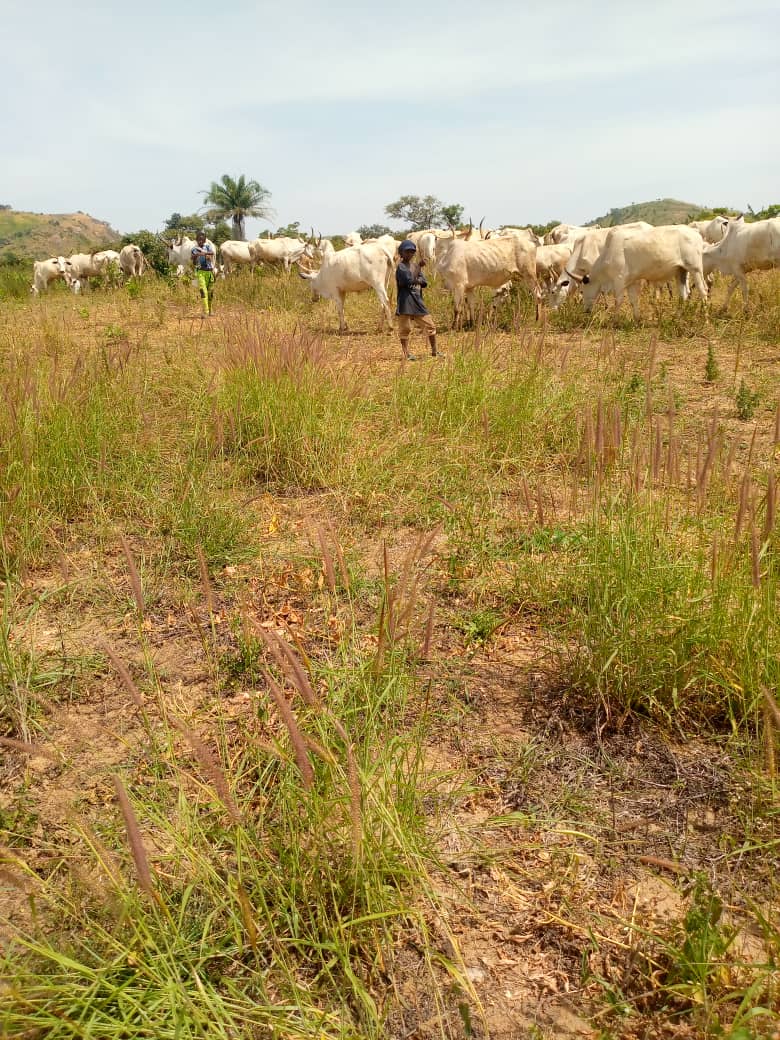




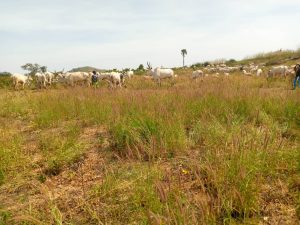
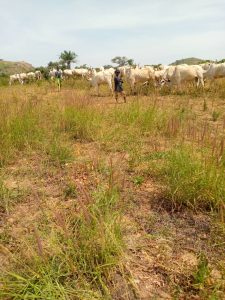
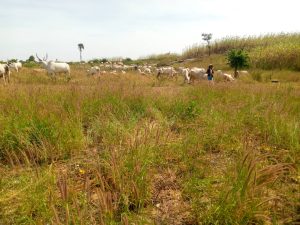
Farmers in Shishimpe Area, Mpape, Abuja, are reeling after an invasion by suspected nomadic cattle herders destroyed over ₦20 million worth of produce and left at least five residents injured, Persecondnews reports.
“It feels like the end of the world,” lamented one visibly shaken farmer. “We’ve worked hard for months, and in one day, everything is gone.”
Mr. Abdullahi Mohammed, whose months of hard work were ruined by the activities of the itinerant Fulani herders, spoke of his distress to Persecondnews correspondent during a visit to the farmlands.
Following the incident, the five injured residents received immediate medical attention at the Mpape Health Centre.
Authorities also addressed an animal casualty, releasing a cow found with severe stab wounds and protruding intestines back to the herders on bond.
“I was on my farm that day, still waiting to harvest my crops, when I saw the cows,” Musa stated. “I calmly asked the herders to get the animals out.
“They refused and became aggressive. I threw a stone simply to scare the cows away. The stone struck a cow, though it caused no injury.
” Instantly, one of the herders made a call, and they arrived in huge numbers. They destroyed all my crops and attacked me with knives and cutlasses.
“I fled to my community and rallied the youth to defend the area, but the police arrived and calmed things down. But the damage is irreparable: my harvest is gone. Months of hard work are down the drain because of the recklessness of these people,” he told Persecondnews.
According to Nextier’s Nigeria Violent Conflicts Database, at least 2,347 casualties were recorded in 359 incidents involving farmers and herders across Nigeria between 2020 and 2024.
Experts and locals suggest that the true extent of the conflict is often underreported, with many incidents resulting from open grazing and fatalities frequently undocumented.
The situation is particularly volatile in the Middle Belt, where the conflict often assumes religious undertones given that the herders are generally Muslim and the farmers are Christian.
Furthermore, farmer Peter Rock noted a pattern of intrusion, stating that herders often arrive on farmlands on Sundays, taking advantage of the farmers’ absence for church service.
“I was alerted by text while in church that herders were on my farm. I arrived by bike and was shocked to see cows openly feeding on my crops,” he recounted.
“The sheer audacity is baffling. The moment the herders saw me, they chased me off my own land with machetes.
“The damage across two hectares is heartbreaking. All the effort, mechanical and physical, is wasted. The destroyed beans alone are worth over ₦2.5 million, and the ruined maize crop is valued at over ₦1.5 million.
“This is completely discouraging. We reported the incident to the Mpape police DPO and submitted all evidence for an investigation, because we deserve protection as taxpayers.
“I borrowed money for materials expecting to pay it back after harvest. Now, in a blink of an eye, I’m left in debt and all my sweat has been in vain.”
A police officer attached to the Mpape Division, who spoke on the condition of anonymity on Wednesday confirmed the clash and noted that investigation are ongoing and that both parties were invited to the police station on Monday.
The officer said: “Yes there was farmers and herders clash in Mpape on Monday at about 12:30pm but it was brought under control.
“The herders presented proof that their cows were attacked and matcheted with visible injuries and they also responded with attacks on the farmland and injuries to farmers.
“We spoke to the elders of the fulani community in Mpape and also the elders of the community to prevent further conflict and douse the tension in the area. Investigations are ongoing once concluded it will be made public.”
The decades-long conflict between farmers and herders in Nigeria has reached a boiling point.
As farmlands shrink and grazing routes vanish, the battle for land, water, and survival has intensified, claiming thousands of lives and displacing over 2 million people.
This deadly cycle of violence shows no signs of abating, with communities caught in the crossfire.
The struggles between farmers and herders in Nigeria run far deeper than just livestock or harvests – they are rooted in questions of identity, community, and the fight for influence in a country where faith, culture, and politics are deeply intertwined.
Meanwhile The Federal Government made a u-turn on Tuesday, maintaining that open grazing has not been outlawed, clarifying that instead it would implement a “gradual transition from open grazing to modern ranching systems.”
While open grazing has continually fuelled violence, the Minister of Livestock Development, Idi Maiha, noted that the government has announced no policy banning open grazing.
“The government is instead implementing a gradual, well-structured transition from open grazing to modern ranching systems.
“Pastoralists, like every other economic group, require a structured business environment,” Mukhtar said.
Nigeria has previously attempted to modernise livestock production through the National Livestock Transformation Plan, which promoted ranching to curb farmer–herder violence and improve productivity.
A related initiative, the proposed RUGA settlements, faced widespread pushback particularly from southern states over land rights and security concerns.
The newly re-established Ministry of Livestock Development has, in recent months, reiterated that open grazing will eventually be phased out, but reiterated that the process will be gradual rather than an immediate nationwide ban.
Persecondnews reports that over 2.2 million Nigerians in middle belt states have been rendered homeless in the space of seven years on the back of violent farmers and herders’ clashes.
A new report by a research firm, SBM Intelligence, titled ‘A Threat to National Stability’ shows that from 2019 to February 2025 when the research was carried out more than 2.2 million civilians have lost their homes in Benue, Plateau and Nasarawa States in the middle belt area of Nigeria.
The violent clashes by farmers and herders in major food producing states have taken a heavy toll not only on farmers but also civilians.
“Over 2.2 million people have been displaced due to the conflict, particularly in the middle belt states such as Benue, Plateau, and Nasarawa.
“Thousands have sought refuge in IDP (Internally Displaced Persons) camps, while others have fled to neighbouring countries,” the SBM report read.
Author








Leave a comment