















By Omoyeni Ojeifo
The Nigerians in Diaspora Commission (NiDCOM) has called on the Central Bank of The Gambia to reverse its directive requiring banks to replace non-Gambian employees, warning that the policy could undermine regional integration and bilateral relations between both countries.
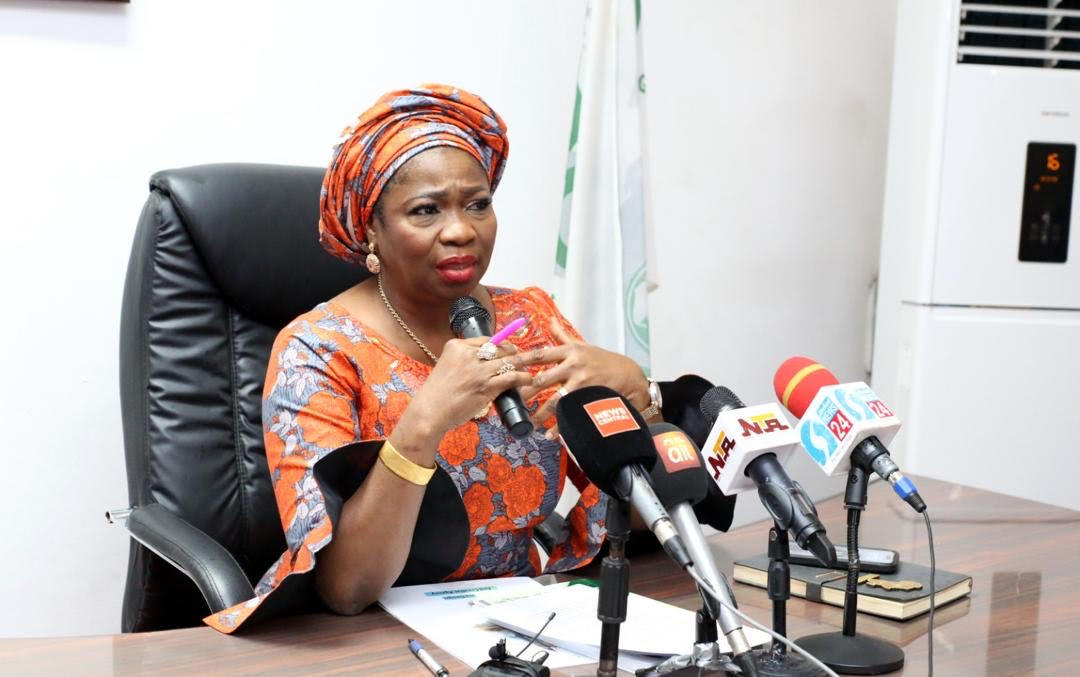
Describing the move as deeply worrisome, Abike Dabiri-Erewa, Chairman of the Commission,
in a statement issued on Tuesday, by the commission’s Head of Media, Public Relations and Protocols, Abdur-Rahman Balogun argued that policies promoting local employment should not undermine legitimate employment arrangements or African regional cooperation.
The decision threatens the jobs of 57 Nigerian banking professionals working in four Nigerian-origin banks in The Gambia, raising concerns over their continued employment despite reportedly holding valid residency and work permits.
Dabiri-Erewa acknowledged The Gambia’s right to promote local employment and develop its workforce but maintained that such policies must respect existing employment arrangements and legitimate work authorisations.
“The directive contradicts efforts to strengthen African investment, regional economic cooperation and the free movement of people across the continent,”she said.
The commission also highlighted the economic contributions of the four Nigerian-origin banks, disclosing that they collectively account for approximately 37.2 per cent of The Gambia’s banking industry’s total deposits, valued at 35.3 billion Gambian dalasis.
The institutions also account for 32.6 per cent of the industry’s loans, amounting to 7.67 billion dalasis, and 37 per cent of its total assets, valued at 44.78 billion dalasis.
NiDCOM further disclosed that the banks account for approximately 34.5 per cent of investments in Central Bank bonds and reportedly contributed 90 per cent of the funding supporting the operations of the National Water and Electricity Company (NAWEC).
Against this background, the commission urged the Gambian monetary authority to reconsider the directive and engage the Nigerian High Commission in Banjul, affected financial institutions and other relevant stakeholders.
It also urged Gambian authorities to uphold the principles of the Economic Community of West African States (ECOWAS) and the longstanding cordial relationship between Nigeria and The Gambia.
The controversy stems from a September 16, 2026, directive by the Central Bank of The Gambia, signed by its Second Deputy Governor, Dr Paul J. Mendy, and addressed to managing directors of all banks operating in the country.
The regulator disclosed that an industry study had identified a relatively high number of non-Gambian employees working in banks outside recognised expatriate arrangements.
It described the situation as a violation of the Labour Act 2023 and Guideline 9 on expatriate staff.
Consequently, the Central Bank directed banks to adopt a phased approach to replacing affected non-Gambian employees with suitably qualified Gambian nationals, while ensuring skills transfer and continuity of operations.
The transition, according to the circular, must be completed by December 31, 2026.
Author











Leave a comment