





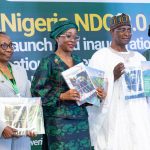

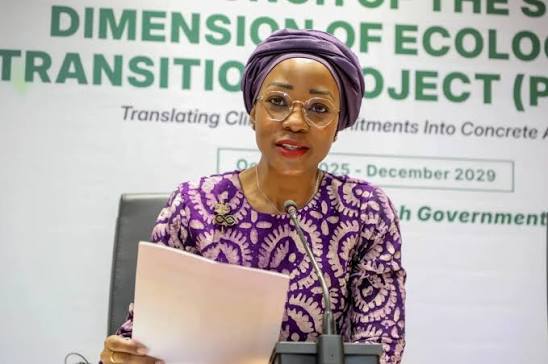




Nigeria will require about $337 billion between 2026 and 2035 to implement its climate commitments, with the Federal Government calling for stronger domestic financing, international climate support and private investment to turn its targets into measurable results.
The Director General of the National Council on Climate Change (NCCC), Mrs Omotenioye Majekodunmi, disclosed this on Thursday in Abuja at the official launch of Nigeria’s Third Nationally Determined Contribution (NDC 3.0), Net Zero Investment Plan and Long Term Low Emissions Development Strategy.
She said the estimated funding requirement comprises approximately $195 billion for emissions reduction and $141.5 billion for climate adaptation, highlighting the scale of investment needed to protect livelihoods, strengthen resilience and move the country towards a low emissions economy.
Nigeria’s NDC 3.0 sets an economy wide target of reducing emissions by 32 per cent by 2035, relative to the 2018 base year, on the pathway towards net zero emissions by 2060.
Majekodunmi said the figures made it imperative for the government and its partners to develop credible projects capable of attracting funding, while ensuring that climate commitments were reflected in public budgets and sectoral development plans.
“The scale of the financing requirement is substantial. The estimates presented in the NDC indicate a need of approximately US$337 billion over 2026–2035, comprising about US$195 billion for mitigation and US$141.5 billion for adaptation.
“These figures underscore the importance of credible investment pipelines, effective public finance, concessional and climate finance, and the mobilisation of private capital,” she said.
The launch also featured the inauguration of an Interministerial Steering Committee on NDC Implementation and Climate Action, designed to coordinate government institutions, align climate priorities with budgets and investments, and monitor progress.
Majekodunmi said the committee must go beyond ceremonial responsibilities to provide the leadership required to overcome implementation challenges across ministries and agencies.
“This is not a ceremonial responsibility. It is an opportunity to strengthen national coordination and ensure that Nigeria’s climate commitments are reflected in decisions, investments and measurable outcomes.”
She added that the council was working with the NDC Partnership to identify early action opportunities and prepare requests for support from development partners, urging institutions to move beyond general expressions of commitment and identify practical areas of intervention.
The Secretary to the Government of the Federation, whose keynote address was delivered by nuclear and environmental scientist Prof. Babatunde Bolaji Bernard, said the launch must mark a shift from policy commitments to coordinated action across the economy.
He said NDC 3.0, the Net Zero Investment Plan and the Long Term Low Emissions Development Strategy should work together to align climate ambition with Nigeria’s development priorities and attract the investment required to implement them.
“Ambition without adequate financing cannot deliver the transformation we seek. The implementation of Nigeria’s climate commitments will require significant domestic and international resources, carefully prioritised investments, appropriate technologies and innovative financing arrangements.”
It called on ministries, departments and agencies to integrate climate considerations into their policies, budgets, infrastructure investments and development programmes, stressing that implementation must be treated as a collective responsibility.
“Our objective should be clear: to move from identifying financing needs to mobilising the resources and investments required to deliver measurable national benefits,” he said.
The address also cautioned that the country’s transition must account for its development needs, particularly affordable and reliable energy, job creation, industrial growth and protection for vulnerable communities.
“Our transition must be orderly, inclusive and responsive to national priorities. It must recognise the importance of affordable and reliable energy, protect vulnerable communities and ensure that the benefits of new investments are widely shared.”
The Minister of Livestock Development, Idi Mukhtar Maiha, said climate change was already threatening livestock production through rising temperatures, drought, flooding, water scarcity, pasture degradation and changing disease patterns.
He said the livestock sector remained central to food security, employment, poverty reduction and economic growth, supporting millions of livelihoods while supplying meat, milk, eggs and other essential products.
Maiha said the government was promoting climate smart, low emissions livestock production through improved animal nutrition, feed efficiency, animal genetics, healthcare and manure management, while strengthening resilience against climate related shocks.
“We must pursue a balanced approach to reducing emissions, increasing productivity, strengthening food security, and protecting livestock dependent economies and communities.”
The minister disclosed that the ministry was developing a livestock measurement, reporting, verification and certification system to improve emissions data and support evidence-based policymaking.
He also said a methane baseline survey was underway in collaboration with the World Bank supported Livestock Productivity and Resilience Support Project.
Maiha said reliable data would help Nigeria measure the livestock sector’s contribution to NDC 3.0 and assess opportunities for climate finance and emerging carbon markets.
“As it is said, what cannot be measured cannot be managed,” he said.
He called for climate action to extend beyond the federal level, noting that livestock resources, grazing lands, water and other critical assets were largely located within states and local government areas.
“The animals, the resources, the land, rivers, everything you have is at the state and local government level, and so we need those very organic linkages with the state governments.”
Maiha assured stakeholders that his ministry would work with government institutions and development partners to translate climate commitments into practical interventions across livestock value chains.
The United Nations Development Programme Resident Representative in Nigeria, Ms Elsie G. Attafuah, said the success of NDC 3.0 would depend on the country’s ability to connect climate policy with financing, project preparation and implementation.
She said many potentially beneficial climate initiatives remained unfunded because they lacked feasibility studies, credible business models, delivery arrangements or appropriate financing instruments.
“The financing challenge begins well before an investor is approached. Many worthwhile climate initiatives remain unfunded because feasibility studies, credible business models, delivery arrangements or suitable financing instruments are missing. Supporting this preparation is one of the most practical contributions government and development partners can make.”
She stressed that different projects required different financing approaches, with commercial capital suited to viable clean energy businesses and public or concessional funding remaining essential for adaptation and public services that might not generate direct financial returns.
Attafuah also urged the interministerial committee to establish clear priorities, identify the institutions responsible for delivering them and create a shared framework for tracking progress.
She said climate action must produce practical benefits for Nigerians, including farmers better able to withstand changing weather conditions, businesses with access to reliable energy and households with greater economic security.
“Ultimately, the measure of success will be whether a farmer can better withstand an uncertain season, an enterprise can grow with reliable energy, and a family can look to the future with greater security,” he stated.
The speakers agreed that Nigeria’s climate commitments would require sustained coordination among federal and state governments, the private sector, financial institutions, research bodies, civil society and international partners.
The Federal Government said the success of the new climate framework would ultimately be measured not by the launch of policy documents, but by the investments mobilised, emissions reduced, communities protected and tangible improvements delivered to Nigerians.
Author







Leave a comment