















By Omoyeni Ojeifo
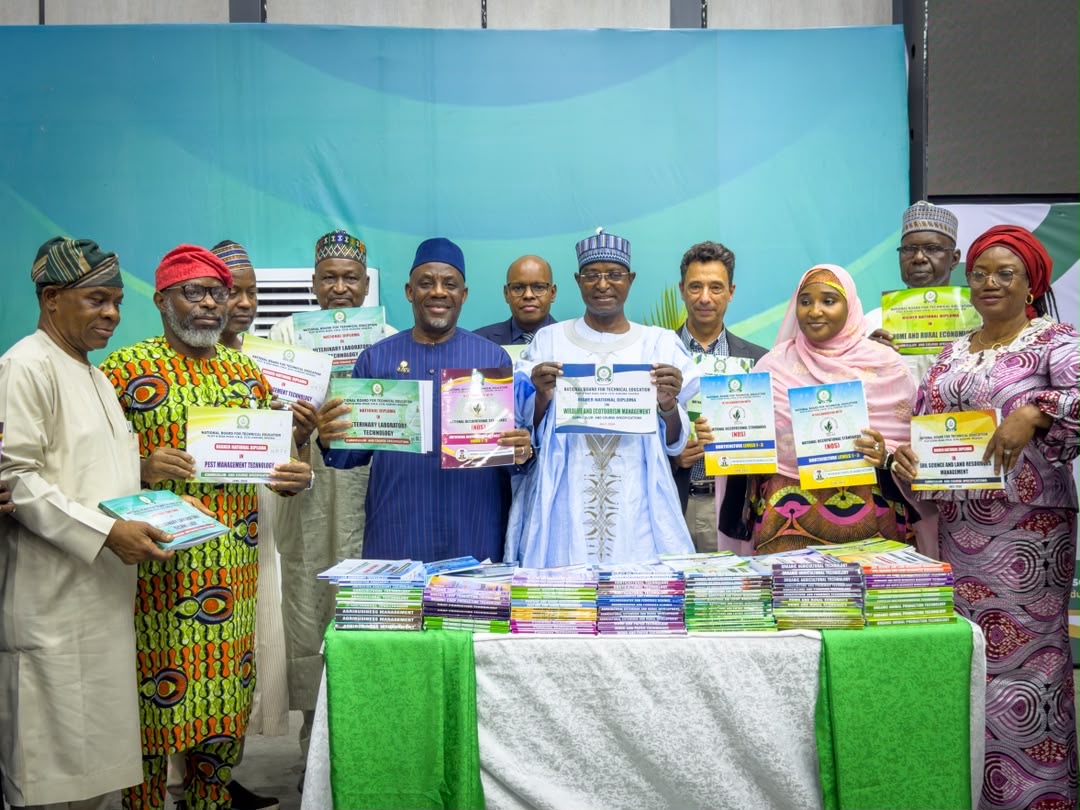
As part of efforts to bridge the gap between classroom learning and practical agricultural production, the Federal Government has unveiled 39 revised curricula and 31 National Occupational Standards for tertiary institutions.
PerSecondNews correspondent reports that the unveiling took place on Monday at the National Unveiling and Public Presentation of the Newly Developed and Reviewed Agricultural Curricula and National Occupational Standards for Tertiary TVET Institutions and Colleges of Education, in Abuja, on Monday.
According to the minister of Education, Dr Maruf Tunji Alausa, the reform would modernise agricultural education, equip students with industry-relevant skills and prepare graduates to establish businesses and create employment.
He lamented that agricultural curricula in tertiary institutions had remained unchanged for more than 30 years, leaving some graduates without the practical experience required to work in the sector.
“We have people finishing HND and BSc in agriculture. They haven’t got to the farm. We have universities offering these courses without having a farm. We knew this could not continue,” he decried.
Alausa explained that the revised framework would incorporate precision agriculture, climate-smart agriculture, artificial insemination and agribusiness, alongside practical learning through modern farms, processing facilities, greenhouses and agricultural stations.
“A major feature of the approved framework is the requirement for an 80:20 practical-to-theoretical ratio across agricultural programmes in colleges of agriculture, polytechnics and colleges of education,” he stated.
The minister cited Ethiopia’s agricultural development as an example of how investment in modern farming methods and practical skills could improve productivity and expand exports.
He also disclosed that the Federal Government had provided a N1 billion agricultural intervention to selected tertiary institutions to modernise their farms and strengthen practical training.




“The ultimate objective was to prepare young Nigerians to establish businesses and generate employment rather than depend solely on existing job opportunities,” Alausa emphasized.
“We need to create entrepreneurs. We need to create job creators and not job seekers.”
In his remarks, the Minister of Livestock Development, Idi Mukhtar Maiha, described the curriculum review as a significant step towards making agricultural education more practical, industry-driven and responsive to Nigeria’s development needs.
Maiha noted that the livestock sector offered opportunities for employment, investment, import substitution and export expansion but required skilled workers capable of improving animal production, nutrition, breeding, health, processing and marketing.
He identified the Middle East as a potential market for Nigerian red meat, saying the country needed to organise its livestock sector and develop the practical skills required to manage production from farms to final markets.
“Nigeria’s red meat is being awaited in the Middle East, but we cannot attempt that simply because we have not organised that sector. The value of that market is about $3.2 billion,” he stressed.
The minister maintained that the reviewed curricula and occupational standards would help bridge the gap between classroom learning and industry requirements, equipping graduates to establish viable businesses, adopt modern technologies and provide quality livestock services.
He added that training institutions must prioritise practical farm experience, apprenticeship and competency-based assessments while ensuring that women and young people had access to relevant vocational training.
“Our goal must be to move beyond producing job seekers to developing skilled professionals, innovative entrepreneurs, and job creators.”
Maiha urged government ministries and agencies, educational institutions, private-sector operators and development partners to support the implementation of the revised standards through adequate funding, modern facilities and stronger industry partnerships.
“The success of the reforms should be measured by improved livestock productivity, employment generation, stronger enterprises and better livelihoods rather than simply the number of curricula reviewed,” he maintained.
Author










Leave a comment