
















By Omoyeni Ojeifo
Despite legal and regulatory reforms aimed at easing compliance for non-profit organisations (NPOs), many legitimate charities in Nigeria still face difficulties accessing financial services as some financial institutions continue to apply heightened risk measures without fully reflecting the new regulatory framework.
The concern dominated a fireside session titled “Financial Inclusion Drive for NPOs in Nigeria: Moving from the Rules-Based to the Risk-Based Approach,” on the second day of the 3rd Africa High Level Civil Society AML/ CFT Conference in Abuja on Thursday, Persecondnews reports.
Highlighting the gaps between reforms and practice, Executive Director of Spaces for Change and convener, Victoria Ibezim-Ohaeri, said although Nigeria had implemented key legal and policy reforms, many financial institutions had yet to align with the country’s new regulatory framework.
“The regulatory authorities had done their part and the legislature had done its part, but the private sector was still in the old mode. Financial institutions continued treating all NPOs as high-risk customers, creating difficulties in opening and operating bank accounts,” she said.
Ibezim-Ohaeri said the Multi-Stakeholder Working Group on Charities was created to bridge the gap between regulators, financial institutions and civil society organisations.
“Many financial institutions were not even aware that Nigeria had conducted the risk assessment, the risk categorisation had changed and new regulatory measures had been introduced. The platform now enables us to share that information and build understanding,” she said.
Speaking from the regulatory perspective, Ibinabo Amachree, Head, Lagos Office of the Special Control Unit Against Money Laundering (SCUML), said sustainable reforms required active collaboration between government and the private sector.
“Government alone cannot successfully build and sustain reforms without the involvement of all stakeholders, particularly the private sector. That is why this platform is important,” she said.
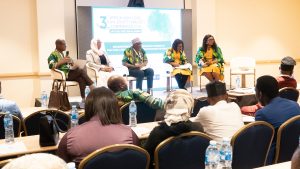
Amachree said Nigeria’s national risk assessment had changed the country’s approach to supervising the non-profit sector.
“The old narrative can no longer be sustained. We now have FATF-defined NPOs and at-risk NPOs, which means attention and resources should be focused on organisations that are genuinely vulnerable to terrorist financing abuse.”
Explaining the position of financial institutions, Head of Compliance and Internal Control at the National Credit Guarantee Company (NCGC), Sa’adatu Salley, said financial institutions often adopted cautious measures because of the regulatory penalties they faced.
“Financial institutions face huge penalties and sanction risks. Context matters. Institutions should deal with customers on an individual basis because there are ways around over-compliance that are both justifiable and acceptable,” she said.

Salley urged non-profit organisations to strengthen their internal governance and documentation to make risk-based assessments easier.
“NPOs need to be properly registered and accurately document their records. Institutions should conduct risk-based reviews, but organisations must also have the necessary governance, documentation and evidence to support their activities,” she said.
Also, President of the Association of Bureau De Change Operators of Nigeria (ABCON), Dr. Mohammed Gwadabe, said the bureau de change sector had experienced challenges similar to those confronting non-profit organisations.
“What we are dealing with is generalisation and criminalisation. Negative perception is a very bad phenomenon because once people see you as high risk, they continue to assume the worst, even when you are doing the right thing,” he said.
Gwadabe said sustained compliance and transparency had helped the bureau de change industry rebuild confidence among regulators and stakeholders.
“We are working to earn the trust of regulators, the public and security agencies through stronger compliance and transparency,” he added.
The session ended with questions and contributions from participants, including bankers, regulators and civil society representatives, who shared experiences and explored practical ways to strengthen collaboration while ensuring legitimate non-profit organisations maintain access to financial services.
Persecondnews reports that the three-day, organised by Spaces for Change, is focused on strengthening implementation of standards affecting the non-profit sector across Africa.
Author












Leave a comment