











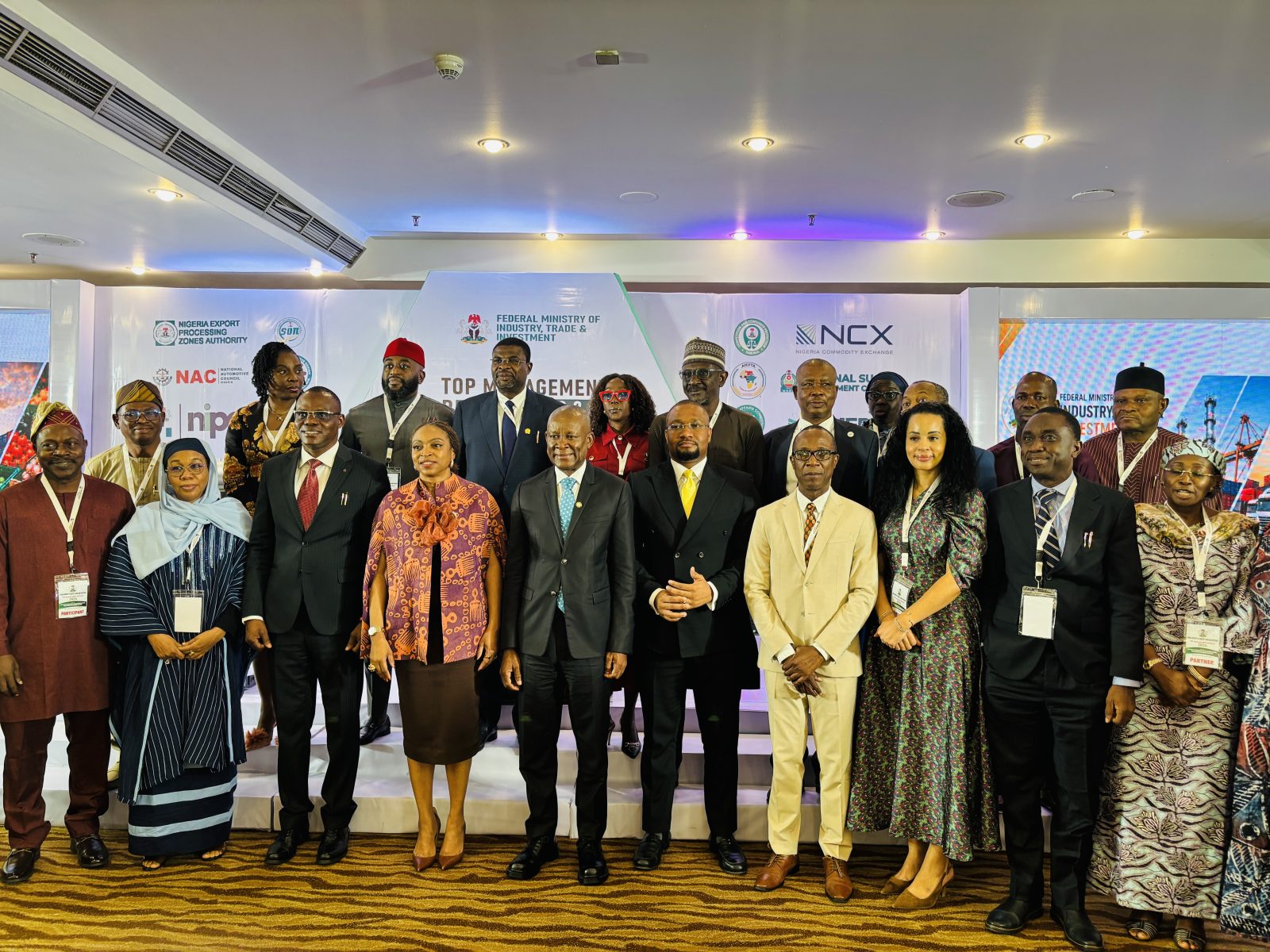




The Minister of State for Industry, Sen. John Enoh, has said the success of Nigeria’s Industrial Policy (NIP) will be measured by its ability to create jobs, expand businesses and deliver prosperity to Nigerians.
Enoh said this on Monday at the top management retreat for Directors, Directors-General and Chief Executive Officers of agencies under the ministry in Abuja.
He described the retreat as an opportunity for reflection, alignment and renewed commitment to translating policies into measurable results”.
According to him, the ministry has recorded significant achievements over the past two years, but stressed that the focus must now shift from policy formulation to effective implementation.
He recalled that shortly after the launch of the Nigeria Industrial Policy, the ministry committed to producing a 90-day implementation report to ensure accountability and track progress.
The minister said the report, recently released, has already revealed encouraging signs, including progress on a $380 million industrial development programme supported by development partners and targeted at strengthening industrial clusters and improving the productivity of Micro, Small and Medium Enterprises (MSMEs).
He also disclosed that discussions were ongoing with development partners on a proposed N350 billion development fund aimed at supporting enterprise growth and industrial expansion.
On skills development, Enoh said the ministry, in collaboration with the Industrial Training Fund (ITF) and other agencies, has trained about 700 individuals in specialised industrial skills.
He stressed that industrial growth would not happen automatically, noting that it requires investment, technology, innovation, infrastructure, market access and strong coordination among stakeholders.
“The true success of Nigeria’s Industrial Policy will not be measured by policy documents but by factories that expand production, MSMEs that grow into larger enterprises, jobs that are created, exports that increase and imports that are substituted,” he said.
The minister said the ministry has intensified engagements with manufacturers, investors and value-chain operators to better understand the challenges facing industries and design practical solutions.
He noted that consultations had been held with stakeholders in sectors such as fertiliser production, rice processing, cashew processing and shea exports.
According to him, effective implementation of the policy requires awareness, alignment among agencies, accountability and institutionalisation to ensure continuity beyond individual administrations.
Enoh described industrialisation, trade and investment as critical pillars of Nigeria’s economic transformation, adding that the ministry remains central to efforts aimed at diversifying the economy and reducing dependence on oil revenues.
He urged stakeholders across the ministry and its agencies to deepen collaboration and focus on delivering tangible outcomes that improve the lives of Nigerians.
“The policy is in place, the implementation matrix is in place, the early results are emerging and partnerships are growing. The responsibility now rests on all of us to turn policy into performance and industrial growth into national prosperity,” he said
Persecondnews correspondent reports that the two-day retreat was organised to review the implementation of the Nigeria Industrial Policy, assess performance under the ministry’s strategic priorities and strengthen institutional coordination for industrial growth, trade expansion and investment outcomes.
Author












Leave a comment