















By Omoyeni Ojeifo
The Federal Government has reaffirmed its commitment to strengthening land governance systems to improve access and control over land for smallholder farmers, particularly women and young people engaged in agroecology.
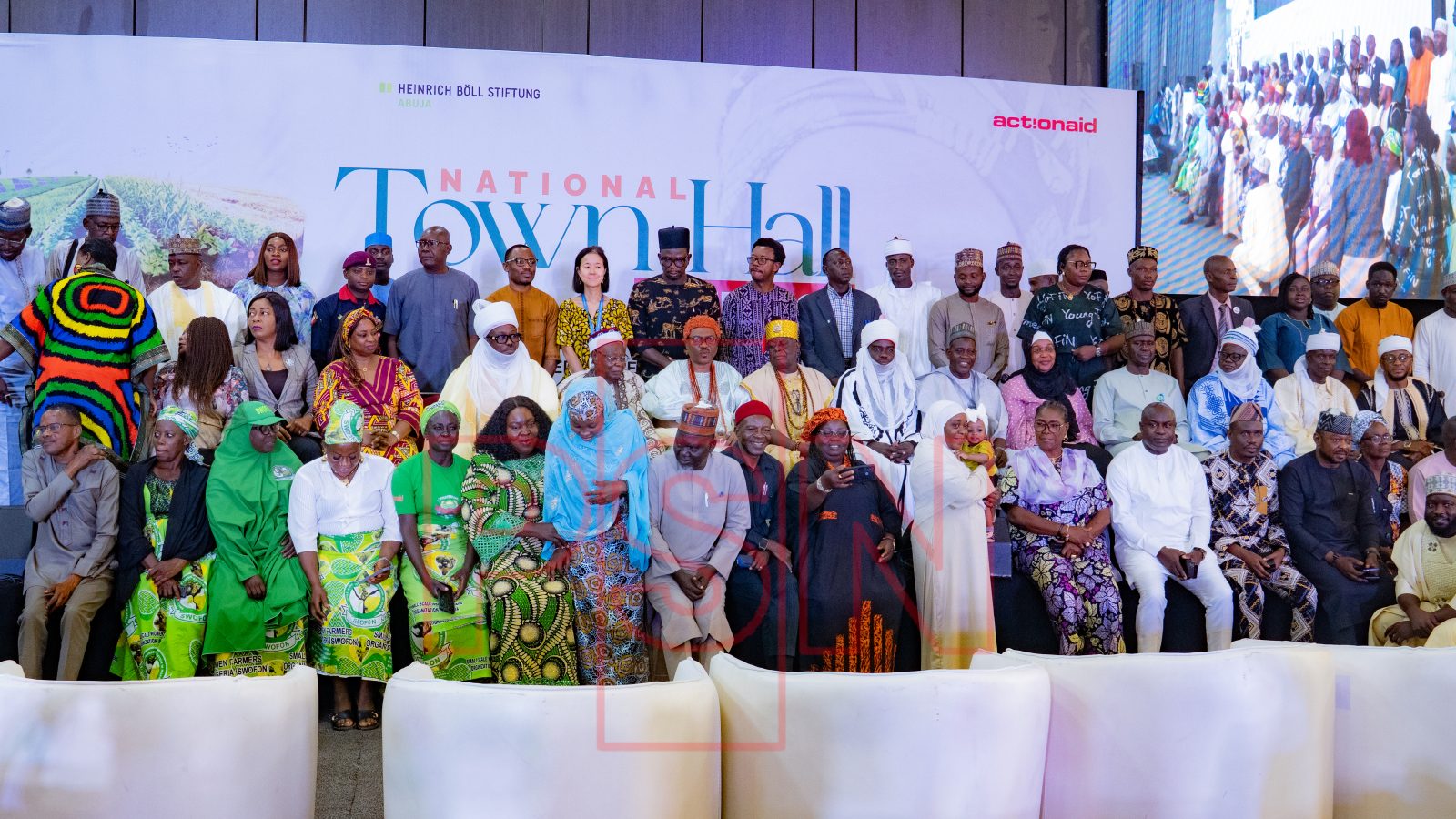
The Permanent Secretary in the Federal Ministry of Agriculture and Food Security, Dr Marcus Ogunbiyi, said this at a national town hall neeting on the Land Use Act and alternative frameworks for land access and control, organised by ActionAid Nigeria in Abuja on Wednesday.
Ogunbiyi, represented by Dr. Tanimu Ibrahim, noted that land remains a critical productive asset for agricultural development, rural livelihoods, and national food security.
He said access to land is still constrained by structural, legal, and socio-cultural barriers affecting smallholder farmers.
“Millions of Nigerians, particularly smallholder farmers, women farmers, and young people, continue to face structural, legal, and socio-cultural barriers in accessing land,” he said at the event covered by Persecondews.
He noted that while the Land Use Act provides a legal framework for land administration, concerns around equity, tenure security, and accessibility persist, stressing the need for more inclusive and gender-responsive frameworks.
Also speaking, the Country Director of ActionAid Nigeria, Andrew Mamedu, represented by the Director of People and Culture, Funmi Olukeye, said the engagement comes at a critical time when Nigeria is grappling with climate shocks, land degradation, and rising food insecurity.
She noted that smallholder farmers remain at the centre of food systems but continue to face systemic barriers in accessing and controlling land.
“This engagement is important because inclusive land governance, support for agroecology, and deliberate investment in women and young people are critical to unlocking Nigeria’s agricultural potential and building resilient food systems,” she added.
Mamedu emphasized that inclusive land governance, support for agroecology, and deliberate investment in women and young people are key to unlocking the agricultural sector and strengthening food systems across the country.
The National PRO Small Scale Women Farmers Organisation of Nigeria (SWOFON), Marka Awbas, said women farmers continue to face multiple overlapping challenges in accessing and controlling land, which limits their productivity and contribution to food systems.
She said securing land for women would significantly increase food production, improve livelihoods, strengthen communities, and enhance nutrition outcomes across the country.
“We are facing multiple overlapping challenges over access and control of land,” she said. “If women are given land, it will increase food production, improve livelihoods, strengthen communities, and improve nutrition outcomes across the country.”
She added that empowering women with land access remains critical to reducing poverty and achieving food security.
The National Coordinator of the Young Farmers Association in Nigeria (YOFIN), Atatasi First Lady Ntene, said access to land remains a major barrier for young farmers.
She noted that many lands are under the authority of traditional rulers, who play a key role in determining access to land for agricultural purposes. “These lands belong to them, so they determine who gets access or not.”
She further urged traditional institutions to play a stronger role in facilitating land access for farmers in order to strengthen national food security.
In a unified response, representatives from the Federal Ministry of Agriculture and Food Security, state ministries of agriculture and lands from Ondo, Jigawa, Taraba, Delta, Ebonyi States and the Federal Capital Territory, expressed collective commitment to strengthening land governance systems.
They pledged stronger collaboration with stakeholders, support for policy reforms, and expansion of land access initiatives aimed at empowering smallholder farmers.
Persecondnews reports that traditional rulers who were also in attendance, reaffirmed their support for land access policies, pledging continued collaboration with government and development partners to open up more community lands for agriculture.
Author












Leave a comment