









The prompt intervention and operational professionalism of the Nigerian Railway Corporation (NRC) ensured that what could have escalated into a major rail disaster on the Abuja–Kaduna corridor on Monday morning was quickly contained, with services restored the same day.
The incident occurred on March 16, 2026, when the Kaduna–Abuja KA-2 train service experienced an internal coach collision while approaching Asham Station.
According to an interim report issued by the Managing Director of the NRC, Kayode Opeifa, the train had departed Rigasa Station in Kaduna at 7:15 a.m. on schedule and arrived Jere Station slightly ahead of time at 8:52 a.m.
The train later departed Jere at 8:59 a.m., a few minutes behind schedule after an additional locomotive was coupled to the rake to strengthen operational resilience.
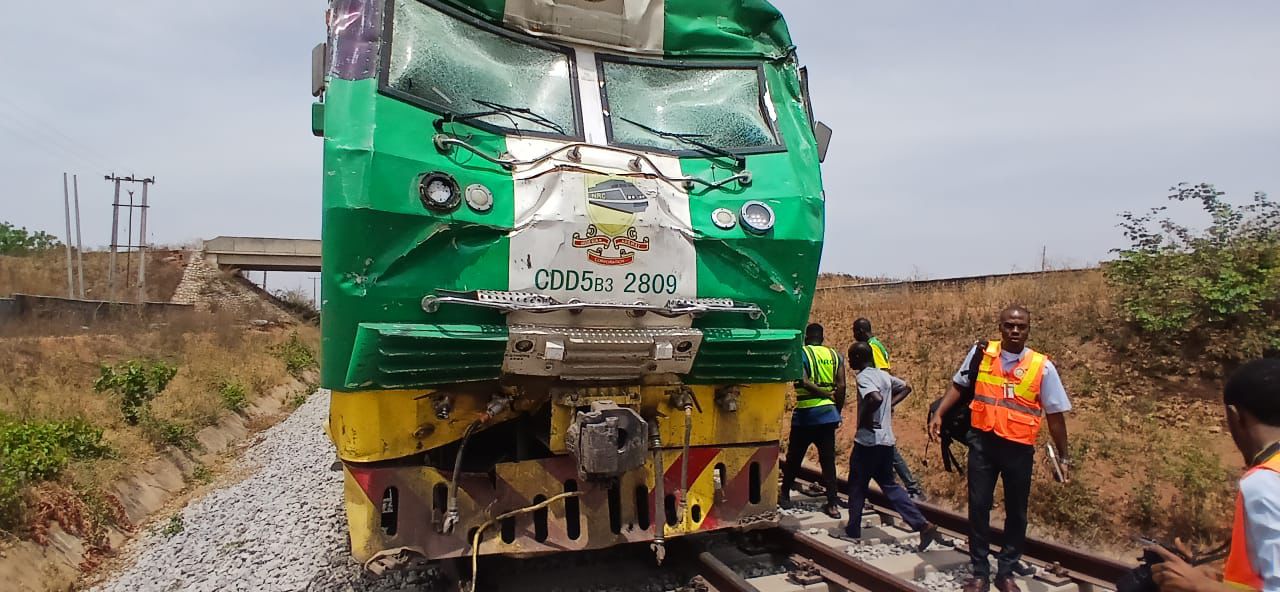
At about 9:16 a.m., shortly before arriving at Asham Station between kilometre points 50 and 51, passengers and crew heard a loud bang when the power car and trailing locomotive made contact with one of the coaches.
Preliminary findings suggest that the incident may have resulted from a coupler malfunction, which likely caused a temporary decoupling between train components.
Crucially, no part of the train derailed, a development railway officials say underscores the effectiveness of the rail system’s safety design and the quick response by onboard personnel.
Following the incident, the affected units — locomotive 2809, power car BVA0002, and passenger coach SP0006 — were swiftly detached to stabilise the train and allow the remaining coaches to continue safely.
Hundreds Safely Accounted For
At the time of the incident, 481 occupants were onboard the service.
The manifest showed:
429 passengers who boarded from the 459 booked for the trip
10 train crew members
26 security personnel, including members of the Man O’ War
6 food vendors
8 cleaners
2 third-party operators, including a nurse and a technical services operative
Medical attention was immediately provided to those affected, with 26 individuals recording minor to moderate injuries among passengers, security personnel and service staff.
Authorities confirmed that all passengers were safely evacuated and accounted for, while emergency response procedures were activated to ensure continued safety on the corridor.
Train Continues Journey
After the affected equipment was detached, the train departed the incident location at 9:42 a.m., arriving Kubwa at 10:10 a.m. before reaching its final destination at Idu Station in Abuja at 10:39 a.m.
The entire disruption resulted in a 38-minute delay, largely due to the time required to safely isolate the damaged rolling stock.
Services Restored Same Day
In a demonstration of operational resilience, the Abuja–Kaduna rail service resumed operations later the same day.
The AK1 service departed Idu Station at 2:48 p.m., though later than the scheduled 11:00 a.m., and arrived Rigasa Station in Kaduna at 5:33 p.m.
Notably, NRC Managing Director Kayode Opeifa personally boarded the service with other officials to oversee operations and reassure passengers.
The return service, KA4, subsequently departed Rigasa at 6:12 p.m., arriving Kubwa at 8:31 p.m. and Idu Station at 8:58 p.m.
Railway authorities say a full technical investigation is underway to determine the precise cause of the coupler failure.
Industry observers have commended the swift response by NRC personnel and the structural integrity of the train system, noting that the absence of derailment and the rapid restoration of services highlight the growing operational capacity of Nigeria’s modern rail network.
Author






Leave a comment