









Nasarawa State is transitioning toward a decentralized energy market amid rising public frustration over unreliable electricity.
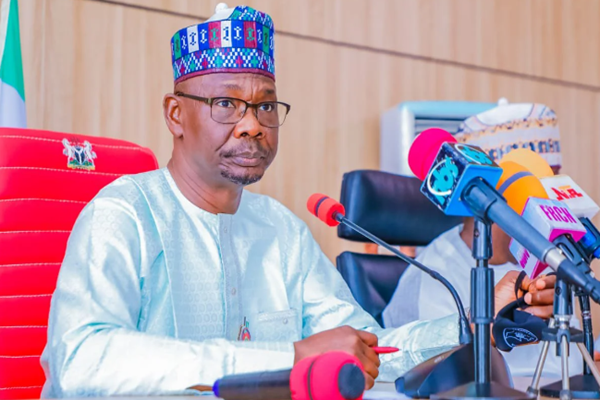
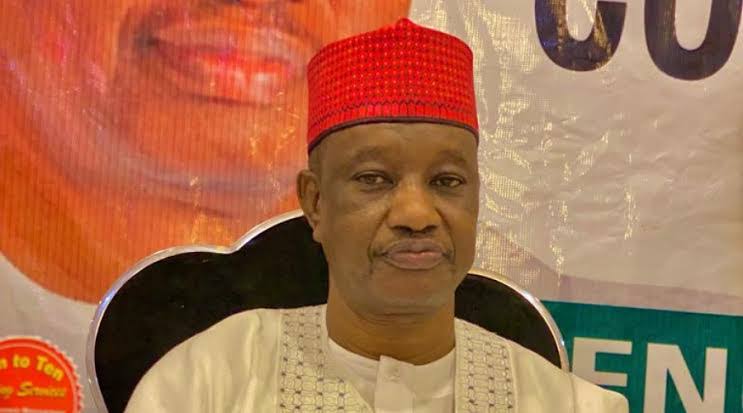
Following widespread protests in Lafia over “chronic blackouts,” Governor Abdullahi Sule has formally launched the Nasarawa State Electricity Regulatory Commission (NASERC).
Utilizing the Electricity Act 2023—which permits states to manage their own generation and distribution—the newly inaugurated commission will now oversee the state’s power sector.
Gov. Sule hailed the move as a critical step in securing energy stability and fostering long-term economic development.
“Our desire is to ensure that we have full authority to generate, transmit and distribute electricity to the satisfaction of our citizens,” the governor said.
He noted that stable electricity supply is essential for the state’s development agenda, particularly at a time when Nasarawa is attracting growing interest from investors in mining and agriculture.
“Especially at a very challenging period such as what we are in right now, this commission is cardinal to our development objectives,” he added.
The governor described the new regulatory framework as a necessary foundation for industrial expansion, job creation and poverty reduction, arguing that investor confidence depends heavily on dependable power supply.
“Undoubtedly, this endeavour cannot be actualised without steady power supply to further boost investors’ confidence,” Sule said.
The commission is chaired by Engr. Abubakar Bello, who now faces the task of translating the provisions of the Electricity Act into operational regulations that can attract private sector investment into the state’s power sector.
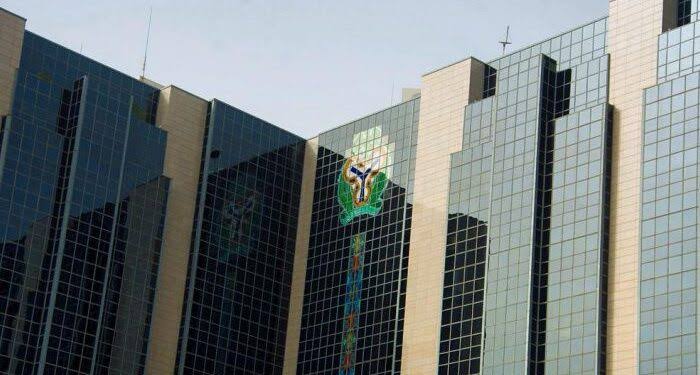
Officials say the immediate priorities include establishing licensing systems for independent power producers and coordinating the transition of regulatory authority from the federal regulator, the Nigerian Electricity Regulatory Commission, to the state-level commission.
The administrative transfer of oversight is expected to be completed in the first quarter of 2026.
State authorities believe the reforms could unlock fresh investment in electricity generation and distribution. Government projections suggest that energy-related projects announced for the state in 2025 alone could exceed 70 million dollars.
The electricity initiative is also tied to a broader infrastructure and economic development programme backed by the state’s 2026 budget.
Out the Nasarawa State 2026 Appropriation Act of ₦545.2 billion, ₦157.8 billion is allocated to infrastructure development, including projects designed to support independent power generation and energy distribution.
Another ₦221.84 billion has been earmarked for the economic sector, a category that includes rural electrification schemes and power supply initiatives targeted at small and medium-scale enterprises.
The government has also pursued complementary infrastructure projects, including road networks linking energy facilities such as the Akurba Power Substation to the national grid.
In addition, authorities have highlighted the potential of the Farin Ruwa Dam, which could support both hydroelectric generation and irrigation for agricultural activities if fully developed.
While the state government focuses on structural reforms, residents say immediate challenges remain unresolved.
During the protest in Lafia, demonstrators led by community advocate Ibrahim Abdullahi Attama accused authorities and electricity distributors of failing to address long-standing infrastructure problems.
Attama said aging power facilities, damaged cables, worn-out transformers and neglected distribution lines have contributed to frequent outages across communities.
He argued that the absence of routine maintenance has allowed minor technical faults to escalate into prolonged blackouts lasting weeks in some cases.
The protesters called for a comprehensive audit of power infrastructure across the state and demanded that faulty equipment be replaced quickly to restore reliability to the network.
They also raised concerns about what they described as insufficient electricity allocation to the state from the national grid.
“Even when the infrastructure is functional, the actual supply hours are minimal and unpredictable,” Attama said. “This indicates a fundamental shortfall in the megawatts made available for distribution.”
He added that businesses in the state face significant operational difficulties due to the unstable power supply, forcing many to rely on costly alternatives.
Demonstrators further criticised the management structure of electricity distribution services in the state, describing it as slow to respond to consumer complaints and lacking transparency in communication with customers.
They urged authorities to improve accountability and provide clearer information about outages and repairs.
Attama warned that the protests could continue if residents do not see measurable improvements in electricity supply.
Electricity distribution companies, however, said the problem extends beyond local infrastructure challenges.
Power operators have attributed the low electricity supply across the country to fuel shortages affecting generation plants and declining water levels at hydroelectric facilities.
Persecondnews recalls that the Nigerian Independent System Operator had confirmed that electricity generation on the national grid had fallen to about 4,300 megawatts due to gas supply constraints.
According to the system operator, only about 692 million standard cubic feet of gas was supplied to power plants, far below the 1,629 million standard cubic feet required to sustain optimal electricity generation.
Persecondnews reports that Nasarawa’s path to energy independence depends on two critical factors – attracting major infrastructure investment and rebuilding public trust.
The new framework will only be as strong as its ability to expand generation and end the chronic outages currently plaguing the state.
Authors




Leave a comment