







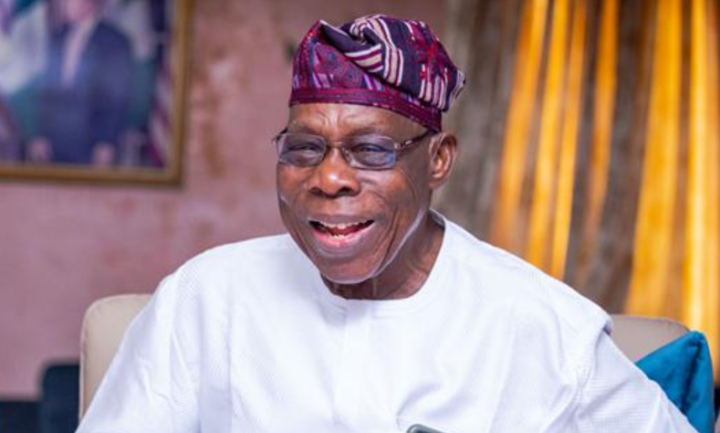



In the heart of Ogun State, the rhythmic thunder of the Gbedu drums resonates today, March 5, 2026, in a singular tribute.
They honour the extraordinary journey of Chief Matthew Olusegun Aremu Okikiola Obasanjo, the “village boy” from the Ibogun wilds who ascended to become a global titan.
As “Baba” celebrates another milestone, Nigeria pauses to reflect on a life that has not merely witnessed nearly a century of history but has boldly redesigned its course.
Born in 1937 in the historic city of Abeokuta, Ogun State, the man affectionately known as “Baba” remains a colossus in the landscape of African leadership.
From a career soldier to a two-time head of the Nigerian state, Obasanjo’s journey is widely regarded as a cinematic masterclass in political survival and continental influence.
From the trenches of the Civil War to the gulags of a military dictator, and finally to the heights of democratic power, the Obasanjo story is a kaleidoscope of survival, tragedy, and rebirth.
The day’s celebrations highlight Obasanjo’s unique position in the history of the Federal Republic, as he remains one of the few individuals to have steered the nation’s helm during two distinct eras:
1976–1979 as Nigeria’s Military Head of State, during which he gained international acclaim for voluntarily overseeing the transition to civilian rule, a rarity in the coup-prone decades of the 20th century.
From 1999–2007 during which he returned decades later as a democratically-elected President, ushering in the Fourth Republic. His tenure is famously credited with the “telecoms revolution,” which introduced the GSM technology and bridged the digital divide for millions of Nigerians.
Perhaps the most harrowing and transformative chapter of Obasanjo’s life was his time behind bars. In 1995, during the draconian regime of General Sani Abacha, Obasanjo was arrested on trumped-up charges of plotting a coup.
He was initially sentenced to death—a sentence later commuted to 15 years—and spent agonizing years in the desolate cells of Jos and Yola prisons.
It was during this bleak period of incarceration that he reportedly found a deeper spiritual calling, emerging in 1998 not as a broken man, but as a reinvigorated statesman.
His journey from the “valley of the shadow of death” directly to the Aso Rock Presidential Villa in 1999 remains one of the most stunning political resurrections in modern history.
Upon his return to power, Obasanjo launched a frenetic series of reforms that dismantled the stagnation of military rule. His landmark policies include:
The Telecoms Revolution: The monumental auction of Digital Mobile Licenses in 2001, which effectively birthed the GSM era and ended the era of “telephone-for-the-rich.”
Debt Relief: A masterstroke of international diplomacy led by Ngozi Okonjo-Iweala, which saw Nigeria exit the London and Paris Club debts, wiping off over $30 billion in liabilities.
Anti-Corruption Frameworks: The establishment of the EFCC and ICPC, marking the first systemic attempt to institutionalize the fight against graft.
Economic Liberalization: The privatization of state-owned enterprises and the aggressive banking sector consolidation that created the “Mega Banks” of today.
Beyond the corridors of power, Obasanjo has carved out a niche as a prolific and often provocative social critic, perfecting the “Art of the Epistle”—sharply worded, incisive open letters addressed to his successors.
Speakers at various commemorative events noted his penchant for “epistles”—sharply worded, incisive open letters addressed to sitting presidents.
While critics often describe his critiques as “acidic” or suggest he is quicker to spot the faults of others than his own, his supporters view these letters as the essential interventions of an elder statesman.
“He refuses to be a silent observer while things go wrong,” noted one commentator, citing the Yoruba proverb that an elder cannot be at home while a goat delivers on a tether.
A significant pillar of Obasanjo’s legacy is his formidable track record of mentorship. He is widely praised for “fishing out” and grooming high-caliber technocrats—most notably empowering women like Ngozi Okonjo-Iweala and Oby Ezekwesili, whose impact has since resonated on the global stage.
Even in his advanced years, the “General” shows no signs of slowing down. Through the Africa Leadership Forum, he continues to be a peripatetic peacemaker, recently surfacing in Burundi and other conflict zones on diplomatic missions.
Observers today marveled at his sturdy physical health, noting his continued participation in football matches and his “legendary” ability to remain active and hale while most his age have long retired from public view.
“Love him or hate him, Chief Obasanjo is an enigma,” remarked a guest during a televised tribute. “He has demonstrated that he can jump from the skies and land on the earth without breaking a bone. That man is a legend.”
As the sunset of his career continues to burn brightly, the consensus remains that Olusegun Obasanjo’s name is permanently etched into the annals of history as a man who didn’t just witness Nigerian history—he wrote it.
Across the nation and the African continent, tributes are pouring in today, March 5, 2026, to honour one of Nigeria’s most consequential and indomitable political titans, Chief Olusegun Obasanjo, as he marks another milestone birthday, inching into nonagenarian next year.
Persecondnews reports that President Bola Tinubu has led by paying a resounding tribute to former President Obasanjo on the occasion of his 89th birthday, honoring a legacy defined by military service, political power, and resilience.
In a message released on Wednesday given to Persecondnews, Tinubu celebrated Obasanjo’s “towering influence” across the continent, describing him as a statesman whose navigation of Nigeria’s most turbulent eras continues to resonate in modern public discourse.
The Presidency highlighted Obasanjo’s unique trajectory of sacrifice—from his command during the Nigerian Civil War to his dual roles as a military head of state and a democratically elected leader.
Tinubu specifically noted Obasanjo’s historic 1979 transition, where he became the first military leader to voluntarily hand over power to a civilian government, only to return two decades later to serve as the first president of the Fourth Republic from 1999 to 2007.
However, the president’s tribute suggested that Obasanjo’s political journey has never been defined solely by office.
Tinubu pointed to moments that tested the former leader’s resolve, including his time in prison after openly criticising military rule, as well as his persistent advocacy for Africa’s political and economic progress on the global stage.
He noted that Obasanjo’s tireless involvement in national affairs—expressed through his prolific writing, public discourse, and high-level diplomatic missions—demonstrates a profound commitment to Nigeria that transcends his time in office.
As the elder statesman celebrates his 89th year, the President offered prayers for his continued vitality and wisdom, voicing his hope that Obasanjo’s influential perspective will continue to play a role in steering the nation toward a brighter future.
Former President Goodluck Jonathan wrote: “Happy Birthday to a father figure and a towering statesman. Your life remains a masterclass in patriotism and service. Africa is richer for your wisdom, and Nigeria is more stable because of your enduring commitment to national unity. May God grant you many more years of strength and clarity.”
Obasanjo’s erstwhile Vice President, Atiku Abubakar stated: “To a leader who has consistently redefined the art of statesmanship: Happy Birthday, Baba. Your legacy of building institutions and fostering regional cooperation continues to inspire us all. I wish you sound mind and body as you continue to guide the next generation.”
From the Commonwealth/Global Leaders: “Warmest congratulations to a global icon of diplomacy. Chief Obasanjo’s work in mediation and conflict resolution has saved countless lives across the continent. He remains a beacon of hope for African democratic transition.”
Author






Leave a comment