











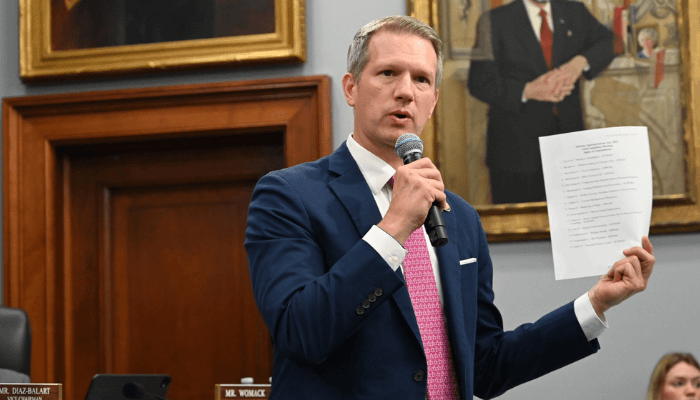




A bipartisan coalition of influential U.S. lawmakers has unveiled sweeping legislation aimed at confronting what they describe as escalating religious persecution and mass atrocities against Christians in Nigeria, signaling a potential new phase of diplomatic pressure on Africa’s most populous nation.
The proposed Nigeria Religious Freedom and Accountability Act of 2026 (HR 7457), introduced by Representatives Riley Moore of West Virginia and Chris Smith of New Jersey, would compel the U.S. Secretary of State to deliver a comprehensive report to Congress detailing America’s response to the crisis and assessing Nigeria’s actions, or inaction in protecting vulnerable religious communities.
Backed by powerful committee leaders, including House Appropriations Chairman Tom Cole, House Foreign Affairs Chairman Brian Mast, and senior subcommittee heads Mario Diaz-Balart and Bill Huizenga, the bill underscores growing concern in Washington that violence linked to extremist groups and armed militias has reached intolerable levels.
Moore, who recently visited Nigeria as part of a congressional investigation requested by President Donald Trump, described witnessing “firsthand the horrors” faced by Christian communities, saying the legislation sends a clear message that the United States stands with persecuted believers while supporting Nigeria’s efforts to restore security.
Smith, a long-time advocate on international religious freedom who has chaired 13 congressional hearings on Nigeria, accused the Nigerian government of denying the scale of the crisis, warning that such denial has allowed killings, church attacks, and displacement to surge. With Nigeria now redesignated a Country of Particular Concern, he argued, Washington has a duty to ensure meaningful accountability and justice for victims.
Senior congressional leaders echoed that urgency. Mast said the “free world cannot stand by” amid kidnappings, murders, and assaults by terrorist groups and militias, while Cole framed the defense of religious liberty in Nigeria as both a moral obligation and a core American strategic interest.
If enacted, the legislation would mandate an expansive U.S. government review of Nigeria’s compliance with international religious freedom standards, potential sanctions under the Global Magnitsky framework, humanitarian assistance for displaced Christians, and whether American security cooperation risks worsening persecution. It would also scrutinize blasphemy laws, Sharia-related prosecutions, extremist networks, and the safety and return prospects of internally displaced persons.
The bill represents one of the most forceful congressional efforts in years to tie U.S.–Nigeria relations to measurable progress on religious freedom, raising the stakes for Abuja while signaling that future cooperation with Washington may increasingly hinge on demonstrable protection of vulnerable communities.
As debate over the legislation unfolds, the message from Capitol Hill is unmistakable: the era of quiet concern may be giving way to structured accountability.
Author







Leave a comment