






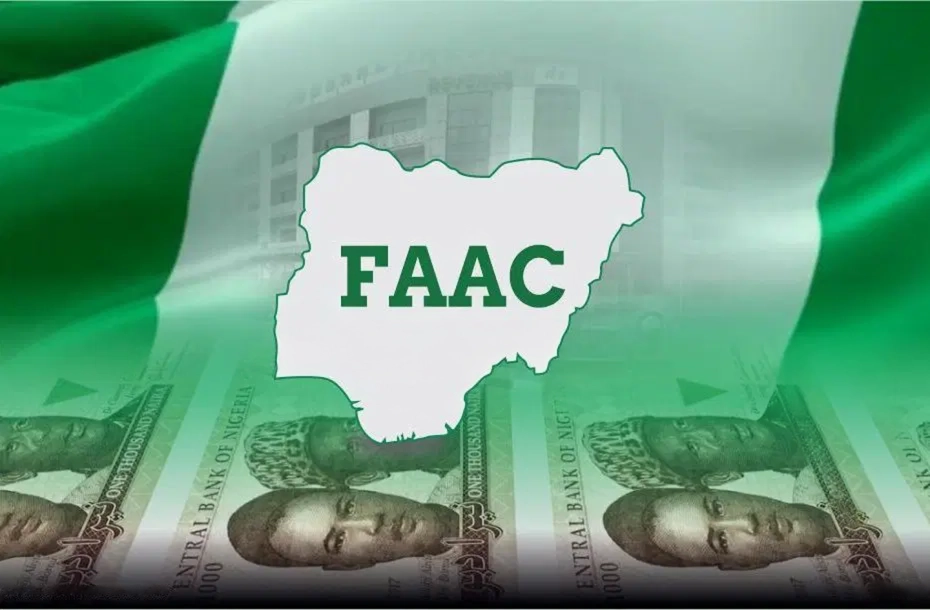



A persistent deadlock over the distribution of ₦1.97 trillion has halted the release of federation revenue for the second consecutive week.
This delay has triggered a salary crisis, leaving federal and state civil servants across Nigeria without their January pay.
Typically, government employees receive their salaries within five days of the monthly Federation Account Allocation Committee (FAAC) meeting.
However, despite the committee meeting on January 20, 2026, in Abuja, the funds remain frozen.
Sources indicate that state Finance Commissioners had rejected the proposed figures, arguing that the amount tabled does not accurately reflect the actual revenue generated in December 2025.
“The states felt the money brought forward did not match what was realised in December. That is why they did not agree to the distribution,” one of the sources said.
A fresh meeting of the FAAC has been scheduled for Monday, February 2
to break the deadlock.
“It is possible that the amount will be adjusted to meet the expectations of the state governments,” he added.
At the January meeting, the FAAC had tabled N1.969 trillion for sharing from a total revenue of N2.585 trillion recorded in December 2025 .
The meeting was chaired by the Minister of State for Finance, Dr. Doris Uzoka-Anite.
A breakdown of the revenue shows that N846.5 billion came from Value Added Tax, N1.631 trillion from other statutory sources, and N38.1 billion from the Electronic Money Transfer Levy.
The Federal Government was expected to receive N653.5 billion while the 36 states and the Federal Capital Territory were to share N706.4 billion and the 774 local government councils N513.2 billion.
Oil-producing states were also set to receive N96 billion as their 13 percent derivation from oil revenue.
The delay is said to have sparked anxiety in many states, as most of them depend heavily on the monthly FAAC allocation to run their governments.
About 31 states rely on this money for at least 80 percent of their monthly spending, including the payment of workers’ salaries and the funding of basic projects.
A state official said: “without this allocation, it becomes very difficult to meet our obligations, especially salary payments and essential services.”
Persecondnews reports that FAAC is made up of representatives of key government and revenue agencies, including the Federal Ministry of Finance, the Office of the Accountant-General of the Federation, the Nigerian National Petroleum Company Limited, the Nigeria Customs Service, the Federal Inland Revenue Service, state Commissioners of Finance, and representatives of local governments.
Author





Leave a comment