






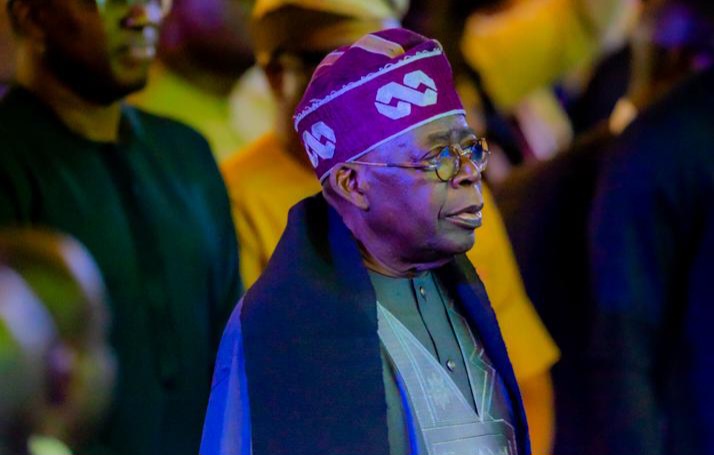



President Bola Tinubu opened the 19th OTL Africa Energy Week on Monday with an appeal to the continent to harness its vast hydrocarbon wealth for African benefits.
He warned that limited refinery capacity and weak distribution networks have forced the bulk of the $120 billion resource pool to be exported abroad.
Tinubu, who was represented by Minister of State for Petroleum (Oil) Heineken Lokpobiri, called for urgent investment to boost local refining and keep more value within Africa.
Tinubu said: “Africa has a proven $120 billion worth hydrocarbon resources. We, however, have limited refinery capacity and distribution network, and based on this, a larger chunk of this money is exported to countries outside Africa.
“We want to retain the greater portion of that, and this is why we encourage investments that will make Nigeria a refinery hub.”
He also urged the conference to shift its narrative, saying: “Let the narrative change. According to statistics, $700 bn should be spent if the world is to avoid an energy crisis by 2050.”
“The hues on energy transition are not in the best interest of Africa. It is not in the best interest of Nigeria. Where are we transitioning to?”
In 2024, Nigeria exported 86 % of its crude oil and 36 % of its natural gas, with data from the Nigerian Upstream Petroleum Commission (NUPRC) showing the export market dwarfed domestic supply and hampered the nation’s energy‑driven economic plan.
Tinubu hailed the fuel subsidy removal as a “far better decision for our energy industry” made on his first day in office.
He also announced the Federal Government’s strong commitment to the Dangote Refinery’s expansion, which aims to increase capacity from 650,000 bpd to 1.4 million bpd in three years, thereby enhancing supply reliability throughout Nigeria and the African continent.
Commending the OTL Africa Energy Week for focusing on Africa’s energy deficits, Tinubu asserted that the continent must strategically prioritize investments.
This includes fixing deficiencies in refining and distribution, limiting excessive crude exports, and re-allocating the estimated $120 billion derived from hydrocarbon wealth directly toward African development goals.
Author









Leave a comment