





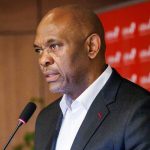

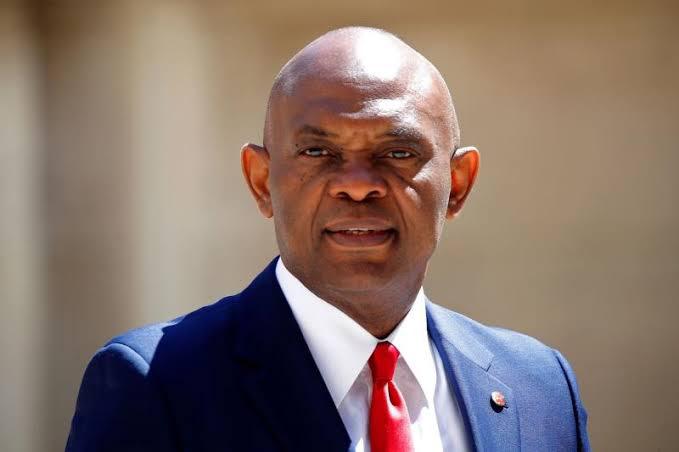



Africa’s economic growth is being hindered by a lack of trust and accountability in governance, according to Tony Elumelu, founder and chairman of Heirs Holdings.
Speaking on Wednesday at the Annual Meetings of the World Bank and the International Monetary Fund (IMF) in Washington, D.C., Elumelu noted that Africa needs sound governance to unlock and mobilize its over $4 trillion in domestic capital.
“Africa has over $4 trillion in domestic capital, but we need trust, accountability, and sound governance to mobilize it effectively,” Persecondnews quotes Elumelu as saying.
“Digital inclusion is economic inclusion. Governments must create an enabling environment and ensure that private capital serves the people.”
Elumelu highlighted the importance of digital inclusion in achieving economic growth and prosperity.
“When we talk about productivity today, it’s really about people. Productivity is not just about output per worker; it’s about opportunity per person,” he added.
Elumelu said that Africa has a history of leapfrogging technological stages and that the digital age presents an even greater opportunity to accelerate development.
He, however, warned that the continent must address deep-rooted structural challenges, including inadequate access to electricity and capital.
“We also face challenges with access to capital, which affects entrepreneurs in the AI space.
“We need what I call a combination therapy to tackle these challenges, massive, deliberate investments in AI and in the infrastructure that unleashes its capabilities,” he said.
Persecondnews reports that the Tony Elumelu Foundation has been working to empower young African entrepreneurs with digital tools through collaborations with partners such as Google.
Elumelu described Africa’s youth as energetic and innovative but constrained by barriers that limit their ability to participate fully in the digital economy.
“Supporting them not only improves productivity globally but also ensures that AI does not worsen inequality,” he emphasized.
Kristalina Georgieva, the Managing Director of IMF, acknowledged the growing gap in AI readiness between developed and developing countries.
“The gap in AI readiness across countries is, unfortunately, very wide. Advanced economies score high, while developing and low-income countries lag far behind,” she said.
Georgieva revealed that the IMF has developed an AI Preparedness Index that measures countries’ readiness based on digital infrastructure, labor skills, innovation, and regulatory environment.
Georgieva cautioned that AI will significantly impact global labor markets, with 60% of jobs in advanced economies, 40% in emerging markets, and 26% in low-income countries expected to be affected.
“It’s a massive transformation of the labor market, a tsunami we are not yet prepared for. AI is transformative, but without proactive measures, it could make inequality worse.”
Georgieva emphasized the need for governments to reform education systems to make them more adaptive and focused on lifelong learning.
Author







Leave a comment