







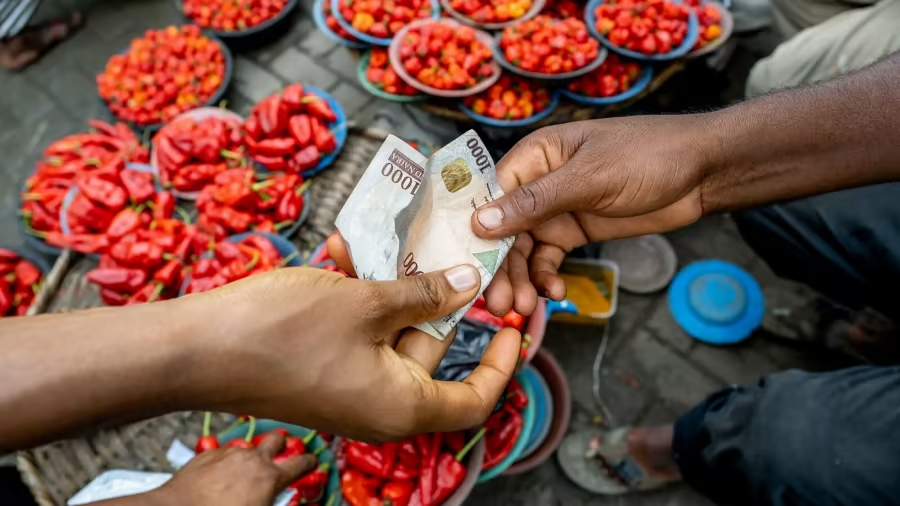







Facing deep hunger and malnutrition across Nigeria, the NNPC Foundation has embarked on a sweeping agricultural empowerment campaign.
The initiative is already having a transformative impact on lives, reaching from the Niger Delta to the North-East.
The initiative, aimed at equipping smallholder and vulnerable farmers with climate-smart, modern agricultural techniques, is emerging as one of the most far-reaching corporate social responsibility interventions in Nigeria’s quest for food security.
Nigeria is at a critical juncture in its food security landscape. According to the March 2024 Cadre Harmonisé Report, about 31.5 million Nigerians are facing acute food insecurity — a figure projected to rise sharply if current conditions persist.
The United Nations has described the hunger crisis in northern Nigeria as “unprecedented,” with over five million children already suffering from acute malnutrition.
The World Food Program (WFP) warns that nearly 31 million Nigerians are in dire need of food assistance, while ongoing insecurity, economic shocks, and climate change continue to erode rural livelihoods.
In the North-West alone, states such as Zamfara, Sokoto, and Katsina account for over 700,000 people classified in Emergency (Phase 4) food insecurity, while the Borno, Adamawa, and Yobe (BAY) axis in the North-East represents 15% of Nigeria’s food-insecure population.
Meanwhile, other regions such as Benue, Kwara, Taraba, and Cross River are also facing worsening food consumption gaps, driven by conflict, floods, and dwindling agricultural productivity.
With aid funding rapidly shrinking and international organizations like the WFP announcing cutbacks, Nigeria’s battle against hunger now depends more heavily on sustainable local interventions.
Recognizing the urgency of the crisis, the NNPC Foundation, the Corporate Social Responsibility (CSR) arm of NNPC Ltd., launched a national agricultural empowerment programme targeting 6,000 vulnerable farmers across the country — an initiative that has since grown to reach over 11,000 farmers nationwide.
The programme, first rolled out in early 2024, aims to build resilience among smallholder farmers by training them in climate-smart agriculture, post-harvest loss reduction, organic fertilization, and enhanced market access strategies.
Speaking at one of the training sessions in Enugu, Mrs. Emmanuella Arukwe, Managing Director of NNPC Foundation, said the initiative was conceived as a practical response to the food security challenge confronting the nation.
“These statistics underscore the urgent need for sustainable agricultural interventions that not only boost productivity but also build resilience against climate change, supply chain disruptions, and economic fluctuations,” Arukwe said.
She noted that agriculture remains the primary livelihood for over 70 percent of Nigeria’s population, according to the National Bureau of Statistics, yet many farmers remain trapped in subsistence-level production due to lack of access to modern techniques and competitive markets.
“Our goal is to equip every participant with the tools, knowledge, and resources needed to transition from subsistence farming to commercial-scale production,” Arukwe added.
The NNPC Foundation’s training initiative was structured into two major phases, covering all six geopolitical zones of Nigeria.
In the South-East, South-South, and South-West, the first phase trained over 3,860 farmers across 10 locations, equipping them with hands-on knowledge in sustainable and climate-resilient farming.
The closing session of the South-West pilot training, held in Ikorodu, Lagos, marked a significant milestone.
“What began as a bold decision to support smallholder farmers has translated into tangible action across three geopolitical zones,” Arukwe said at the Lagos event.
“This achievement is not just a number but a milestone in the lives of real people and real communities.
“We strengthened farmers’ capacity to adapt to climate change, improved access to markets, and promoted inclusive agriculture, especially gender representation.”
The second phase of the programme extended the training to the North-East, North-West, and North-Central regions — areas hardest hit by food insecurity and conflict-related disruptions.
The North-East training, launched in Potiskum, Yobe State, focused on empowering women and youth farmers to transition from subsistence to sustainable income levels.
“Today, we gather not only to launch another phase of this programme but to reaffirm our shared commitment to securing Nigeria’s food future and uplifting our rural communities,” Arukwe represented by Bala T. David, Executive Director of Programme Development said during the flag-off.
“The objective of this programme is clear — to equip vulnerable farmers, especially women and youth, with practical skills and market knowledge that can move households from subsistence to sustainable income and greater resilience.”
The economic implications of the NNPC foundation’s intervention are profound.
By targeting the agriculture sector, which contributes over 25 percent to Nigeria’s GDP, the Foundation is helping to stimulate rural economies, reduce poverty, and foster local production that can ease pressure on food imports.
The empowerment of over 11,000 farmers translates into a ripple effect across the value chain — from increased yields to job creation in logistics, processing, and marketing.
With better access to modern agricultural practices, farmers can now tap into both domestic and export markets, enhancing household incomes and national productivity.
Moreover, the programme’s focus on climate-smart agriculture aligns with global sustainability goals by promoting resource-efficient and environmentally friendly practices that safeguard future harvests.
NNPC Foundation’s initiative is reshaping Nigeria’s broader socio-economic landscape.
By investing in the country’s most vulnerable farmers, the Foundation is not only tackling hunger but also fostering resilience and inclusivity in rural development.
“At NNPC Ltd., we recognize that agriculture remains the foundation of Nigeria’s socio-economic wellbeing,” Arukwe emphasized.
“Through this initiative, we are building a stronger, more food-secure Nigeria from the grassroots.”
Author












Leave a comment