












Following recent accusations by former Vice President Atiku Abubakar, the Federal Government has vehemently denied using anti-corruption agencies to target its political rivals.
Persecondnews recalls that Atiku had alleged that the administration of President Bola Tinubu was weaponizing the Economic and Financial Crimes Commission (EFCC) to weaken the opposition in the run-up to the 2027 general elections.
In a statement on August 12, Atiku, who was Vice President from 1999 to 2007, claimed that these agencies were being deployed to harass and intimidate opposition figures, a move he described as a threat to Nigeria’s democratic process.
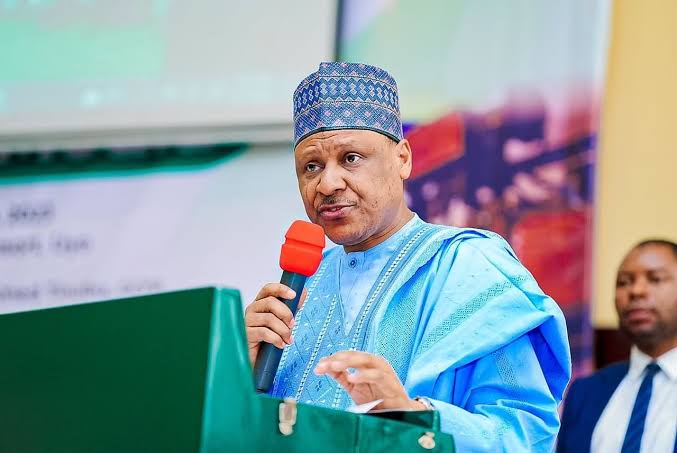
Responding to these claims on Wednesday, September 3, the government, through the Minister of Information and National Orientation, Mr. Mohammed Idris, stated that it remains dedicated to allowing anti-graft bodies to operate independently, without any form of political interference.
Speaking at the opening of the ICPC Roundtable Engagement in Abuja, Idris said: “Fighting corruption is indeed one of the 8-Point priorities of the Tinubu administration, and that is why the President is strengthening the institutional framework to fight corruption, especially through the ICPC and the EFCC.
“By its policy of non-interference, the Tinubu administration has made it clear that anti-corruption agencies are not instruments of political witch-hunt.
“They operate with independence and professionalism in line with the rule of law.”
The minister further highlighted the President’s resolve to eliminate corruption from public institutions, insisting that there will be “no safe haven for corruption in Nigeria.”
He said FG was “advancing far-reaching judicial reforms aimed at curbing unnecessary delays in corruption trials, ensuring that justice is neither denied nor endlessly deferred.”
According to him, these reforms are designed to ensure that justice is delivered promptly and fairly.
He also highlighted the theme of the roundtable — ‘Partnership for Strengthening Transparency and Accountability at State and Local Government Levels Through Strategic Communications’ — as evidence of the critical role that state information commissioners play in spreading government messaging across all levels of society.
“Transparency and accountability constitute strong pillars of democracy and are, unarguably, at the core of President Tinubu’s grundnorm of administration,” Idris said.
The minister called on state governments and their officials to rise above partisanship and support the national development agenda.
“I wish to implore you all, Honourable Commissioners, that irrespective of the political party you belong to, it is important you identify with the massive opportunities inherent in the Renewed Hope Agenda of President Tinubu, who is relentless in reshaping our economy to address years of neglect, and its limitations, and in turn achieve inclusion, diversification, growth and steady development,” he added.
Idris also commended the Independent Corrupt Practices and Other Related Offences Commission(ICPC), led by Dr. Musa Aliyu, for adopting an innovative communication strategy that actively involves stakeholders at the state and local levels in disseminating government policies to the grassroots.
Author









Leave a comment