









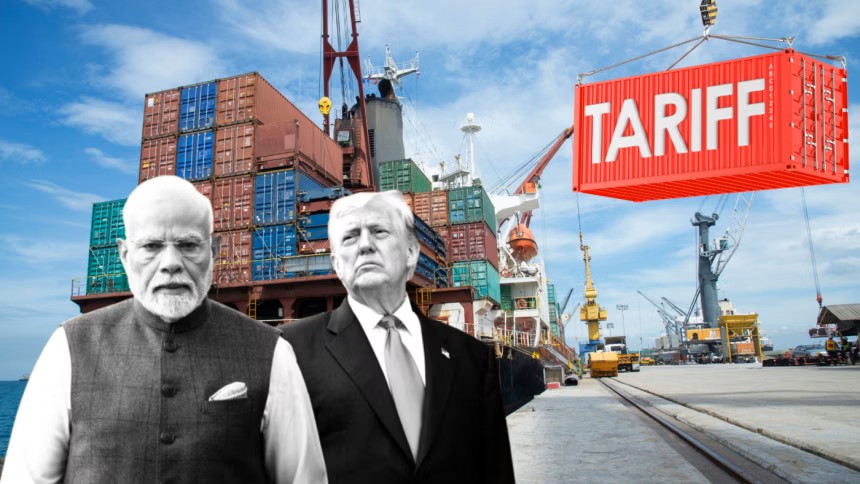



The United States has imposed a 50% tariff on a wide range of Indian goods, effective Wednesday, in a bid to pressure India to reduce its purchases of Russian oil.
The move has strained relations between the two countries, with India condemning the levies as “unfair, unjustified, and unreasonable”.
The tariffs affect various sectors, including textiles, gems and jewelry, leather, machinery, furniture, and marine products.
Indian exporters are bracing for a significant impact, with many already reporting canceled US orders and losses to rivals such as Bangladesh and Vietnam.
According to Ajay Sahai, Director General of the Federation of Indian Export Organisations, “We want to ensure that even if business stops, we are able to keep workers on the payroll”.
Sahai called for “liquidity support from the government” to cushion the blow. The tariffs could harm smaller firms, and 55% of India’s US-bound exports are at risk.
Some sectors, such as pharmaceuticals, semiconductors, energy resources, and critical minerals, have been exempted from the tariffs.
Pharmaceuticals, in particular, are a significant sector for India, accounting for 50% of the US market.
Despite the tariffs, India and the US have a robust trade relationship, with bilateral trade reaching $190 billion in 2024.
However, the recent move has eroded trust between the two countries, which could take years to rebuild, according to Wendy Cutler, a former US trade official.
Prime Minister Narendra Modi has vowed to defend India’s interests and strengthen its resilience against economic pressure.
India has begun exploring new markets and diversifying its exports to mitigate the impact of the tariffs.
The government has also assured exporters that it will take all possible measures to safeguard them from global uncertainties.
“No matter how much pressure comes, we will keep increasing our strength to withstand it,” Modi said.
The US tariffs on India are part of a broader trade policy aimed at addressing trade imbalances and what Washington deems as unfair trade practices.
Other countries, such as Brazil, have also faced similar tariffs, with some exemptions.
Author








Leave a comment