







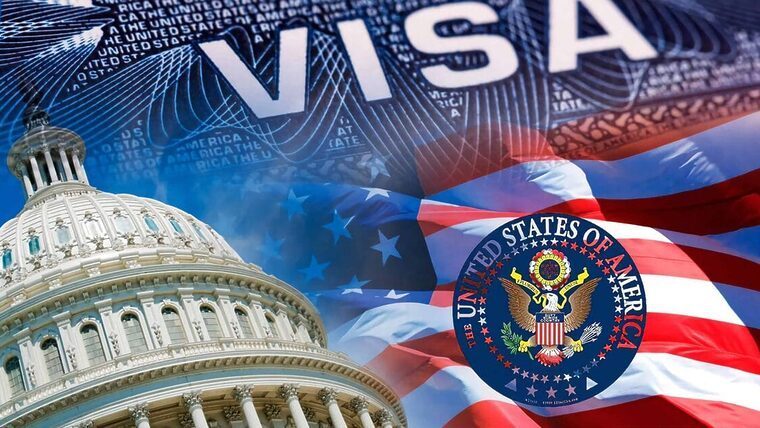



The US Mission in Nigeria has reaffirmed its commitment to ensuring the safety and security of the United States through its visa application and decision-making process.
This comes after the US directive requiring Nigerians to disclose all social media usernames and handles used over the past five years as part of the visa application process.
The US Mission in Nigeria on Monday stated that prospective visa applicants will undergo careful vetting to maintain a safe and welcoming environment in the US.
The US Mission explained that the safety and security of the United States is at the heart of every US visa application and decision process.
“That’s why prospective applicants undergo careful screening to ensure a safe and welcoming environment for all,” the Mission stated.
The measures help protect American citizens and communities while supporting secure and responsible travel.
Nigerian visa applicants must provide a comprehensive list of their social media profiles on the DS-160 visa application form, and omitting this information could lead to visa denials.
In response to the US directive, the Federal Government of Nigeria had announced that US citizens intending to visit Nigeria will be subjected to the same measures.
“The best we can do is to carry out reciprocal action. Some people from the US might want to apply for a visa, and we will adopt the same measures,” spokesman of the Ministry of Foreign Affairs, Kimiebi Ebienfa, said.
This move highlights the escalating tensions between the two countries over visa policies.
The new policy has raised concerns about privacy and freedom of expression.
According to Mr. Olufemi Soneye, a seasoned media strategist and former Chief Corporate Communications Officer of NNPC Ltd, the policy could have dire consequences for Nigerians.
“What may be a harmless meme or satirical remark in Nigeria could be wrongly interpreted as extremist, subversive, or fraudulent by US immigration authorities,” Soneye noted.
“This could lead to a chilling effect on free speech and cultural authenticity.”
According to Soneye, the policy could have significant implications for US-Nigeria relations.
“It threatens broader societal values such as freedom of expression, cultural authenticity, and civic engagement,” Soneye noted.
He added: “This does not merely pose a risk to individual visa applicants. It threatens broader societal values such as freedom of expression, cultural authenticity, and civic engagement.
“It also risks further straining US–Nigeria relations at a time when collaboration and mutual respect are more important than ever.
“The US government maintains that social media activity provides valuable insight into a visa applicant’s character, affiliations, and potential risks. In an age where radicalization and misinformation can proliferate online, there is some logic to this argument.
“However, in practice, it opens the door to arbitrary interpretations, biased judgments, and significant invasions of privacy.”
Author





Leave a comment