







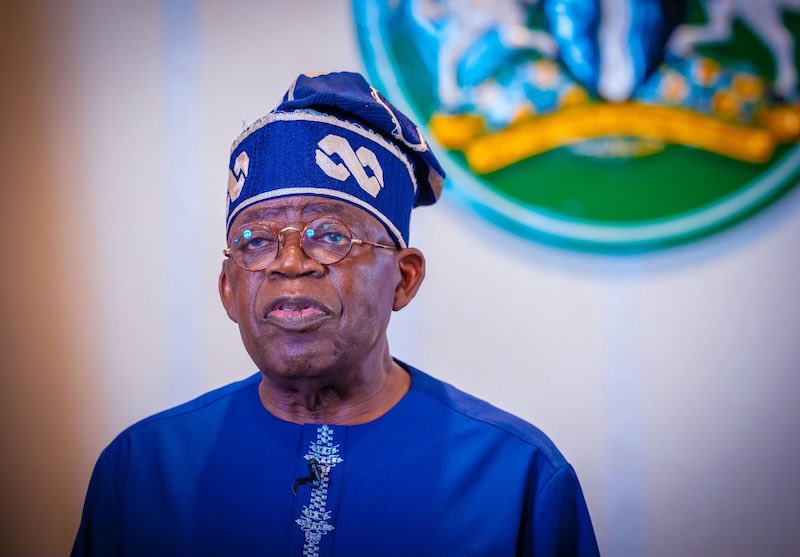



President Bola Tinubu has directed the Federal Ministry of Finance to conduct a comprehensive review of deductions and revenue retention practices by key revenue-generating agencies.
The move aims to optimize public savings, enhance spending efficiency, and free up more resources to finance economic growth.
The Minister of Finance and Coordinating Minister of the Economy, Mr. Wale Edun, told a media briefing after the FEC Meeting on Wednesday that the review will cover the Federal Inland Revenue Service (FIRS), Nigeria Customs Service (NCS), Nigerian Upstream Petroleum Regulatory Commission (NUPRC), Nigerian Maritime Administration and Safety Agency (NIMASA), and the Nigerian National Petroleum Company (NNPC) Limited.
The review seeks to reassess the current funding model, known as the cost of collection, where FIRS receives 4% of all non-oil revenues, NUPRC gets 4% of royalties, rents, and other revenues from the oil and gas sector, and NCS keeps 7% of revenue from duties and levies.
Additionally, NNPC’s 30% management fee and 30% frontier exploration deduction under the Petroleum Industry Act (PIA) will be reevaluated.
“Tinubu’s directive is part of efforts to sustain reforms that have dismantled economic distortions, restored policy credibility, enhanced resilience, and bolstered investor confidence,” Edun said.
“The President reaffirmed his administration’s target of building a $1 trillion economy by 2030, which requires at least 7% annual economic growth from 2027.”
Describing this goal as “not just an economic target but a moral imperative,” Edun reiterated that higher growth is essential to sustainably tackling poverty.
“The President also highlighted the importance of maximizing every available naira to sustain momentum amid global liquidity constraints, noting that public investment currently accounts for only 5% of GDP due to low public savings,” he added.
Edun explained further that macroeconomic indicators are improving, with a stabilizing exchange rate, declining inflation, rising revenues, and debt-to-GDP ratios within target levels.
“Nigeria is now viewed as an attractive investment destination across multiple sectors, supported by a competitive exchange rate, savings form the foundation for investment, whether from domestic sources or foreign inflows, and the President’s directive aims to urgently increase public sector savings.
“The President also drew attention to the Renewed Hope Ward Development Programme, a grassroots poverty-reduction initiative covering all 8,809 wards across the country. The scheme aims to empower economically active individuals through partnerships with state governments and the private sector,” Edun said.
Edun had presented two memoranda to the Federal Executive Council, including a $125 million Islamic Development Bank financing for infrastructure in Abia State and a plan to refinance ₦4 trillion in outstanding electricity sector obligations.
Author






Leave a comment