









The World Bank has given its seal of approval to a groundbreaking $300 million financing package for the Solutions for the Internally Displaced and Host Communities Project (SOLID) in Northern Nigeria.
The International Bank for Reconstruction and Development (IBRD) noted that the game-changing initiative, sanctioned on August 7, 2025, aims to bolster resilience and expand access to vital services for Internally Displaced Persons (IDPs) and their host communities in the most conflict-affected local government areas.
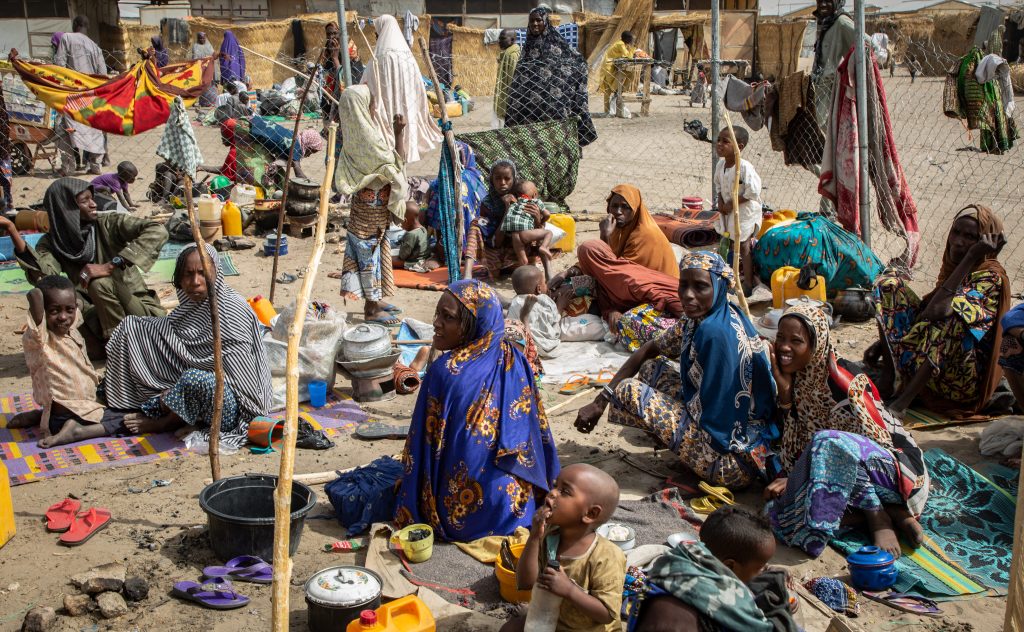
According to the World Bank, the insecurity in the region has displaced over 3.5 million people, putting significant strain on local infrastructure and services in areas where IDPs have settled.
The influx has heightened competition for scarce resources, limited livelihood opportunities, and increased vulnerability to natural disasters such as flooding.
In a statement on Monday by World Bank Nigeria said: “The World Bank has given its seal of approval to a groundbreaking $300 million financing package on August 7 for the Solutions for the Internally Displaced and Host Communities Project (SOLID), a bold initiative designed to revolutionize access to essential services and unlock economic opportunities for Internally Displaced Persons and their host communities in Northern Nigeria’s most vulnerable Local Government Areas.
“By embracing a holistic development strategy, the SOLID Project aims to empower both IDPs and host communities to break free from the shackles of dependency and forge a path towards self-sufficiency and resilience, perfectly in sync with Nigeria’s long-term development aspirations.”
“We are glad to support this initiative, which has tremendous potential to help Nigeria address development challenges associated with protracted displacement in a sustainable way,” said Mathew Verghis, World Bank Country Director for Nigeria.
Verghis said the project’s integrated approach, aligned with the National IDP Policy and the Federal Government’s long-term vision, will ensure that IDPs and host communities can transition from dependency on humanitarian assistance to self-reliance and resilience, opening up better economic opportunities.
The project will be implemented through a coordinated, community-driven approach involving all tiers of government, with strong collaboration from international stakeholders.
Task Team Leaders Fuad Malkawi and Christopher Johnson described the initiative as central to addressing the enduring displacement crisis in Northern Nigeria, highlighting its role in tackling infrastructure gaps and service delivery challenges in already strained host communities.
The project is expected to benefit up to 7.4 million people, including approximately 1.3 million IDPs.
As of March 31, 2025, Nigeria’s total debt to the World Bank stood at $18.23 billion, marking a $420 million increase in just three months.
The World Bank Group now accounts for approximately 39.7% of Nigeria’s total external debt stock, which stood at $45.98 billion.
Author





Leave a comment