



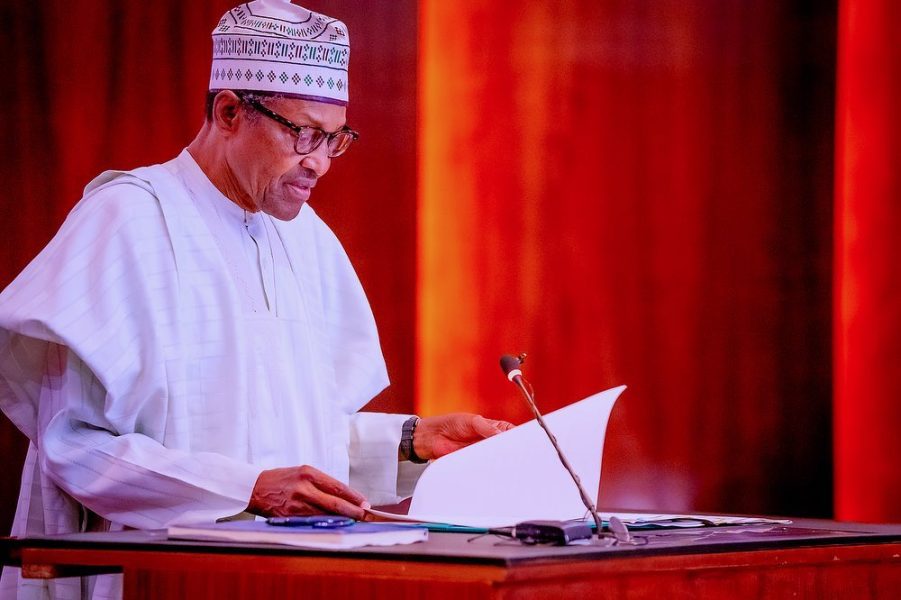



1. Born in Daura: Muhammadu Buhari was born on December 17, 1942, in Daura, Katsina State, to a Muslim Fulani family.
2. Twenty-third child: He was the 23rd child of Mallam Hardo Adamu, a Fulani chieftain, and his mother, Zulaihat.
3. Named after an Islamic scholar, Muhammad al-Bukhari, of 19th Century
4. Orphaned early: Buhari’s father died when he was four, leaving him under the guardianship of Waziri Alhassan.
5. Military ambition: Inspired by junior officer Hassan Katsina, Buhari joined the Nigerian military instead of pursuing a medical degree.
6. Young cadet: At 19, he was among 70 boys selected for the Nigerian Military Training College in 1962.
7. Trained in England: Buhari underwent officer cadet training at Mons Officer Cadet School in Aldershot, England, in 1962–1963.
8.He was commissioned into the army as a second lieutenant at age 20 in January 1963.
9. Nigerian civil war: Buhari served in the 1st Division of the Nigerian Army during the Nigerian Civil War, participating in key battles in Ogoja and Nsukka.
10. 1975 coup: Buhari was part of the coup that brought General Murtala Mohammed to power in 1975.
11. Military Governor at 32: He became the first Governor of Borno State in 1976 at age 32 after the North-Eastern State split.
12. Appointed Federal Commissioner for Petroleum in 1976 under the Federal Military Government headed by Gen. Olusegun Obasanjo.
13. Buhari was the first chairman of the Nigerian National Petroleum Corporation from 1977 to 1978.
14. US Army War College: He earned a master’s degree in Strategic Studies from the US Army War College in Carlisle, Pennsylvania, in 1980.
15. Buhari led the military coup that overthrew the civilian administration of Alhaji Shehu Shagari in the second republic on December 31,1983 and served as Nigeria’s military head of state from December 31, 1983 to August 1985 when Gen. Ibrahim Babangida terminated the regime.
16. His administration launched in 1984 the War Against Indiscipline (WAI) aimed to enforce public morality, order and civic responsibility.
17. His regime promulgated the infamous Decree No. 2 which allowed detention of people without charges for up to three months and another draconian Decree 4 in 1984 targeted at journalists who were clamped into jail for publishing “false” reports.
18. Mass purge: About 200,000 civil servants were retrenched under his administration by October 1984.
19. Anti-corruption stance: Over 500 politicians, officials, and businessmen were jailed for corruption during his 20-month rule.
20. The Umaru Dikko affair: His regime kidnapped and crated Dr. Umaru Dikko, Shagari’s flamboyant Minister of Transportation from London in 1984 back to Nigeria to face military tribunal but was foiled by British authorities.
21. 1985 coup: Overthrown by Ibrahim Babangida in August 1985, Buhari was detained in Benin City until 1988.
22. PTF chairman: As Chairman of the Petroleum Trust Fund in the 1990s, he oversaw transparent developmental projects.
23. Multiple presidential runs: Buhari contested for president in 2003, 2007, and 2011 before winning in 2015 which marked the first time in the political annals of the country when an incumbent Nigerian President (Goodluck Jonathan) lost re-election and in 2019, Buhari defeated Atiku Abubakar by over 3 million votes in the 2019 re-election bid. He will be remembered for successfully prosecuting COVID 19.
24. Health challenges: He sought medical treatment in the UK multiple times, including a 104-day stay in 2017 while the Vice President, Prof. Yemi Osinbajo (SAN) held the fort.
25. Boko Haram fight: His administration secured the release of 103 Chibok girls kidnapped by Boko Haram in 2016–2017.
26. Anti-corruption war: Over 600 figures, including judges and military officers, were convicted for corruption from 2015 to 2020.
27. Launched the National Social Investment Programme in 2016 to support vulnerable populations and N-Power programme to provide job training and stipends to young Nigerians to boost employment.
28. Twitter ban: In 2021, his government banned Twitter after it deleted his post threatening violence against Biafra insurgents.
29. First Lady’s office: He vowed to abolish the First Lady office in 2014 but allowed Aisha Buhari to operate it, making the controversial remark in 2016, that his wife “belongs in the other room” while standing next to Angela Merkel, Germany’s first female Chancellor.
30. In 2023, Buhari handed over power successfully to another APC President, Bola Tinubu, before retiring to his country home in Daura, Kastina State.
Author



Leave a comment