













By Joycelyn Ellakeche Adah
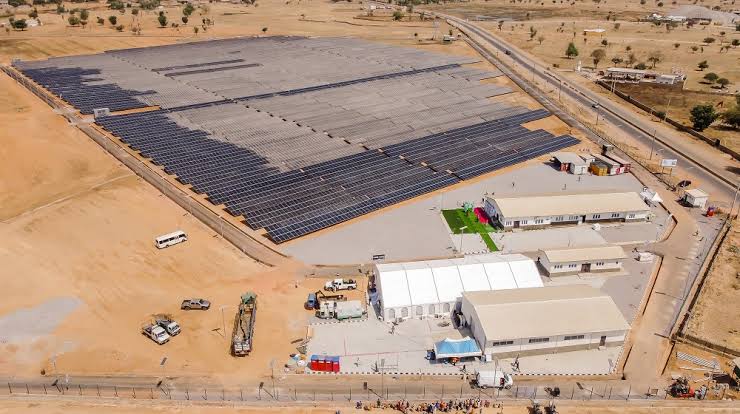
The Niger Delta Power Holding Company (NDPHC) has unveiled a partnership with the National Agency for Science and Engineering Infrastructure (NASENI) and Haier Technologies to deliver a 20-megawatt embedded solar power facility to the Challawa Industrial Area in Kano State.
NDPHC’s Managing Director/CEO, Engr. Jennifer Adighije, spoke when she led a high-level delegation on a site assessment of the Challawa Industrial District.
Speaking during an engagement with business owners in the area, Engr. Adighije described the visit as “significant and emotional,” underscoring Challawa’s strategic importance to Nigeria’s industrial and economic growth.
“It is a pleasure to be at the Challawa Industrial Area. This is a very important and emotional visit,” she said.
“I recall that on December 7th last year, the Chairman of our Board and Vice President of Nigeria, His Excellency Kashim Shettima, visited Challawa. Before he even returned to Abuja, he gave us a clear directive—to provide an alternative electricity solution for this area.”
Adighije was accompanied on the visit by the Executive Director of Generation, Engr. Kassim Abdulahi, and the Executive Director of Corporate Services, Engr. Omoregie Ogbeide-Ihama.
The visit had kicked off from the Kano Electricity Distribution Company (KEDCO), where the team was received by its Managing Director/CEO, Dr. Abu Jimeta.
Discussions between both leadership teams reaffirmed their mutual commitment to collaboration aimed at improving electricity access in Kano and surrounding areas.
The site visit also featured representatives from NDPHC’s technical partners—NASENI and Haier Technologies—who are jointly developing the embedded solar project.
The 20MW facility is specifically designed to support small and medium-sized businesses operating in Challawa, a vital industrial hub.
Responding to concerns about the time lag between the Vice President’s directive and the project’s rollout, Engr. Adighije explained that the delay was necessary to develop a sustainable and affordable model.
“You may wonder why it took us from December until now,” she said. “I engaged development partners to design a cost-effective solution that would ensure lower tariffs for the Challawa community.”
According to her, the proposed solar project leverages Kano’s abundant solar energy potential to provide reliable, renewable power to the area’s industries.
She lamented the economic losses many businesses have suffered due to inconsistent and expensive power supply.
“I was emotional seeing businesses with the capacity to generate revenue and jobs suffer due to a lack of affordable electricity,” she said.
“We must harness our solar potential to unlock productivity and drive inclusive economic growth for all Nigerians.”
She further noted that the project aligns with national goals, stating, “The manufacturing sector’s output should translate into job creation, wealth generation, and poverty reduction. Kano is symbolic and strategic to the administration of President Bola Ahmed Tinubu.”
Adighije reassured stakeholders that NDPHC and its partners are committed to delivering embedded solutions that will directly benefit local manufacturers.
She explained that while NDPHC traditionally supplies power from its gas-fired plants to the national grid, the ongoing shift to a bilateral electricity market now allows for direct sales to off-takers and buyer groups.
“As an association, you can register a trading company and buy electricity directly from NDPHC,” she advised.
“Our tariffs will be highly competitive—better than what is currently available from traditional distribution companies.”
The Challawa solar project is part of NDPHC’s broader mandate to enhance energy access, promote industrial development, and drive sustainable economic transformation across Nigeria.
Author








Leave a comment