











A sudden halt to solar panel imports could jeopardize Nigeria’s expanding solar energy adoption, impacting affordability, accessibility, and investor trust, the Federal Government has been warned.
Spaces for Change (S4C), through its Executive Director Victoria Ibezim-Ohaeri, urged a rethink of the proposed ban in a statement titled “Rethinking Nigeria’s solar panel import ban,” shared with Persecondnews.
While S4C supports local manufacturing of renewable energy equipment, it raises critical concerns about an immediate end to photovoltaic solar panel imports.
S4C is a non-profit organization working to infuse human rights into social and economic governance processes in Nigeria.
It said:” Amidst Nigeria’s efforts to expand energy access and accelerate its transition to cleaner energy sources, the federal government (FG) has announced plans to immediately halt the importation of solar panels and instead, domesticate the manufacturing of renewable equipment.
“This sudden end to the importation of photovoltaic solar panels into Nigeria raises important questions.
“While the goal of promoting local manufacturing is laudable, the abruptness of such a move could risk disrupting Nigeria’s rapidly-growing usage of solar energy, thereby affecting affordability, accessibility and investor confidence.
“As the nation walks the delicate line between meeting its climate targets and bolstering energy sovereignty, it is critical to consider how policies, if not carefully measured, can sometimes complicate the very challenges they seek to solve.
“Over the past two decades, Nigeria’s solar energy growth has heavily-depended on imported photovoltaic (PV) panels. Records show that most of these imports came from China and Europe, powering home solar systems and mini-grids across rural, urban and peri-urban communities.
“In other words, these imports played a crucial role in lighting up areas previously without electricity access and/or cut off from the national grid. While imports enhanced access to cleaner energy technologies, heavy reliance on foreign PV panels at the same time stunted the growth of local PV manufacturing and assembly industries.
“Domestic companies struggled to compete with the economies of scale and pricing advantages enjoyed by foreign manufacturers. Compounding the challenge, the Standards Organisation of Nigeria (SON) repeatedly flagged the unchecked influx of substandard solar products as a persistent threat to consumer trust and sector growth.
“Not only that, large volume of PV imports continued to exert pressure on Nigeria’s foreign exchange reserves, heightening concerns about the sustainability of a heavily import-dependent transition to cleaner energy future.”
S4C noted:’ Faced with these challenges, FG is now advocating for a ban on solar panel imports with a view towards fostering industrialization, creating jobs, and strengthening energy security and independence.
“This new policy direction was publicly articulated on March 25, 2025, when the Honourable Minister of Innovation, Science and Technology, Uche Nnaji, stated during the unveiling of the NEV T6 electric buses in Abuja that “the federal government has announced plans to halt the importation of solar panels to promote local manufacturing and accelerate Nigeria’s transition to clean energy.”
“Corroborating this position, the Managing Director and Chief Executive Officer of the Rural Electrification Agency (REA), Abba Aliyu, reiterated during a roundtable with the Lagos State Government that “the federal government has maintained the need to end the importation of photovoltaic solar panels into Nigeria.”
He also lamented N200 billion already been spent on imports.
In a sharp twist of policy contradiction, the minister announced a day later (March 26, 2025) via his official X page (formerly Twitter) that Nigeria had signed a landmark 2,600MW solar deal with LONGi Solar France SARL and Alternative Petroleum & Power Limited (APPL).
S4C noted that the agreement, one of the largest solar procurement deals in sub-Saharan Africa involves the supply of solar modules to power Nigeria’s Green Hydrogen Hub Project at the Liberty Oil & Gas Free Trade Zone in Akwa Ibom State.
“Without clearly disclosing any deliberate arrangements in place for technology transfer or domestic industrial development, the deal promises to position Nigeria as a regional leader in green hydrogen production with applications in clean mobility, exports, and industrial uses.
“More worryingly, the project will involve heavy importation of solar modules which is inconsistent with the announced plan to support local solar panel manufacturing or domestication efforts.
“This contradiction between aspiration and action reveals a deeper tension that deserves attention.
“While FG aspires to end solar imports to boost local production, a reality check shows that Nigeria is still signing large importation deals to meet urgent energy demands. These contradictions are sending conflicting to stakeholders: governments, businesses and the civil society, especially advocates clamoring for a green economy in Africa.
“It is not only creating confusion among project developers, financiers, and investors but also risks undermining confidence in Nigeria’s climate targets and low-carbon policy direction at a time when stability is crucial.
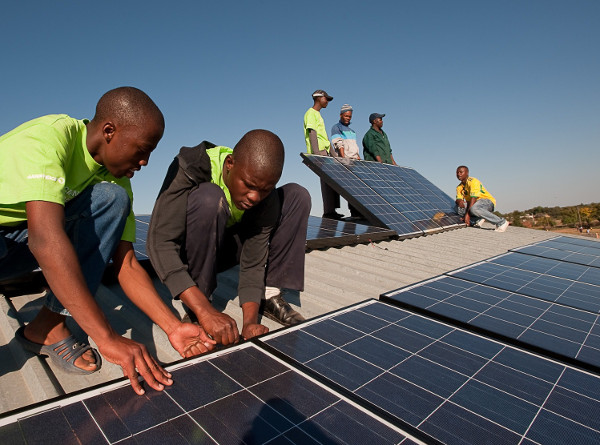
“Beyond the contradictions, an abrupt halt to solar panel imports could trigger significant unintended consequences across the energy sector. Many small and medium-sized enterprises (SMEs) in the renewable energy sector—from mini-grid developers to rooftop installers—operate on thin margins.
“Denying them access to reliable and functional panels without first ensuring the availability of viable local alternatives could trigger massive business losses, project cancellations, layoffs, and even sector-wide contraction.
“Government-backed energy access projects, such as mini-grids for rural electrification rely heavily on imported panels to meet deployment targets. A sudden import ban could delay these projects, compromising Nigeria’s energy access goals and straining partnerships with development financiers.
“Moreover, limited access to electricity could worsen the existing energy poverty in low-income communities, restricting development opportunities and further deepening the energy divide.
“Ultimately, it is the Nigerian consumer who stands to bear the brunt. Solar systems — already a high-cost investment for many households and small businesses — could become even more expensive if scarcity drives prices upward,” the civil society organization stated.
S4C warned that a mismatch between local production capacity and national demand could lead to supply shortages, lower product quality, and erosion of trust in clean energy solutions.
It said: “In the absence of a well-sequenced domestication plan that includes incentives, technology transfer agreements, and capacity building for local manufacturers, the good intentions behind the import ban risk translating into reduced energy access, slower climate action, and heightened economic hardship for millions of Nigerians.
“As Nigeria charts its course toward energy security, industrialization, and clean energy growth, it is essential that policies aimed at boosting local industries are clearly articulated with defined timelines, stakeholder consultation, and targeted investment in manufacturing capacity.
“Otherwise, the rush to substitute imports without first securing domestic readiness could slow down, rather than speed up, the energy transition the country urgently needs.”
Author







Leave a comment