













The Socio-Economic Rights and Accountability Project (SERAP) and the Nigeria Guild of Editors (NGE) are calling on the Federal Government to cease weaponizing the Cybercrime Act 2024.
These organizations are urging the government to refrain from using the Act to target journalists, activists, critics, and other Nigerians who are peacefully expressing their opinions online.
SERAP and the editors also called for the release of those arrested and detained under the Act.
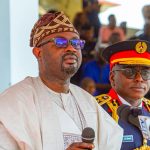
They made the call at a press conference held in Lagos on Saturday to mark the World Press Freedom Day.
A statement issued on the conference reads in part: “We are concerned that Nigerian authorities have continued to use the Cybercrime Act to normalize repression of the rights of journalists, bloggers, human rights defenders, opposition politicians, artists and other Nigerians.
“Nigerian authorities at all levels of government should immediately stop using the Cybercrimes Act and regulations disguised as broadcasting code by the National Broadcasting Commission (NBC) to target, intimidate and harass journalists, bloggers, critics and media houses.
“Impunity for those who threaten, intimidate and harass journalists, bloggers, human rights defenders and activists exacerbates the hostile environment for these defenders of constitutionally and internationally guaranteed human rights in Nigeria.
“We note that the suppression of the press in recent times takes various forms ranging from extrajudicial to unlawful detentions, disappearances, malicious prosecutions and wrongful use of both legislation and law enforcement.
“Since the amendment of the Cybercrime Act in 2024, Nigerian authorities at all levels have consistently used the provisions of the Cybercrime Act including the provisions of section 24 on “cyberstalking” to harass, intimidate, arbitrarily arrest and detain and unfairly prosecute users of social media, activists, and journalists.
“Nigerian authorities at all levels increasingly use criminal defamation laws and other repressive laws to crack down on human rights and peaceful dissent, bringing frivolous lawsuits against journalists, bloggers, human rights defenders and activists.
“We are also concerned about the persistence of threats to journalists’ safety, and the potential chilling effect of strategic lawsuits against public participation (SLAPPs) and harassment, including by security agencies and politicians.
“We note that journalists, bloggers, human rights defenders and activists play an indispensable role in documenting and reporting on human rights violations.
“The right to freedom of expression applies to all kinds of information and ideas, including those that may shock, offend or disturb, and irrespective of the truth or falsehood of the content.”
The two bodies also said: “The provisions of the provisions of the Cybercrime (Prohibition, Prevention, etc.) (Amendment) Act 2024, including Section 24 are inconsistent with the provisions of section 39 of the Nigerian Constitution 1999 [as amended] and the African Charter on Human and Peoples’ Rights to which Nigeria is a state party.
“We note that the ECOWAS Court of Justice on 25 March 2022 held that section 24 of the Cybercrime Act is arbitrary, vague and repressive and therefore, is in contravention of Article 9 of the African Charter on Human and Peoples’ Rights and Article 19 of the International Covenant on Civil and Political Rights.
“The Court also ordered the Federal Government to amend section 24 of the Cybercrime (Prohibition, Prevention, etc.) Act, 2015 in accordance with the country’s obligations under Article 1 of the African Charter on Human and Peoples’ Rights.
“However, while the National Assembly amended the Cybercrime (Prohibition, Prevention etc.) Act, 2015 in 2024, section 24 of the Cybercrimes Act (as amended) is still vaguely worded, arbitrary and easily lends itself to subjective interpretation and repressive use by the Nigerian authorities.
“Because the provisions of section 24 of the Cybercrimes Act 2024 are so broadly defined as to expose them to abuse for less legitimate ends, Nigerian authorities have persistently used these provisions to crackdown and violate the human rights of Nigerians including activists, bloggers, journalists, and social media users.
“The amended Cybercrime Act 2024, despite the wide-ranging provisions in its section 24, still provides a vaguely worded meaning for ‘Cyberstalking’ in section 58 as ‘a course of conduct, directed at a specific person that would cause a reasonable person to feel fear.
“The provisions of the Cybercrimes Act 2024, including section 24, contain several broadly defined offences with harsh sentences that threaten human rights and have had a chilling effect on freedom of expression and media freedom in Nigeria.
“Stories published online have been deemed ‘offensive’, ‘obstructive’, ‘insulting’ or ‘annoying’ with actionable consequences under amended provisions of section 24 of the Cybercrime Act 2024, even when the stories are true and factual.
“Also, stories published through traditional media outlets (print and electronic) that were never sanctioned by the government have been picked on upon being rebroadcast or republished through online platforms.
“Section 24 of the Cybercrimes Act 2024 represents a harshly punitive attempt to address the problems relating to stalking and harassment, and the Act fails to provide sufficient safeguards against misuse, particularly for peaceful and legitimate exercise of freedom of expression and investigative journalism.”
According to the editors and SERAP, what constitutes ‘causing a breakdown of law and order’ is also unclear, threatening to punish peaceful and legitimate expression and opening the provisions up to abuse.
They said: “According to Reporters Without Borders (RSF), Nigeria has dropped 10 spots to 122nd in the 2025 World Press Freedom Index.
“According to the 2023 and 2024 Freedom House Reports on Nigeria, internet freedom of expression declined due to an unprecedented pattern of arbitrary arrests and detention of bloggers after the enactment and amendment of the Cybercrime Act in 2024; most of whom are either pending at various police stations or courts of law.
“According to the Centre for Journalism Innovation and Development (CJID) Press Attack Tracker, there have been 110 verified attacks in the year 2024. In comparison to the previous year, the press attacks between the first and third quarter of 2024 have surpassed those of the entire year in 2023.
“We therefore call on President Bola Tinubu and his government to review the Cybercrime Act and other repressive laws for potential restrictions on free speech and press, and amend them in line with constitutional and international human rights standards and to uphold the human rights of every Nigerian and media freedom.
“We urge President Tinubu and his government to publicly call on Nigeria’s state governors, the Nigerian Police Force, the Department of State Services (DSS) to uphold and ensure full respect for the rights of everyone in the country, including journalists, bloggers, human rights defenders and activists.
“We call on President Tinubu and his government, the country’s 36 governors and Federal Capital Territory (FCT) minister to genuinely uphold press freedom, ensure access to information to all Nigerians, obey court judgments, and respect the rule of law.
“We urge the Attorney General to push for the immediate amendment of the Cybercrimes Act and other repressive legislation, and bring these laws in line with the Nigerian Constitution and international human rights obligations to which Nigeria is a state party.
“We urge the Attorney General to advise President Bola Tinubu to promptly obey all outstanding court judgments, including the ECOWAS Court judgment directing the Federal Government to repeal the repressive Cybercrimes Act and bring it in conformity with Nigeria’s international human rights obligations and commitments.”
The organizations urged the National Assembly to promptly and comprehensively review the Cybercrimes Act and other restrictive legislation, and revise them as appropriate to bring them into line with Nigeria’s international human rights obligations and commitments regarding human rights and media freedom.
“We urge state governors to ensure that security agencies, the Nigeria Police Force and other authorities drop all charges against journalists, bloggers and other media workers and critics, and cease further arbitrary closures of radio and television stations.
“We urge the international community to hold Nigerian authorities to account for violations of human rights in the country, including by calling on the authorities at both the Federal and state levels to immediately and unconditionally release anyone detained solely for peacefully exercising their human rights,” they said.
Author







Leave a comment